



Nicholas Munkhbaatar started using ChatGPT shortly after the artificial intelligence chatbot’s launch at the end of 2022. He was 14 at the time, and says: “I used it for almost everything, like math problems.”
At first, Munkhbaatar, who is from Sacramento, California, thought it was amazing. But later, he says, he began to see downsides: “I realized it just gave me the answer without helping me go through the real learning process.”
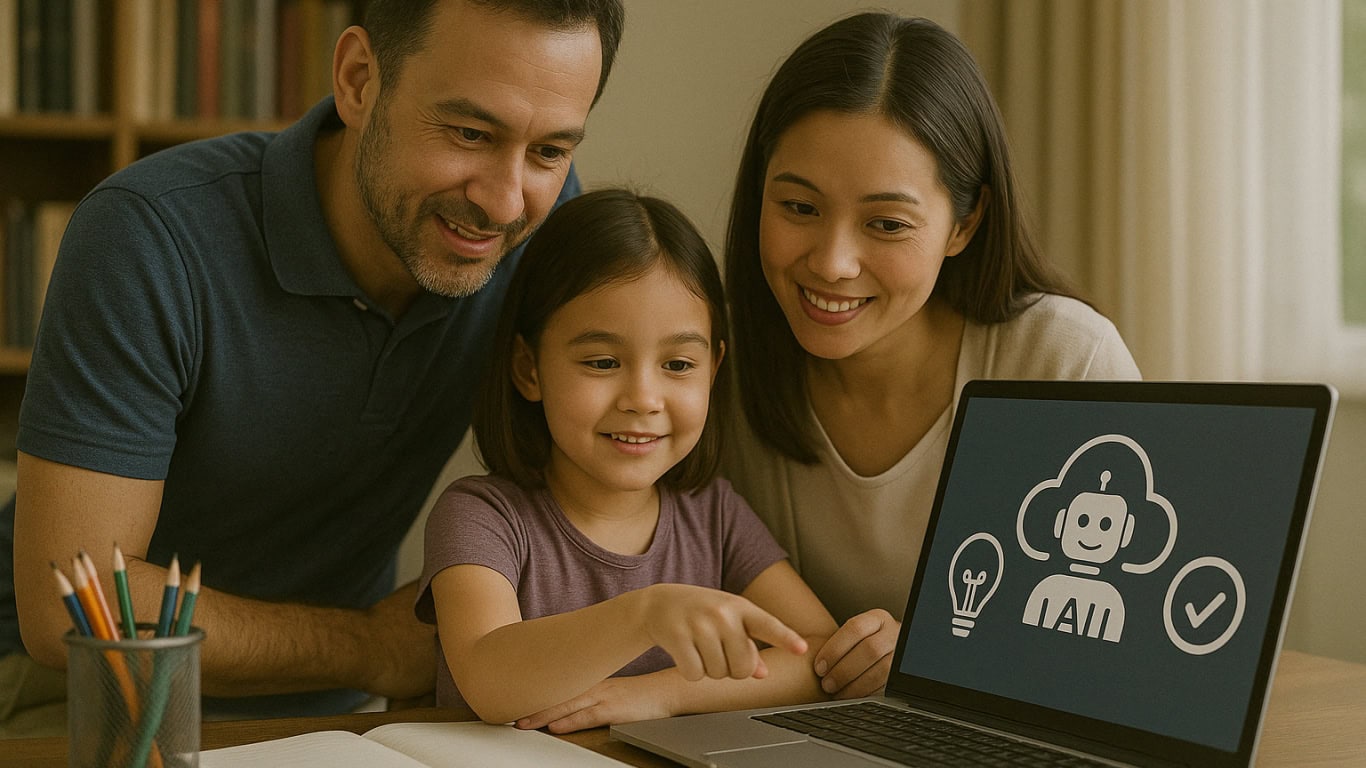
Many children and teens use ChatGPT and other generative AI models like Claude or Google Gemini for everything from tackling math homework to dealing with a mental health crisis, often without adult guidance. Education and child development experts say parents should take the initiative to help kids understand this new technology.
“Having conversations now about what ethical and responsible AI use is is important, and you need to be part of that if you’re a parent,” says Marc Watkins, a lecturer at the University of Mississippi who researches AI and its impact on education.
While early evidence suggests the technology can boost student learning if used correctly, ongoing research and stories about teens who died by suicide after chatting with AI chatbots indicate significant risks for young users.
Experts share advice on how to talk to kids about AI, including its potential benefits and harms.
Start the conversation early
Start the conversation when kids are in elementary school, says Watkins, before they encounter AI through friends at school or other spaces.
To guide these discussions, Watkins says to set aside time each week to learn about AI and try out the tools yourself. This could mean listening to a podcast, reading a newsletter, or testing platforms like ChatGPT.
To explain how AI works to your children, Watkins recommends playing Google’s game called Quick, Draw!. Players get a drawing prompt, and the game’s neural network tries to guess what you’re drawing by recognizing patterns in doodles from thousands of other players.
Watkins says it’s a way to show kids that AI is only as good as the data it was trained on. It imitates how humans write and create content, but doesn’t think or understand things the way people do.
Use AI together
As the technology is still evolving, parents often learn about it alongside their kids. Ying Xu, assistant professor at Harvard Graduate School of Education who researches AI, says parents can use this as an opportunity to explore it together.
For example, the next time your child asks you a question, type it into an AI chatbot and discuss the response, says Xu. “Is it helpful? What seemed off? How do you think that response was generated?”
Parents should also reinforce that AI can make mistakes. Xu says parents can teach kids to fact-check information provided by AI chatbots using other sources.
Explore its possibilities
If your child is using AI for homework help, keep an open mind.
Research has shown that some AI tools can have a positive impact on learning. Xu worked with PBS Kids to design AI-powered interactive digital versions of popular children’s shows. She found that kids who watched the AI versions were more engaged and learned more compared to kids who watched the traditional broadcast version of the show.
Meanwhile, Munkhbaatar, the Sacramento teen, says AI has been a helpful learning aid and brainstorming partner — as long as he doesn’t use it to do all the work for him.
Now, if he gets stuck on a challenging math problem, he says he asks ChatGPT: “What’s the first step I should take when looking at a problem like this? How should I think about it?”
Munkhbaatar also says he feeds his class notes to ChatGPT and asks it to quiz him on the material. “I make sure it only gives me the question itself, instead of the question and the answer at the same time.”
Understand the risks
We still don’t know how generative AI will impact child development in the long term, but there are some present dangers.
Dr. Darja Djordjevic, a college fellow at Stanford University’s Brainstorm: The Stanford Lab for Mental Health Innovation, is working with the group Common Sense Media to study how popular AI models respond to users showing symptoms of psychiatric disorders that affect teens. The research hasn’t been released yet, but Djordjevic shared some of her findings with NPR.
“What we found was that AI chatbots could provide good general information on mental health, but showed concerning gaps in recognizing serious conditions,” says Djordjevic.
Sometimes, she says, AI chatbots provided unsafe responses to questions and statements about self-harm, substance use, body image or eating disorders, and risky behaviors. She says they also generated sexually explicit content.
NPR contacted OpenAI, the company behind ChatGPT, about these concerns. We were directed to a recent post on the company’s site that says OpenAI is “continuing to improve how our models recognize and respond to signals of mental and emotional distress and connect people with care, guided by input from experts.”
The post says ChatGPT is also trained to direct users expressing suicidal intent to professional help.
Warning signs that a child is spending too much time with AI include increased time alone with devices or talking about an AI chatbot as if it were a real friend.
“That’s a red flag that the conversation about these being AI tools and not people needs to be nurtured again,” says Djordjevic.
Set reasonable house rules for AI
You might be wondering how to enforce these limits at home. Experts share tips.
Write AI rules together with your kids, says Djordjevic. Identify safe uses of AI together — like for homework help under parental supervision or as a creative outlet — and limit the time your child uses it. And check in regularly on how AI use is making your child feel.
Don’t ban your kids from using AI — but set limits. “Bans usually don’t work, especially with teens,” says Watkins. “What works is talking to them, setting clear guidelines and structure around these things, and understanding what can and can’t be done.” Parents should feel empowered to ban clearly dangerous uses, like if a child is self-harming and an AI chatbot encourages the behavior, says Djordjevic.
Make time for real life. Prioritize time spent outdoors with real people, away from devices, says Djordjevic. This could include joining a sports team and scheduling regular family activities.
Trust that your conversations will make a difference. No matter how overwhelmed parents may feel navigating AI, Watkins emphasizes that dedicating time to talk to kids can have real impact: “They won’t remember an ad for an AI chatbot. They’ll remember a conversation you had with them. And that gives you a lot of agency, a lot of power in that.”
Source: npr.org by Lee V. Gaines