



Considered one of the richest and most diverse regions in the country due to its variety of festivals, dances, religious manifestations, customs, superstitions, and many other forms of artistic and cultural expressions, the Brazilian Northeast holds a true treasure of delicious typical foods. The region’s cuisine is filled with spices and flavors that perfectly match the local duo of sun and beaches.
Marked by its unique mix of ethnicities, including Indigenous people, Black people, White people, immigrants, and Brazilians from other parts of the country, the Northeastern people are certainly unique. The diversity of climates (tropical on the coast and semi-arid inland) also has direct impacts on Northeastern cuisine. In the region, it is difficult to pinpoint where each dish comes from, as cultures have intertwined so intensely at various moments.
From the coast of Pernambuco to Bahia, African dishes are popular. In Alagoas, seafood is more common. In Maranhão, the Portuguese influence is even stronger than in other states in the region (with less frequent use of spicy seasonings). And the variety continues throughout the rest of the region, which also includes the states of Piauí, Ceará, Rio Grande do Norte, Paraíba, and Sergipe.
In the Northeastern hinterland, as the semi-arid lands are called, the climate itself favors a higher consumption of meat, especially carne-de-sol (sun-dried meat) and dishes made with roots. The cuisine of the June Festivals is also quite typical of the Northeast. For those visiting Paraíba, rubacão is perhaps the most typical dish of the state, made with beans, rice, queijo coalho, and charque meat. A must-try dessert in Pernambuco is bolo de rolo, a delicious thin cake with guava paste, rolled up and sprinkled with sugar.
Typical Dishes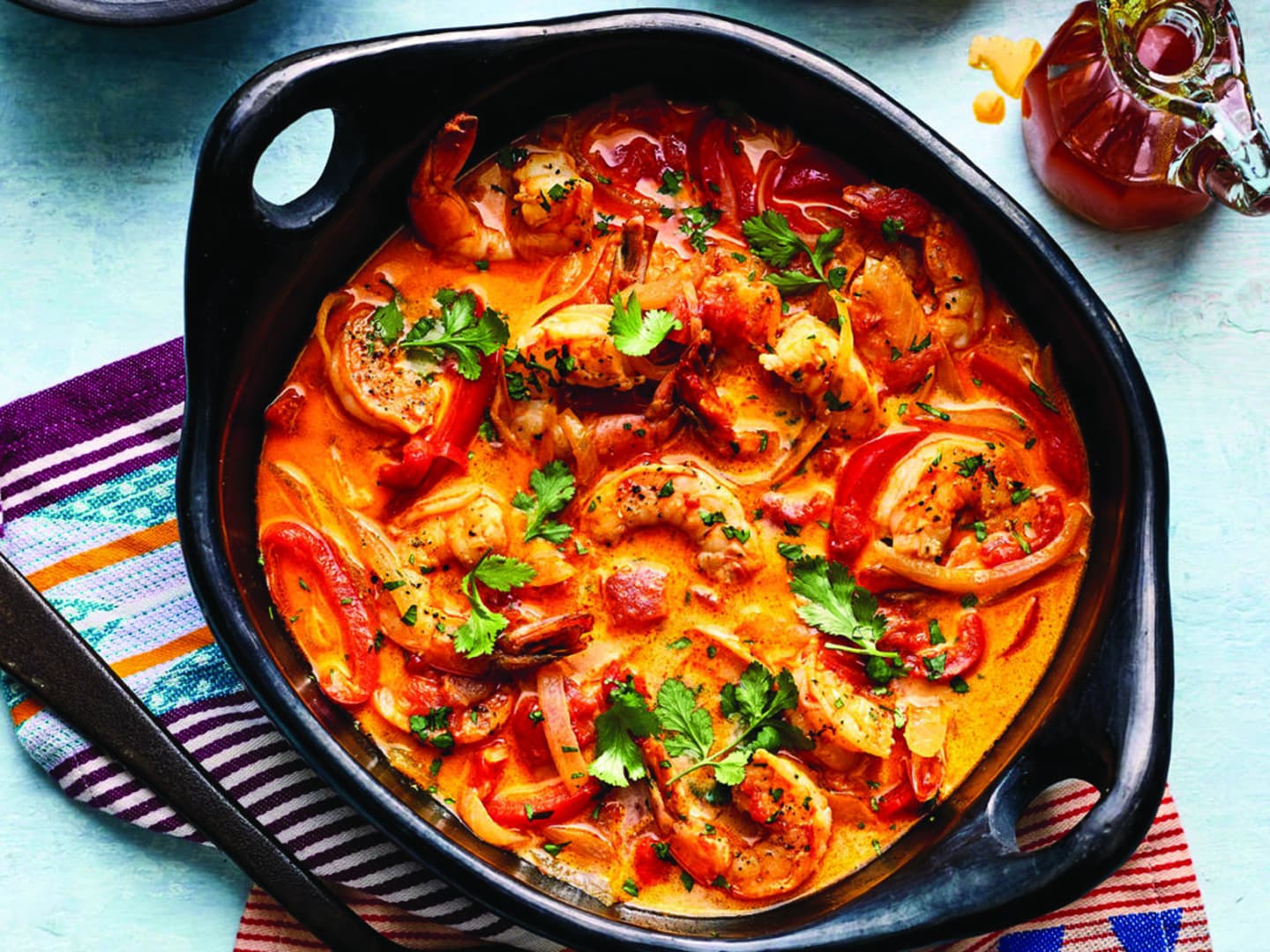
Due to the region’s characteristic diversity, the menu is very varied. Options range from acarajé to vatapá, passing through caranguejada, buchada, paçoca de carne, tapioca, sarapatel, local cuscuz, and cocada, all classics of the Northeast. Shellfish are also a big hit, with bobó de camarão (shrimp stew), moquecas of fish, and mollusks and crustaceans featured in large local dishes.
Some of the main ingredients consumed in the region include dendê oil, cassava, coconut milk, ginger, corn, soursop, shrimp, lobster, fish, and crab.
Acarajé, considered a typical food of Bahia, is a fritter made from black-eyed peas, prepared by hand and fried in hot dendê oil. The treat is then filled with vatapá (see below), caruru (okra stew), sautéed shrimp, and a salad of pepper and tomato with cilantro. The origin of acarajé dates back to the arrival of African slaves. In 2012, the Bahian acarajé was recognized as an Intangible Heritage of the state.
Vatapá, in turn, is a creamy dish whose recipe varies greatly depending on the cook. One of the most common versions, typical of Bahia, is made with dried shrimp, bread, coconut milk, peanuts, and cashew nuts, but preparations vary from state to state.
Known for its eccentricity, buchada de bode is a typically Northeastern dish made with offal such as goat kidneys, liver, white entrails, and stomach, all seasoned and served stuffed inside the animal’s own stomach.
Source: Brazil Agency