



Tourists visiting Brazil can take the opportunity to explore various unique cultural expressions that preserve and narrate the country’s history. In northern Brazil, two received special protection this month: The National Institute of Historical and Artistic Heritage (Iphan) recognized Marabaixo and Boi-Bumbá as cultural heritage of Brazil. This means that the government will strengthen actions to ensure that these artistic expressions are protected and preserved.
Learn more about each of them below and discover why they deserve to be on your must-see list during a trip to Brazil:
Marabaixo
A regular feature in the state of Amapá, Marabaixo is a unique cultural expression that combines dance, music, and singing. The manifestation is recurrent in places occupied by black populations. The verses of Marabaixo songs are known as Ladrões (“Thieves”), and they tell the very story of those who produce and reproduce them, as well as providing a unique perspective on the social space in which these peoples coexist.
The Marabaixo groups have seventy members, who perform playing percussion instruments they call snare drums. The singers sing the Ladrões, and the dancers – wearing colorful flowing skirts and flowers in their hair – dance in a counterclockwise circle around the musicians.
Several groups perform in Amapá every year during the Marabaixo Cycle. The period follows the Roman Catholic calendar, starting on Good Friday and extending for forty days after Easter Sunday.
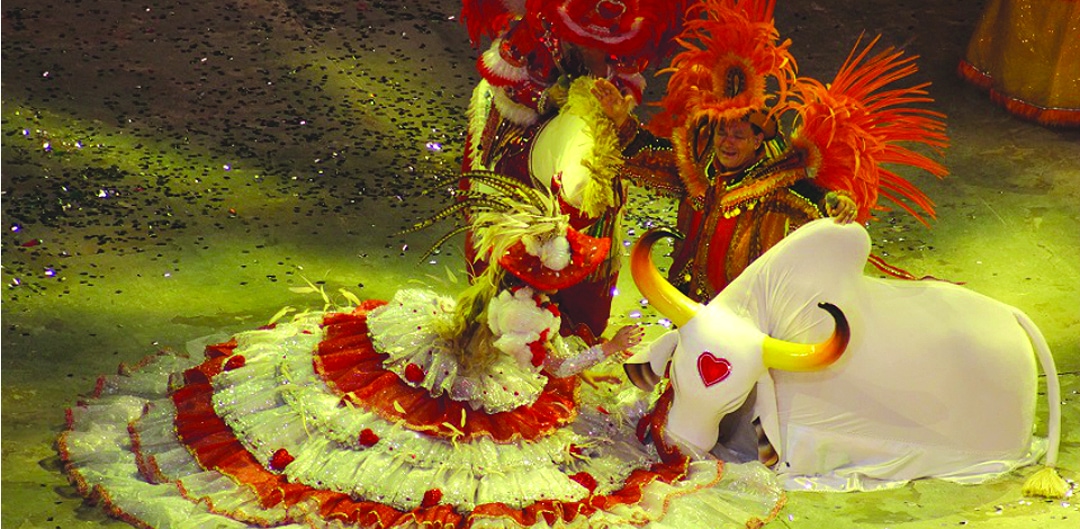 Photo: Iphan
Boi-Bumbá
The Cultural Group of Boi-Bumbá of Médio Amazonas and Parintins, in the state of Amazonas, is a festive cultural manifestation that has the Boi (“Ox”) as its main cultural element and origin myth, and encompasses various traditional styles of dance, songs, drama, and storytelling.
The ways of “playing the Boi,” as locals call the parties, vary widely depending on the region of the country. The variations and denominations differ in each context, as do the times of year when Boi-Bumbá occurs. In the Amazon, the Boi is considered to have been born during the Jesuit missions. The missionaries endeavored to catechize the country throughout the 17th century, and in the North, they blended Mediterranean European traditions with indigenous and black influences to help tell their stories.
The Parintins Folklore Festival is the largest cultural event of the year in the Amazon, bringing together performances from Garantido and Caprichoso (the two major rival Boi-Bumbá groups) for three consecutive nights in the last week of June.
Cultural Heritage
The process of registering an expression as Brazilian cultural heritage begins with a formal request for analysis, which can be submitted by civil society associations or government institutions. This request must be forwarded to Iphan. At the institute, the request is sent to the Advisory Council of Cultural Heritage, which evaluates the registration and listing dossiers submitted. The Council is composed of specialists from various fields, such as culture, tourism, anthropology, architecture & urbanism, sociology, history, and archaeology. Once registered, the asset receives the title of Brazilian Cultural Heritage, after which it is inscribed in one of the four Books of Tomb.
Source: https://gestaoconteudo.presidencia.gov.br