



Plastic pollution affects every corner of the planet, from the stomach of an animal in remote Antarctica to the trees of the Sahel and the highest peaks of the Himalayas. It can take centuries to degrade.
The world produces about 272 million metric tons of plastic waste each year. That is close to the weight of the entire human population. And just over 7 million metric tons of that waste reaches the ocean annually.
In the United States, both the public and private sectors are working to reduce plastic pollution globally.
The U.S. Government Leads the Global Fight
The U.S. Department of State has worked with partners at the United Nations to launch negotiations for a global agreement on plastic pollution at the U.N. Environment Assembly.
“Plastic pollution is a global problem that affects the environment, food security, maritime transport, tourism, economic stability, resource management, and potentially human health,” said Monica Medina, Assistant Secretary of the Bureau of Oceans and International Environmental and Scientific Affairs at the State Department.
“Plastic pollution, particularly plastic pollution in the oceans, knows no political boundaries and addressing it requires international cooperation.”
The State Department and the Environmental Protection Agency are helping Central American countries and the Dominican Republic to “strengthen solid waste management capacity, including addressing land-based sources of plastic pollution in the oceans.” The agency has also granted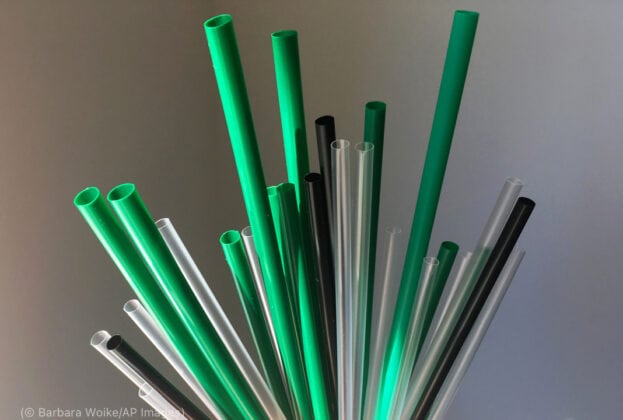
millions in grant funding to non-governmental organizations to combat plastic debris in the oceans.
The Private Sector Takes Action
The U.S. Plastics Pact was established in August 2020 as part of the global Plastics Pact network of the Ellen MacArthur Foundation. The goal is to create a pathway to a circular economy for plastics, meaning that reused plastics would replace new plastics.
The participating U.S. private sector companies in the pact represent one-third of the U.S. plastic packaging supply.
Last June, the Plastics Pact outlined four goals to reduce plastic pollution by 2025:
• Define a list of problematic or unnecessary packaging by 2021 and take steps to eliminate the items on the list by 2025.
• Ensure that 100% of plastic packaging is reusable, recyclable, or compostable by 2025.
• Undertake ambitious actions to effectively recycle or compost 50% of plastic packaging by 2025.
• Achieve an average of 30% recycled or responsibly sourced and bio-based content by 2025.
In January, the Plastics Pact released a list of problematic plastics — such as straws, cutlery, and stirrers, as well as chemicals like PVC, PFAS, and PETG — that are not reusable, recyclable, or compostable. Members of the U.S. Plastics Pact will develop guidelines by 2025 on alternatives to these items.
“The outcomes of the U.S. Plastics Pact’s efforts to advance packaging, improve recycling, and reduce plastic waste will benefit the entire system and all materials,” said Sarah Dearman, Vice President of Circular Ventures at The Recycling Partnership.
Source: share.america.gov