



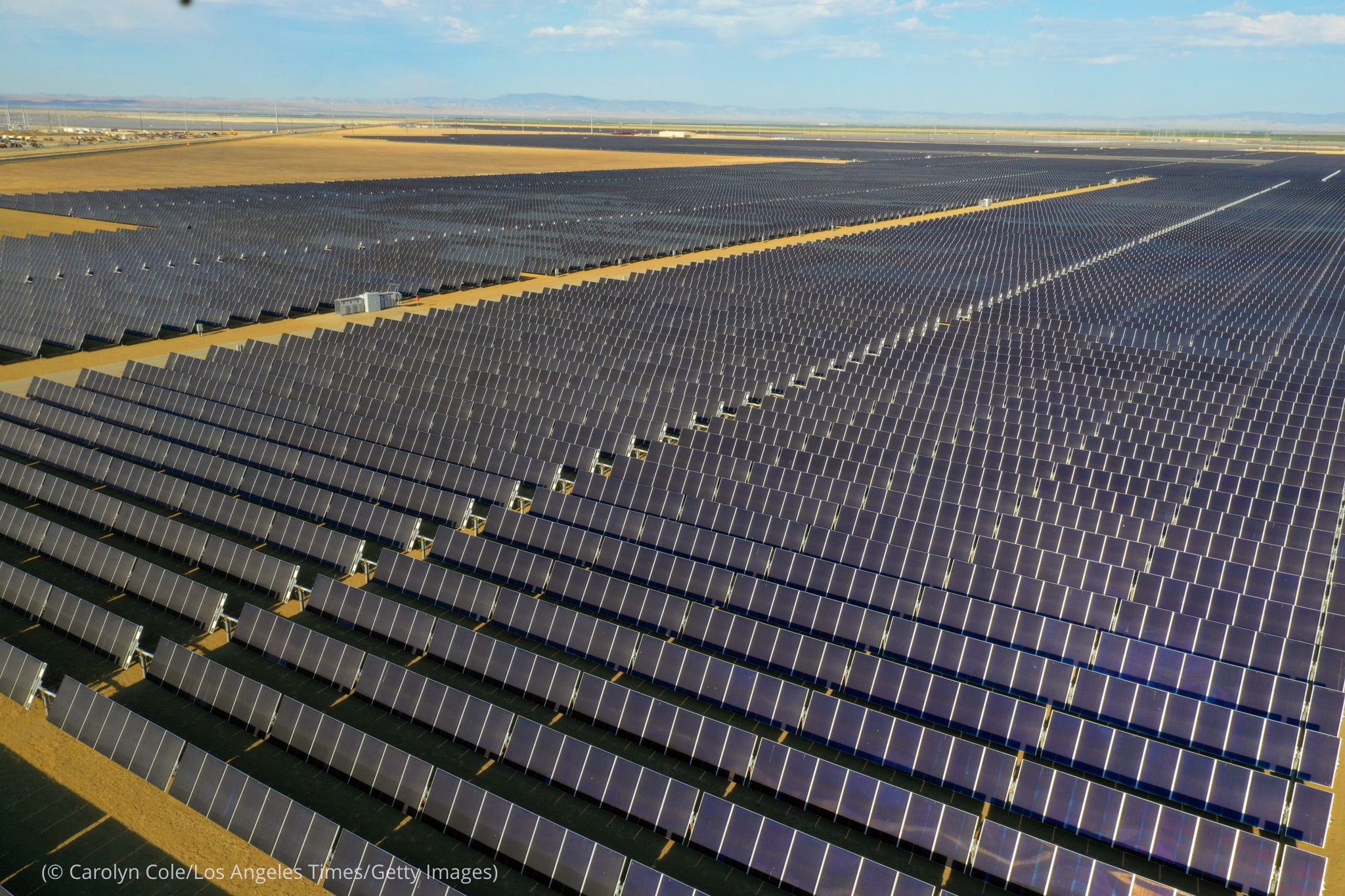
The largest solar farm in the United States is under construction.
Doral Renewables, an Israeli company, is building a 5,260-acre solar farm in Starke and Pulaski counties in the state of Indiana. The project will cost $1.5 billion, take two years to complete, and — once finished — will power 75,000 homes.
“I’ve never seen anything like this project here in my life,” said Starke County Commissioner Mark Gourley to AP News. “The energy we harvest here in Starke County will enrich lives throughout the county.”
The Rise of Solar Energy
A solar farm is a large installation of photovoltaic panels that convert sunlight into electricity and distribute that energy to a centralized power grid.
Earlier this year, a report from the Department of Energy concluded that the United States could obtain 40% of its electricity supply by 2035 and 45% by 2050 from solar energy.
Solar energy is already responsible for about 230,000 jobs in the U.S. (PDF, 29.7 MB), and the Department of Energy projects that there could be 1.5 million solar jobs by 2035.
Abundant Solar Farms
The United States is home to more than 2,500 solar farms, several of which can power hundreds of thousands of homes.
When it was built in 2015, the Solar Star facility in Rosamond, California, was the largest solar farm in the world.
Today, it continues to generate enough solar power to supply 255,000 homes annually. Over 20 years, the carbon dioxide that the facility will prevent from entering the atmosphere will be equivalent to removing 2 million cars from the roads, contributing to the U.S. climate commitments.
The Solar Star projects also created over 650 construction jobs over three years and brought about $500 million to the local economy.
“Our mission is clear,” said U.S. Energy Secretary Jennifer Granholm on December 10, “saving the planet means creating millions of well-paying jobs in the energy sector.”
Source: share.america.gov, By Noelani Kirschner