



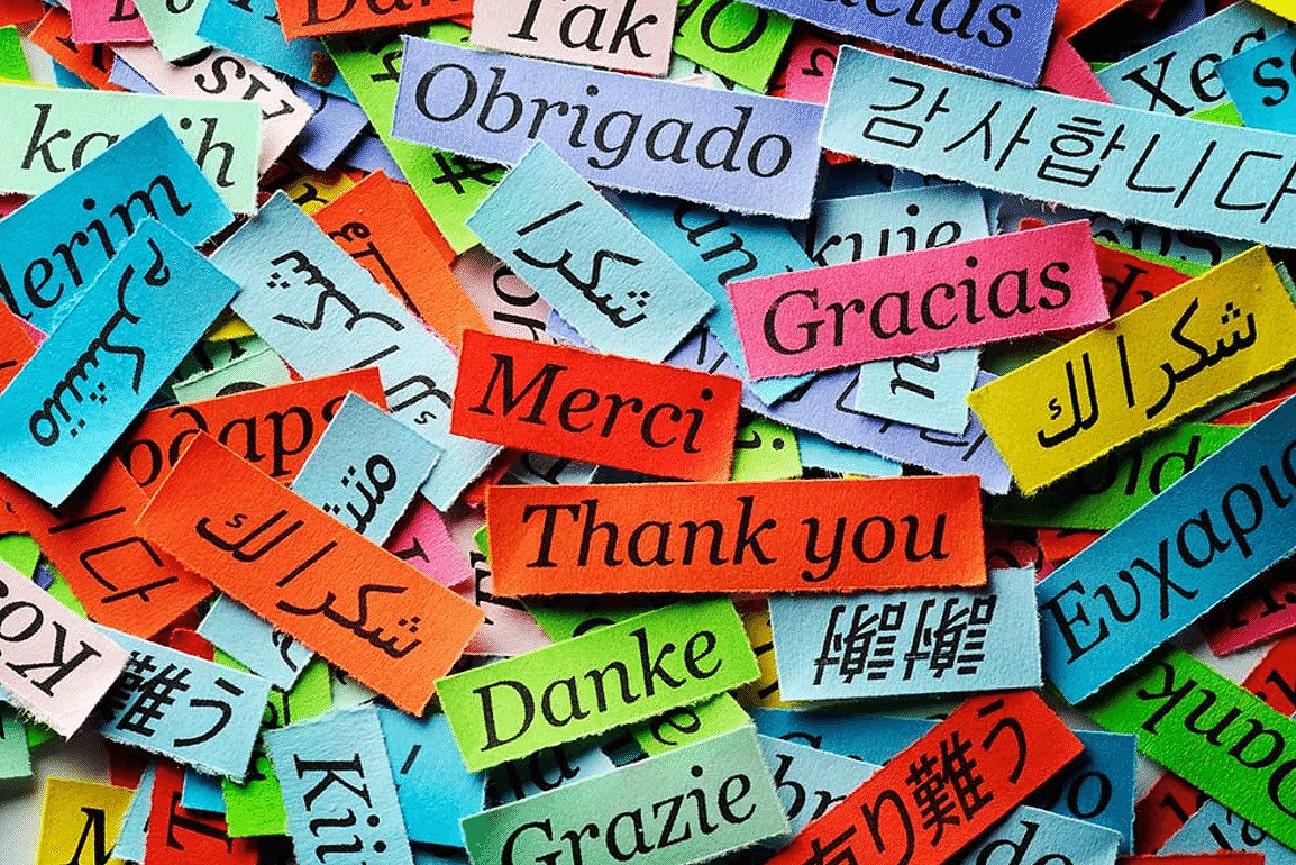
In the U.S., the number of people who spoke a language other than English at home nearly tripled, from 23.1 million (about 1 in 10) to 67.8 million (about 1 in 5), over the past three decades, according to the U.S. Census.
There are between 350 and 430 languages spoken in the United States, making it one of the most linguistically diverse countries on Earth, according to the nonprofit organization Translators Without Borders. Their estimate aligns with the U.S. Census’s claim of “more than 350 languages.”
Americans trace their roots to all parts of the globe, and many can speak the native language of the places their ancestors came from.
In other words, while the majority of the U.S. population (78.4%) speaks only English at home, a growing share (21.6%) of American households speaks languages other than English.
Hispanics are the largest minority group in the U.S., so it’s no surprise that Spanish is the most common non-English language spoken in American homes. About 42 million people speak Spanish at home (they represent about two-thirds of those who speak a language other than English).
The five most spoken non-English languages in American households also include Chinese (spoken by 3.49 million in U.S. homes, or 5.2% of those homes); Tagalog (1.7 million, or 2.6%); Vietnamese (1.5 million, or 2.3%); and Arabic (1.2 million, or 1.9%).
Revitalizing English
The rise of spoken languages enriches American English, which is constantly evolving with “borrowed words.” Rice University linguistics professor Suzanne Kemmer writes: “It is part of the cultural history of English speakers that they have always adopted borrowed words from the languages of the cultures they have come into contact with.”
Thanks to the popularity of Mexican cuisine, there are many Spanish words that English speakers use daily. Additionally, U.S. states and cities often receive names in Spanish from saints (San Francisco, Santa Clara, etc.) or geographical features. For example, the state of Montana gets its name from the Spanish word for “mountain” (“montaña”), and the name of the city of Monterey, California, is a Spanish word meaning “mountain of the king.”
The word “rodeo” has Spanish origins, as does the word “alligator” (from “el lagarto,” meaning “the lizard”). Spanish has also expanded the English vocabulary with words like “barracuda,” “aficionado,” “plaza,” “tango,” “bonanza,” “savvy,” “coyote,” and “vigilante” (“watchman”), to name just a few examples.
Chinese, like Spanish, has provided English speakers with a wealth of food-related words, as well as words like “gung-ho” (“to show enthusiasm”) and “typhoon.”
The American slang “boondocks” (or “boonies,” for short) came from the Tagalog word “bundók,” meaning “mountain,” used as shorthand for a hilly rural area. And the Vietnamese word “pho,” the name of a traditional soup dish, is used by food-loving English speakers around the world.
Arabic, like Spanish and Chinese, has been a prolific contributor to the English language. Commonly used words like “algebra,” “giraffe,” “sofa,” “tariff,” “safari,” “alchemy,” “gazelle,” “alcohol,” “cotton,” “sugar,” and “ghoul” all come from Arabic.
Source: ShareAmerica