



My guest today is businessman Rômulo Engelhard, originally from Soure in the interior of Pará on Ilha do Marajó, born in 1979. That year, Rômulo was the newest member of the 14,000 inhabitants. Son of Reginaldo and Vilma Engelhard, his childhood was very strict, grounded in strong values and principles, far from the modernity and technologies available today.
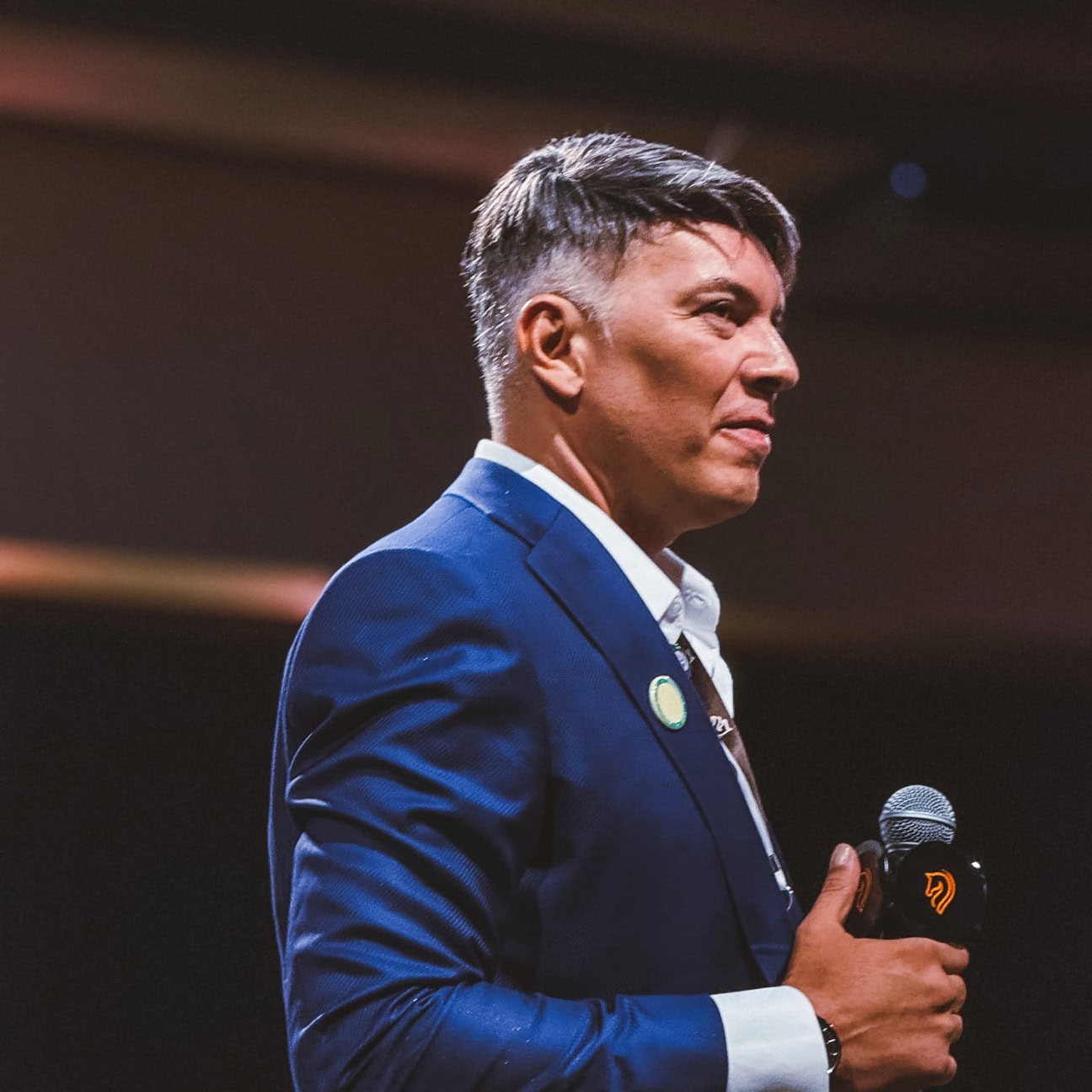 At 17 years old, he went to a boarding school with a military regimen housing more than 600 boarders, from which he graduated at 20 with a degree as a Technician in Agribusiness—a foundation that enabled him to build a promising future. Married to businesswoman and journalist Brenda Engelhard, father of three children, today he represents the rare combination of technical expertise, strategy, and inspiring leadership.
Currently, Rômulo is one of the most respected names in Brazilian agribusiness, leading Engelhard—a company consolidated for over two decades in live cattle exports and a benchmark in technology, biotechnology, and logistics for global food security.
Aryane Garcia – During your adolescence, did you ever imagine being in the position you are today?
Rômulo Engelhard – I never imagined being where I am today. At the boarding school, far from home and under a strict regimen, I learned early the value of discipline and resilience. That routine taught me that success comes from continuous effort and determination. I always admired people with great oratory skills and leadership—I realized that knowledge is true power. From then on, I decided no one would take that away from me.
AG – Still in your childhood, which artists influenced you who have now lost relevance with the digital revolution and the advent of the internet?
Rômulo – In my childhood, television was limited and the internet nonexistent. I had no artistic references. My greatest influence was my grandfather, Rodolpho Engelhard—a respected man with vision ahead of his time, a firm stance, and a commanding presence. He was my first example of leadership and character.
AG – After years of learning, becoming a recognized professional in your field has given you the ease to opine on other market sectors?
Rômulo – Yes. Professional recognition has opened doors and put me in contact with names I always admired in cattle ranching and other sectors. I remember a call from a major icon in live cattle exports—someone I saw as unattainable. At that moment, I realized I had reached the same level of dialogue and authority. It was silent confirmation that effort and merit build real credibility.
AG – Among your productive habits during the week, are there precepts you adapted and now pass on to your collaborators?
Rômulo – Yes. I always emphasize three fundamental principles: First, think big and act in the details. Great results come from consistent small actions. Second, exercise strategic patience—immediatism destroys good ideas. And third, pursue continuous learning. Knowledge is the only asset no one can take from us. These habits shape strong teams and enduring businesses.
AG – What is your overview of Brazil’s economic situation over the last 20, 10, and 5 years?
Rômulo – Over the last 20 years, Brazil squandered unique opportunities. We had commodity booms and social advances, but lacked long-term planning. In the last 10 years, political polarization and institutional crises stalled development and scared off investments. In the last 5 years, despite agribusiness resilience, we remain structurally stagnant. We are an agricultural and energy powerhouse, but still hostages to a centralizing State and a culture that discourages entrepreneurship. Brazil has the strength to be the world’s third-largest economy—but it needs direction and courage.
 AG – Being part of agribusiness, Brazil’s most profitable sector, does it help you understand the country’s social situation? What are your plans to promote inclusion of youth and women in the sector?
Rômulo – Without a doubt. Agro is the country’s most technical and competitive sector. It reflects both Brazil’s virtues and shortcomings. I’ve tried recruiting recent graduates and noticed a major structural flaw: lack of technical preparation and practical vision. That’s why I advocate for training centers and internship programs focused on agro to turn talent into real competence. Youth and women have a place in the sector—as long as armed with knowledge and discipline. Meritocracy is the path to inclusion and prosperity.
AG – How will agribusiness remain strong in the coming years, according to your line of work?
Rômulo – Brazilian agro will continue expanding. The world needs to double food production, and Brazil is essential in that process. We have scale, technology, and favorable climate. In cattle ranching and biotechnology, the future lies in productive efficiency and sustainability. Growing demand from Asian and Arab countries reinforces our relevance. With innovation in feedlots and hydroponic forage, the country positions itself as the absolute leader in animal protein and global food security.
AG – Does agribusiness face challenges in communicating its importance to the world?
Rômulo – Yes. There’s a misguided global narrative trying to portray Brazil as an environmental villain. It ignores that we have one of the planet’s most sustainable production models. We need to better communicate the truth: Brazilian agro preserves, produces, and feeds. It’s the sector that generates the most foreign exchange, jobs, and social balance—and yet it’s unfairly attacked. We lack communication strategy on par with our greatness.
AG – How to convince society that agribusiness is not the main culprit for global warming?
Rômulo – Disinformation has created myths. Brazilian cattle, for example, is not a climate villain—bovine methane is part of a natural cycle and converts back to CO₂ and water in a few years, unlike fossil carbon that lingers for centuries. The Amazon is targeted by manipulations. Humidity comes mostly from the Atlantic Ocean, not just the trees. We must break dogmas and show that agro is the solution, not the problem. Brazil is an agro-environmental powerhouse that produces with science, technology, and responsibility.
AG – Is the popularity of rural producers at risk? Why the attempts to demonize the sector?
Rômulo – Yes, there’s a deliberate attempt to tarnish the image of rural producers. A false class divide has been created, portraying agro as elite. This narrative masks the State’s failure to provide education and development. While producers generate jobs and wealth, they are unjustly accused of causing environmental problems. The way forward is unity. Brazil needs a strong national agro federation, with a single voice, its own bank, and institutional power to defend those who truly sustain the economy.
AG – Which biggest names in agribusiness influenced your career?
Rômulo – The greatest influencers in my life weren’t agro celebrities, but people I interacted with. My grandfather Rodolpho Engelhard, an example of character and vision. Dr. Bill from Agroquina, who taught me that big businesses require the same effort as small ones. And Clynton Olanda, who challenged me to entrepreneur. It was his provocation that gave birth to Engelhard. These people shaped my mindset and reinforced my commitment to excellence.
AG – Do you believe Brazil could face an economic recession? How to shield against a food crisis?
Rômulo – The country is already in a veiled recession. Purchasing power has plummeted, and the exchange rate has impoverished us in dollars. To protect itself, Brazil needs serious fiscal management, heavy investment in logistics, and industrialization of agricultural and mineral production. We must add value domestically, generate jobs, and reduce reliance on welfare policies. With courage and strategy, we can turn natural wealth into real prosperity.
AG – If you could create laws to favor agribusiness and the Brazilian people, what would your proposals be?
Rômulo – Mandatory technical education in high school. Scientific autonomy with public-private management in agribusiness research. Civil service reform to reward productivity. Reduction of the federal bureaucracy and more state autonomy. Transparency and oversight of foreign NGOs. Industrialization of national wealth. Zero tax on food. Massive investment in logistics infrastructure. Radical debureaucratization for exports and rural credit. And a Permanent National Agro Plan that transcends governments and consolidates Brazil as a global food powerhouse.
AG – What is the greatest contribution this generation can offer Brazil in the next 30 years?
Rômulo – This generation has the power of information but needs to recover the values of discipline and responsibility. Technology without purpose is waste. Brazil needs youth with courage to innovate, but also ethics and patience to build. If we unite technology, merit, and purpose, we will be an unbeatable nation.
AG – If you could choose a Brazilian city to live in until the end of your life, which one and why?
Rômulo – Brasília and Florianópolis. Brasília fuels my strategic mind—it’s the center of decisions and power. Florianópolis nourishes my soul—it’s innovation, nature, and balance. These two cities represent the Brazil I believe in: strong, intelligent, and human.
Brazilian agribusiness is the foundation sustaining our economy and sovereignty. We feed the world, generate jobs, drive GDP, and preserve the environment with technology and science. Yet, we remain hostages to ideological narratives that distort our image and seek to undermine global confidence in Brazil.
The time has come to embrace our true identity: that of a global agro-environmental powerhouse. Brazil must stop asking permission to grow. We need merit-based policies, technical education, and productive autonomy. It is the private sector—not the State—that moves the nation. The future belongs to those who believe in work, discipline, and truth.
And it is that truth that Brazilian agribusiness carries in its hands: we don’t destroy—we produce. We don’t divide—we multiply. We don’t depend—we build.
ARYANE GARCIA
Journalist
@aryanegarcia