



More than 120 confirmed or suspected cases of monkeypox, a rare viral disease rarely detected outside Africa, have been reported in at least 11 non-African countries last week. The emergence of the virus in separate populations around the world, in places where it does not usually appear, has alarmed scientists — and led them to frantically seek answers.
“It’s striking to see this kind of spread,” says Anne Rimoin, an epidemiologist at the University of California, Los Angeles, who has studied monkeypox in the Democratic Republic of the Congo for over a decade.
The virus is called monkeypox because researchers first detected it in laboratory monkeys in 1958, but it is believed to transmit to humans from wild animals, such as rodents, or from other infected people. In an average year, a few thousand cases occur in Africa, typically in the western and central parts of the continent. But cases outside Africa have previously been limited to a handful associated with travel to Africa or the importation of infected animals. The number of cases detected outside Africa just last week — which will certainly increase — has already surpassed the total detected outside the continent since 1970,
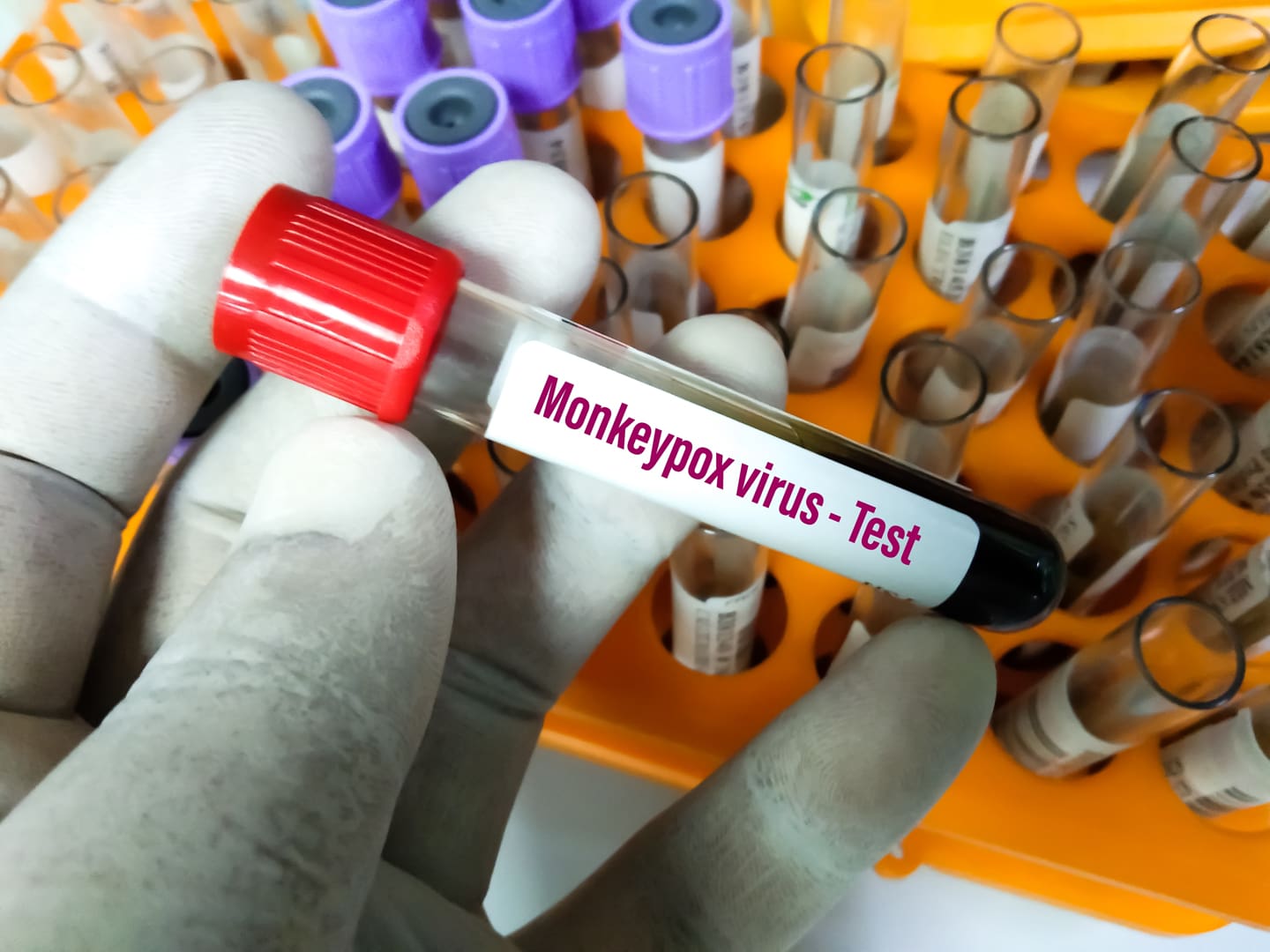 Photo: www.shutterstock.com, Arif biswas
when the virus was first identified as a cause of disease in humans. This rapid spread is what has kept scientists on high alert.
But monkeypox is not SARS-CoV-2, the coronavirus responsible for the COVID-19 pandemic, says Jay Hooper, a virologist at the US Army Medical Research Institute of Infectious Diseases in Fort Detrick, Maryland. It does not transmit from person to person as easily, and since it is related to the smallpox virus, there are already treatments and vaccines available to contain its spread. Therefore, while scientists are concerned — because any new viral behavior is worrisome — they are not in a panic.
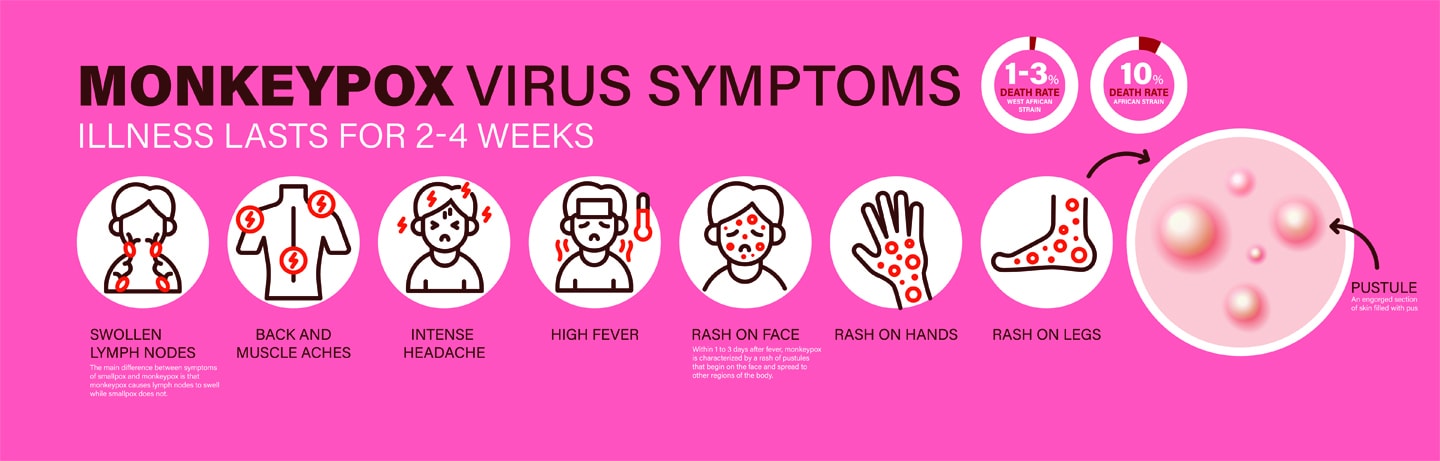
Unlike SARS-CoV-2, which spreads through tiny aerosolized droplets in the air, monkeypox is believed to spread through close contact with bodily fluids, such as saliva from a cough. This means that a person with monkeypox is likely to infect far fewer close contacts than someone with SARS-CoV-2, Hooper says. Both viruses can cause flu-like symptoms, but monkeypox also causes swollen lymph nodes and eventually distinct fluid-filled lesions on the face, hands, and feet. Most people recover from monkeypox within a few weeks without treatment.
On May 19, researchers in Portugal sent the first draft of the genome of the monkeypox virus detected there, but Gustavo Palacios, a virologist at the Icahn School of Medicine at Mount Sinai in New York, emphasizes that it is still a very early draft, and more work needs to be done before definitive conclusions can be drawn.
What researchers can infer from this preliminary genetic data is that the strain of the monkeypox virus found in Portugal is related to a viral strain predominantly found in West Africa. This strain causes milder disease and has a lower mortality rate — about 1% in poor rural populations — compared to the one circulating in Central Africa. But exactly how much the strain causing the current outbreaks differs from that of West Africa — and whether the cases emerging in various countries are linked to each other — remains unknown.
Answers to these questions could help researchers determine if the sudden increase in cases results from a mutation that allows monkeypox to transmit more easily than in the past, and whether each of the outbreaks traces back to a single origin, says Raina MacIntyre, an
 www.shutterstock.com, Dotted Yeti
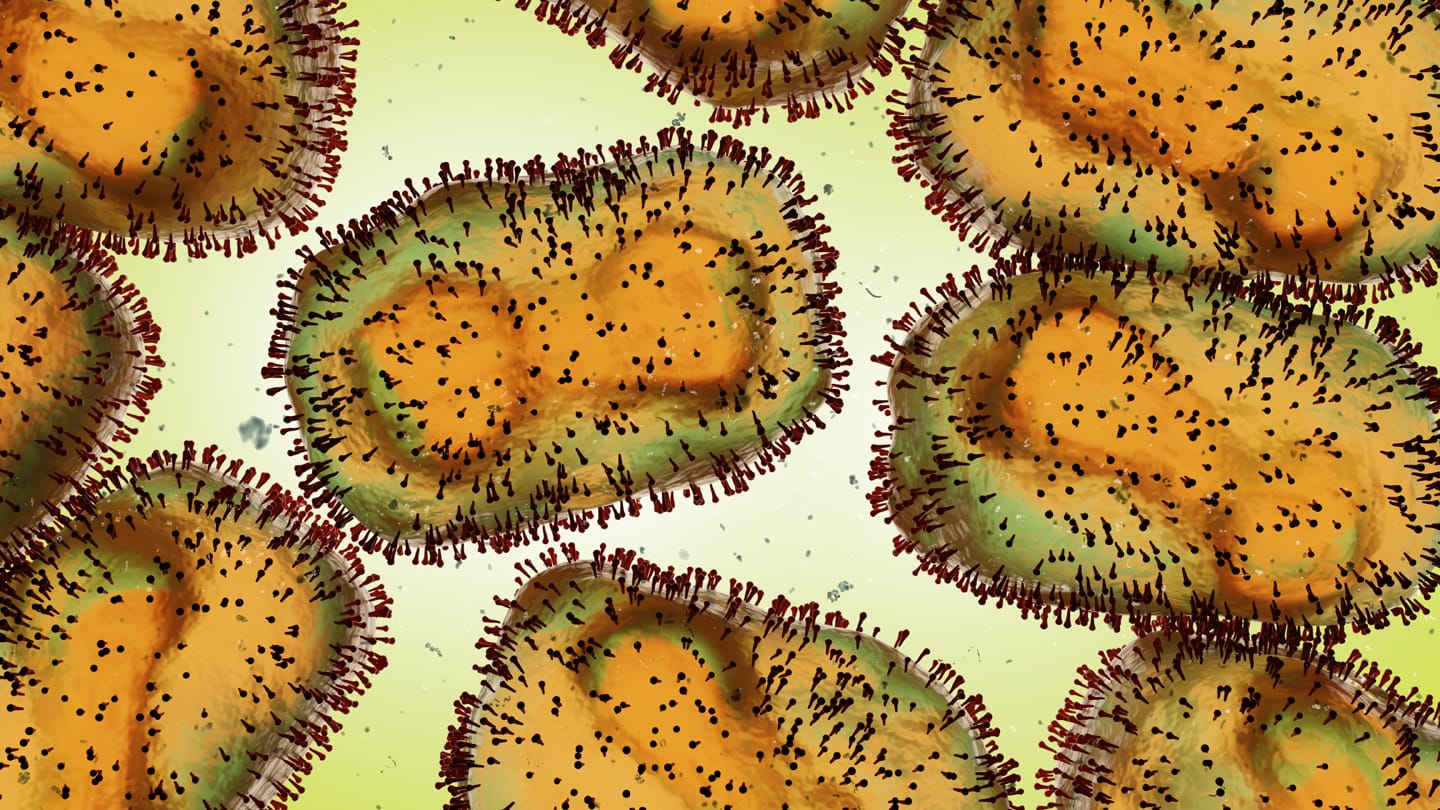
infectious disease epidemiologist at the University of New South Wales in Sydney, Australia. Unlike SARS-CoV-2, a rapidly evolving RNA virus whose variants regularly escape vaccine and previous infection immunity, monkeypox is caused by a relatively large DNA virus. DNA viruses are better at detecting and repairing mutations than RNA viruses, meaning it is unlikely that the monkeypox virus has suddenly mutated to become efficient at human-to-human transmission, MacIntyre says.
‘Concerning in Depth’
Still, the fact that monkeypox is being detected in people with no apparent connection to each other suggests that the virus may have spread silently — a fact that Andrea McCollum, an epidemiologist who leads the poxvirus team at the US Centers for Disease Control and Prevention in Atlanta, Georgia, calls “concerning in depth.”
Unlike SARS-CoV-2, which can spread without causing symptoms, monkeypox usually does not go unnoticed when it infects a person, partly because of the skin lesions it causes. If monkeypox could spread asymptomatically, it would be especially concerning, as it would make the virus harder to track, McCollum says.
Another puzzle is why almost all clusters of cases include men aged 20–50, many of whom are men who have sex with men (MSM). Although monkeypox is not known to be sexually transmitted, sexual activity certainly constitutes close contact, says Rimoin. The most likely explanation for this unexpected pattern of transmission, MacIntyre says, is that the virus was coincidentally introduced into an MSM community and continued circulating there. Scientists will have a better idea of the origin of the outbreaks and the risk factors for infection once an epidemiological investigation — which can take weeks and involves rigorous contact tracing — is complete.
Containment Strategies
Scientists have been monitoring monkeypox since the smallpox eradication campaign, a closely related virus, ended in the 1970s. Once smallpox ceased to be a threat thanks to vaccines worldwide, public health authorities stopped recommending smallpox vaccination — which also kept monkeypox under control. With each passing year since the eradication of smallpox, the population with weakened or absent immunity to these viruses has grown, MacIntyre says.
There have been some outbreaks of monkeypox since then. The Democratic Republic of the Congo, for example, has been dealing with the virus for decades, and Nigeria has faced a major outbreak, with over 500 suspected cases and more than 200 confirmed, since 2017, when the country reported its first case in about 40 years. The United States also reported an outbreak in 2003, when a shipment of rodents from Ghana spread the virus to pet prairie dogs in Illinois and infected more than 70 people.
 www.shutterstock.com,Pro_Vector
Public health authorities are not helpless against monkeypox. As a precaution against bioterrorism, countries like the United States maintain a stockpile of smallpox vaccines, as well as an antiviral treatment considered highly effective against the virus. However, therapies are unlikely to be used on a large scale to combat monkeypox, McCollum says. Healthcare professionals would likely instead use a method called ‘ring vaccination’ to contain the spread of the virus: this would vaccinate close contacts of people infected with monkeypox to cut off any transmission route.
Based on the data she has seen so far, McCollum believes the current outbreaks are unlikely to require containment strategies beyond ring vaccination. “Even in areas where monkeypox occurs every day,” she says, “it is still a relatively rare infection.”
Source: www.nature.com, by Max Kozlov