



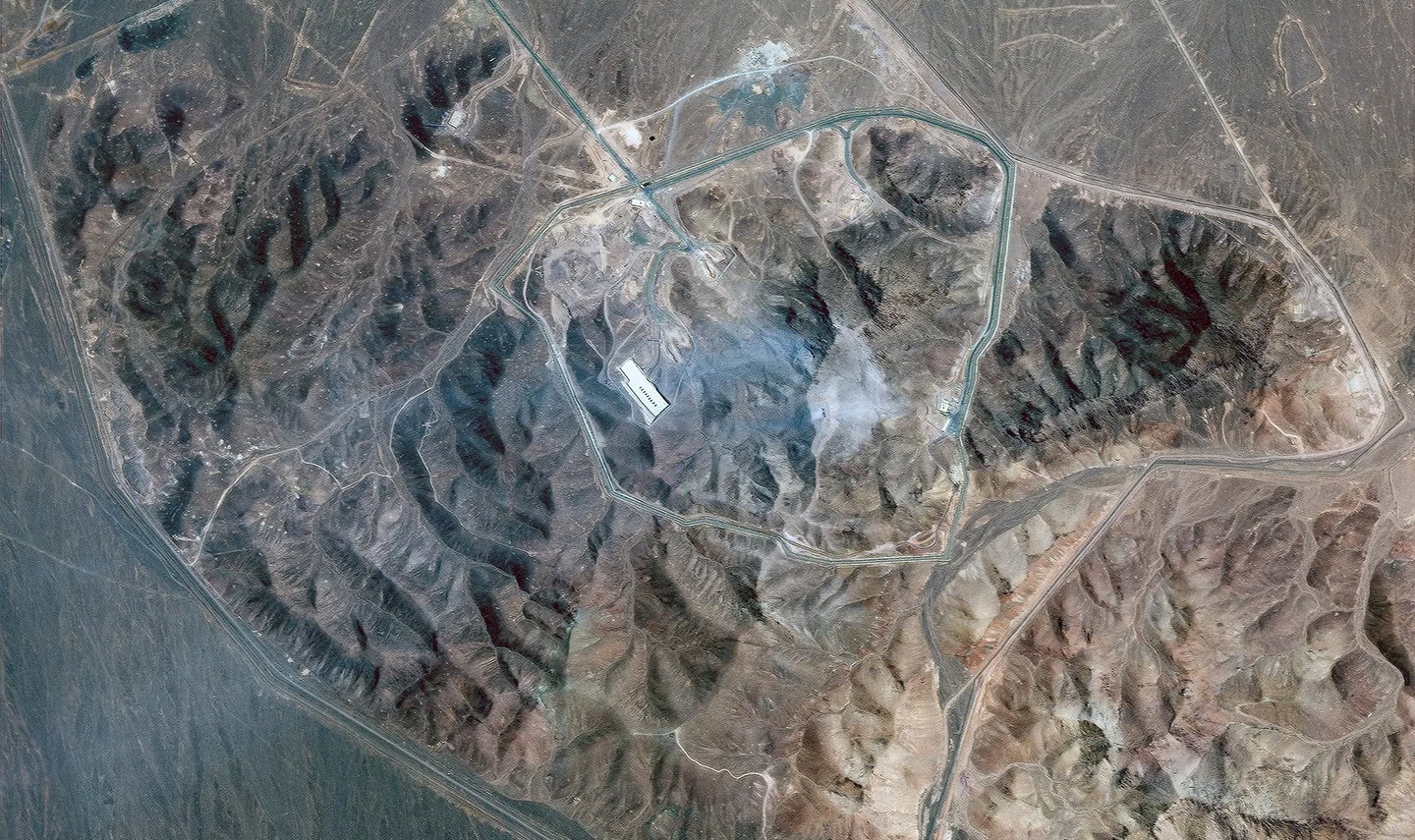
The Iranian government is assessing how to respond after the US military launched a series of coordinated airstrikes on Saturday against three Iranian nuclear facilities, in a major escalation of the ongoing conflict in the Middle East.
The strikes were intended to prevent Iran from developing a nuclear weapon, according to US officials. President Trump said in a Truth Social post on Saturday night that the American assault was “very successful”.
Early in June, Israel began bombing nuclear facilities and other sites across Iran. The two countries have been exchanging deadly strikes since then, and the US military helped intercept missiles and drones fired at Israel. But the US did not directly participate in the Israeli offensive until Saturday’s surprise attacks.
Iran’s Foreign Minister called the US military operation an “outrageous, serious, and unprecedented violation” of the UN Charter and international law.
Here’s what you need to know about the US attack on Iran and what might come next.
1. The US is now directly involved in another Middle East conflict
The mission, called “Operation Midnight Hammer”, began at midnight on Friday, when a group of stealth B-2 bombers took off from an Air Force base near Kansas City, Mo., according to General Dan Caine, Chairman of the Joint Chiefs of Staff, who briefed journalists on Sunday.
Some bombers flew west as decoys, while the other planes that would ultimately strike the Iranian nuclear sites flew east. Those B-2s dropped 14 bunker-buster bombs on multiple targets at the Fordo and Natanz sites between approximately 6:40 p.m. and 7:05 p.m. ET.
Bunker-buster bombs describe a type of munition that can penetrate deep into the ground before exploding and are designed to strike fortified underground targets.
Around 5 p.m. ET on Saturday, just as the bombers entered Iranian airspace, a submarine launched more than two dozen Tomahawk missiles at the Isfahan nuclear site.
The mission involved more than 125 aircraft and resulted in 75 precision-guided weapons being launched at the three sites, officials said. And they emphasized that this attack was against Iran’s nuclear program, not its military or people.
2. Iran warns that the US is responsible for “dangerous consequences”
Iran’s Foreign Minister, Abbas Araghchi, denounced the attacks during a press conference in Istanbul on Sunday, calling them a violation of the law. “The warmongering and lawless administration in Washington is solely and fully responsible for the dangerous consequences and far-reaching implications of its act of aggression,” he said.
Araghchi added that Iran “reserves all options to defend its security interests and its people,” but did not specify what the country’s response would be.
Several high-ranking Israeli politicians welcomed the attacks. Israeli Prime Minister Benjamin Netanyahu thanked Trump in a video message, while Yair Lapid, the opposition leader in the Knesset, said that Trump and the US military “made the world a safer place”.
There was a muted response from several European leaders, who continued to urge diplomacy between Iran, Israel, and the US.
UK Prime Minister Keir Starmer said that Iran “must never be allowed to develop a nuclear weapon” and urged the country to continue negotiating.
But UN Secretary-General António Guterres said he was “gravely alarmed” by the US use of force, calling the US attacks “a dangerous escalation in a region already on the brink of the abyss – and a direct threat to international peace and security”.
Russia’s Foreign Ministry also condemned the attack, calling it “irresponsible” and a “grave violation of international law”.
3. Republicans largely supported Trump’s action, while many Democrats were skeptical
Back in the US, top congressional Republicans expressed support for the military operation. House Speaker Mike Johnson said that Trump “made the right decision and did what needed to be done”, while Senate Majority Leader John Thune said Iran had “rejected all diplomatic paths to peace”.
However, many Democrats accused Trump of circumventing the Constitution by ordering the military to attack Iran without first seeking congressional approval.
Rep. Jim Himes of Connecticut, the top Democrat on the House Intelligence Committee, called the strike “a clear violation of the Constitution, which explicitly grants Congress the power to declare war”.
Sen. Mark Kelly, D-Ariz., said on Meet the Press that Iran did not pose an imminent threat to the US before the attack. “I would say that when there is a clear and imminent threat to American citizens, to the United States, to the homeland, the commander-in-chief has the right to act,” he said.
“It wasn’t the case here, and I think certainly for the 40,000 troops in at least six countries in the Middle East — we have many bases in the Middle East — those troops are now at greater risk,” Kelly added.
While the reaction among politicians largely fell along party lines, it wasn’t exclusive. Rep. Thomas Massie, R-Ky., said Congress “has the exclusive authority to authorize war” and should have been called back from recess before the attack.
4. Trump floats the idea of regime change
The Trump administration continues to try to figure out exactly how effective its strike was in degrading Iran’s ability to build a nuclear weapon.
“The final battle damage assessment will take some time,” Caine said, “but initial battle damage assessments indicate that the three sites suffered extremely severe damage and destruction”.
The International Atomic Energy Agency confirmed on Sunday that all three sites — Fordo, Isfahan, and Natanz — were hit in the attack. The extent of damage to the underground Fordo site was “not immediately possible to assess,” the agency said, adding that Natanz and Isfahan suffered additional damage from US bombings after having been previously hit by Israeli forces.
Two independent experts who analyzed commercial satellite images told NPR that the nation’s long-standing nuclear endeavor is far from destroyed, adding that Iran likely still has stocks of highly enriched uranium.
The IAEA also said that Iranian authorities did not report an increase in radiation outside the site after Saturday’s bombings, and no health impacts on people outside the three sites were expected.
Another open question is whether Iran will retaliate against the US in response to the attack — and what form that retaliation would take.
In a Truth Social post on Sunday afternoon, Trump floated the possibility of regime change in Iran. “It is not politically correct to use the term ‘Regime Change’, but if the current Iranian Regime is incapable of MAKE IRAN GREAT AGAIN, why wouldn’t there be a regime change??? MIGA!!!”
Source: npr.org