



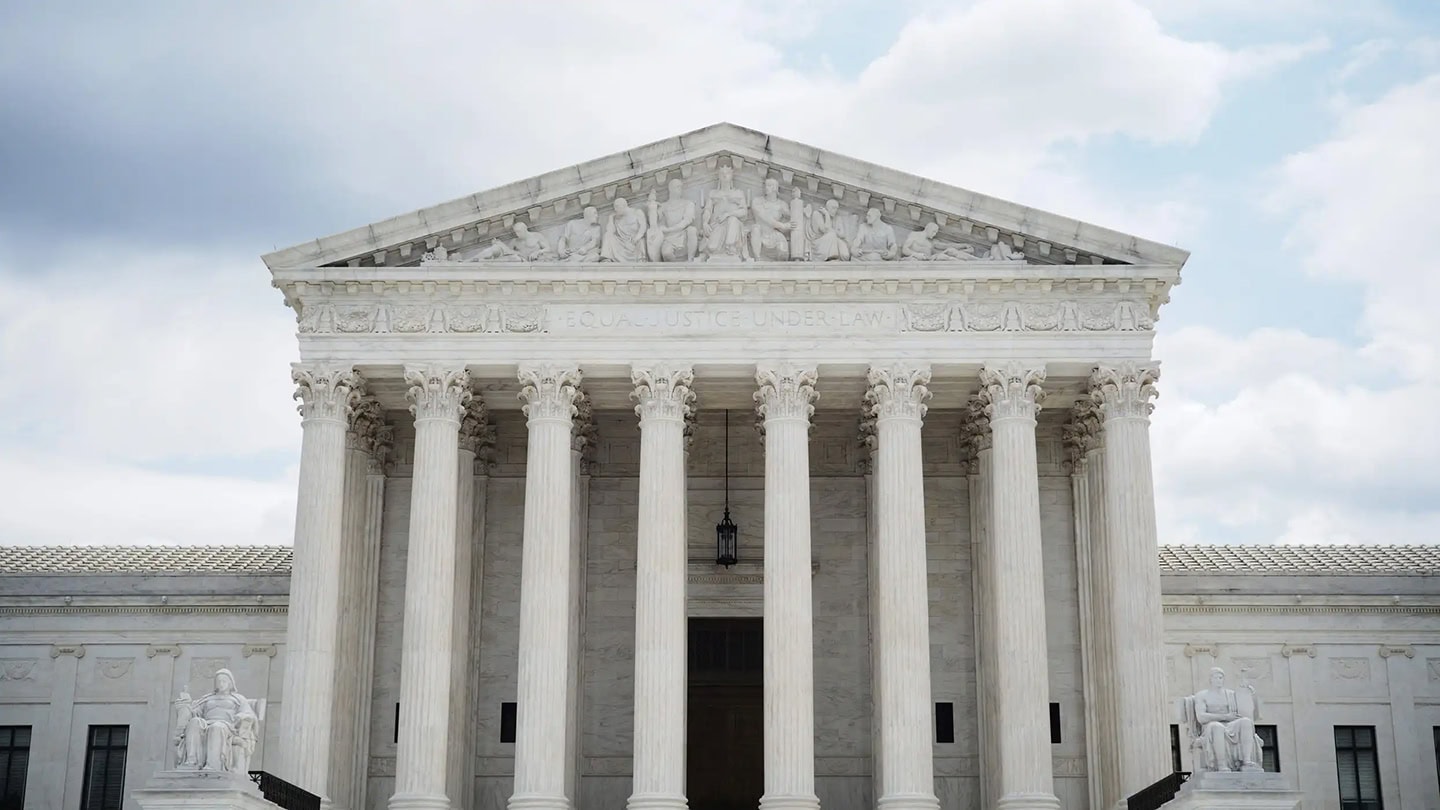
The Supreme Court hears arguments on Monday in an important gun case that has united a series of unlikely allies, from conservative gun rights groups to liberal civil liberties groups. At issue is a federal law that makes it a crime for drug users to possess firearms. It is the same law used to prosecute then-President Joe Biden’s son for illegal gun possession — except in this case it involves marijuana use and gun possession.
The briefs in the case present diametrically opposed versions of the facts. On one side, the Trump administration portrays Ali Danial Hemani as a drug trafficker, someone with terrorist ties and a habit of using marijuana. Importantly, however, he is not being prosecuted for any of those offenses. Instead, the government charged Hemani with violating a federal gun law that prohibits drug addicts from possessing firearms, a crime punishable by up to 15 years in prison.
The U.S. Court of Appeals for the 5th Circuit overturned the charge, declaring that the federal law violates Hemani’s Second Amendment right to possess a gun.
The Department of Justice appealed to the Supreme Court, arguing that since Hemani admitted to FBI agents that he used marijuana several times a week, he is a “persistent” drug user, making it illegal to possess the gun he legally purchased and keeps securely in his home.
Hemani’s attorney, City University of New York law professor Naz Ahmad, paints a very different picture of her client. Hemani, she notes, was born and raised in Texas, “went to high school there, played on the high school football team, attended the University of Texas at Arlington, was an honors student there” and is “a really valued member of his local religious community.”
“The Second Amendment does not support disarming and prosecuting someone for mere possession of a firearm if they happen to use marijuana occasionally,” she says.
“It’s an inconsistency,” she adds, especially at a time when 40 states, to a greater or lesser degree, have legalized marijuana use.
If the court rules against Hemani, she says, “the statute could apply to anyone. It could apply to someone who uses a marijuana gummy to sleep.”
Trump administration defender, Acting Solicitor General D. John Sauer, acknowledges that under the Supreme Court’s historic gun decision four years ago, the government has a heavy burden to show that modern gun laws are analogous to laws in effect at the nation’s founding. But he argues that the statute used to prosecute Hemani is justified and analogous to founding-era laws and practices.
Specifically, in his brief to the Supreme Court, Sauer points to the severe punishments imposed in the founding era on “habitual drinkers.” And he argues that both Congress and the states have restricted gun possession by illegal drug users “for as long as this social ill has afflicted America.”
That said, for the most part, the case appears to have united groups from left to right, from civil liberties organizations to gun rights advocates.
“It’s outrageous that they tried to get him on a gun charge related to marijuana,” says Aidan Johnston, federal affairs director of Gun Owners of America. He argues that the government seeks to criminalize conduct that was widely tolerated at the founding.
“It was the universal custom of founding-era militias to consume alcoholic beverages,” he notes, adding that Thomas Jefferson and other famous Americans “owned guns while being drug users ranging from opium to cocaine.”
At the opposite end of the ideological spectrum are several gun safety groups that fear if Hemani wins his case, it could open a loophole in the current national background check system.
Under the current system, dealers are required to first approve the sale by submitting the buyer’s name to the FBI’s National Instant Criminal Background Check System. The problem is that there is a very small window to complete the check — just three days. And gun safety groups say anything that makes the rules more complicated and uncertain could really mess up the system.
“We’re telling” the court, “whatever you do, it’s essential to keep the rules clear so that, in that short window, federal agencies can give a quick response to dealers,” says Douglas Letter of the Brady Center to Prevent Gun Violence.
An adverse decision, he says, would mess up the criminal background check process. That, in turn, would result in “so many, particularly women and children, who will die if this kind of system is not in place.”
A decision in the case is expected by summer.
Source: npr.org