



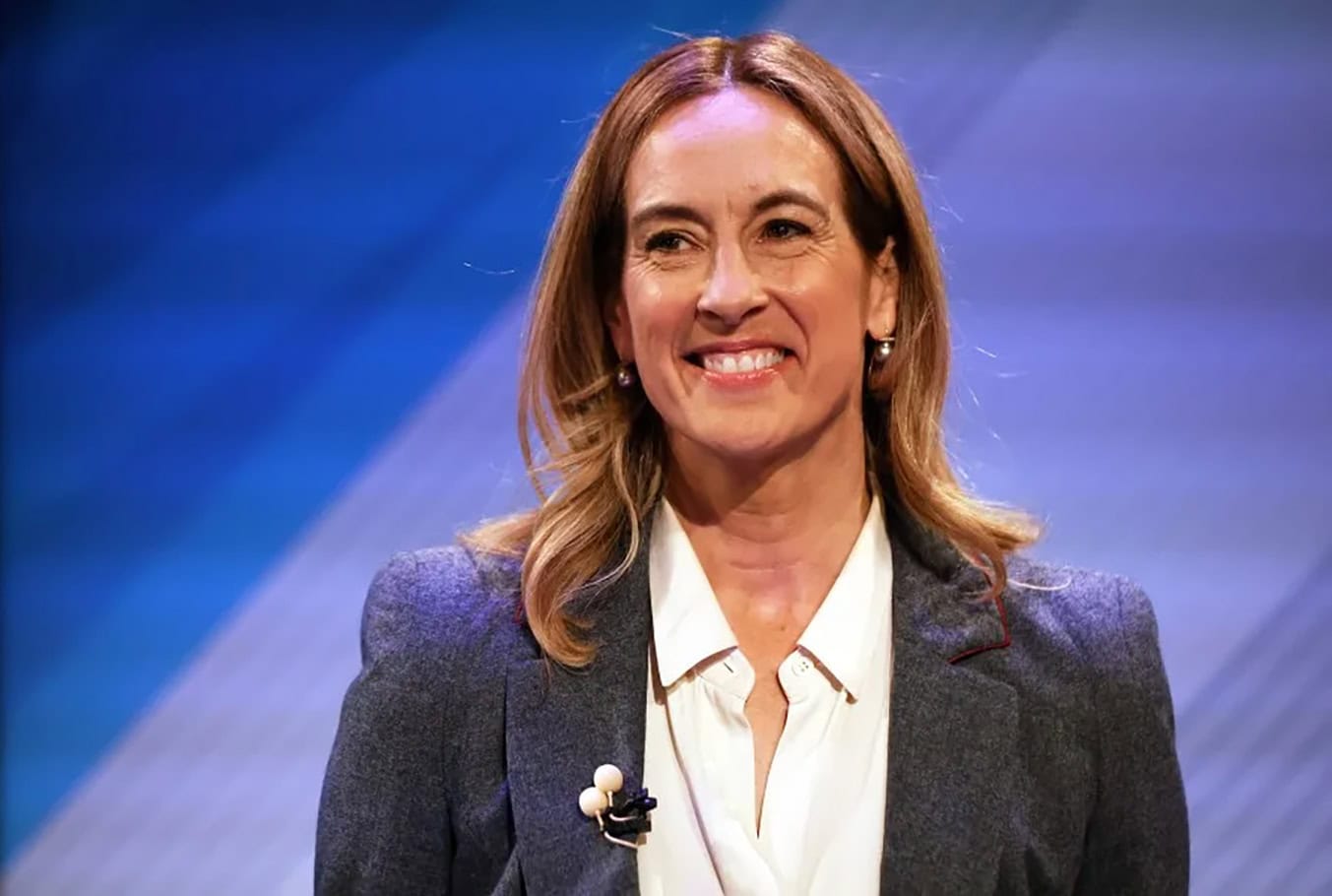
Democratic Rep. Mikie Sherrill defeated former Republican state Assemblyman Jack Ciattarelli, according to the Associated Press victory projection, capping a closely watched gubernatorial election that some polls had predicted as unpredictable.
Sherrill’s victory marks the first time since the 1960s that New Jersey voters have elected a governor from the same party for three consecutive terms. Her win is also the second major Democratic victory on Tuesday, following Abigail Spanberger’s victory for governor of Virginia.
The race was one of the first statewide elections since President Trump began his second term. Trump endorsed Ciattarelli in May, ahead of the Republican primaries.
The tight contest surprised some in the traditionally Democratic state, which has had a Democratic governor for eight years and a legislature controlled by Democrats for even longer.
But the prospect of the state government flipping to a Republican — coupled with the statewide election being viewed as a bellwether for public opinion on Trump’s second term — thrust the race into the national spotlight and drew nearly $200 million in spending.
Trump endorsed Ciattarelli early in the year, saying that after Ciattarelli came to “know and understand the MAGA,” he was “ALL IN, and now 100% (PLUS!).” Ciattarelli had previously criticized the president. Meanwhile, former President Obama endorsed Sherrill in an online video message and later joined her on the campaign trail.
Sherrill, also a former federal prosecutor and lawyer, entered politics less than a decade ago, when she was elected to Congress in 2018. This was the third time Ciattarelli, a former CPA and small business owner, ran for governor.
But although Democrats hold an edge over Republicans in voter registration, New Jersey residents have elected governors from both parties.
“As Democratic as New Jersey may be in presidential and U.S. Senate elections too, the state is decidedly purple when it comes to gubernatorial races,” said Ben Dworkin, director of the Rowan Institute for Public Policy & Citizenship at Rowan University, to NPR in October.
Affordability has perhaps been the most prominent campaign theme. Both candidates decried the state’s high cost of living and soaring energy prices, with Ciattarelli vowing to reduce New Jersey’s high property taxes and Sherrill promising to freeze electricity bills.
But in the campaign’s final weeks, the campaigns traded personal attacks. Ciattarelli repeatedly questioned Sherrill’s involvement in a 1994 Naval Academy cheating scandal. She said she was barred from the graduation for refusing to rat out her classmates and criticized the Trump administration for releasing her largely unredacted military records to a Ciattarelli campaign ally.
In response, Sherrill accused Ciattarelli’s former publishing company of producing materials that minimized the dangers of opioids, stating in one of their televised debates that her opponent was responsible for the deaths of tens of thousands of people in New Jersey. Ciattarelli called Sherrill a liar and threatened to sue her for defamation.
Source: npr.org by Joe Hernandez