



Ozzy Osbourne, the influential and down-to-earth singer who became known as the Prince of Darkness, died in Birmingham, England, according to a statement from his family.
That statement, attributed to his wife, Sharon Osbourne, and his children Jack, Kelly, Aimee, and Louis, says: “It is with more sadness than mere words can convey that we must report that our beloved Ozzy Osbourne passed away this morning. He was with family and surrounded by love. We ask everyone to respect our family’s privacy at this time.”
Ozzy Osbourne was born John Michael Osbourne on December 3, 1948, son of John “Jack” Thomas Osbourne and Lillian Osbourne (née Unitt), the fourth of six children. The Osbournes lived at 14 Lodge Road, in the Aston area of Birmingham, UK, where Ozzy would remain for some time, including while pursuing a career as a rock and roll singer.
Once he became a star, he remained associated with the city and returned frequently. He played a highly acclaimed final show with Black Sabbath, one of the most influential 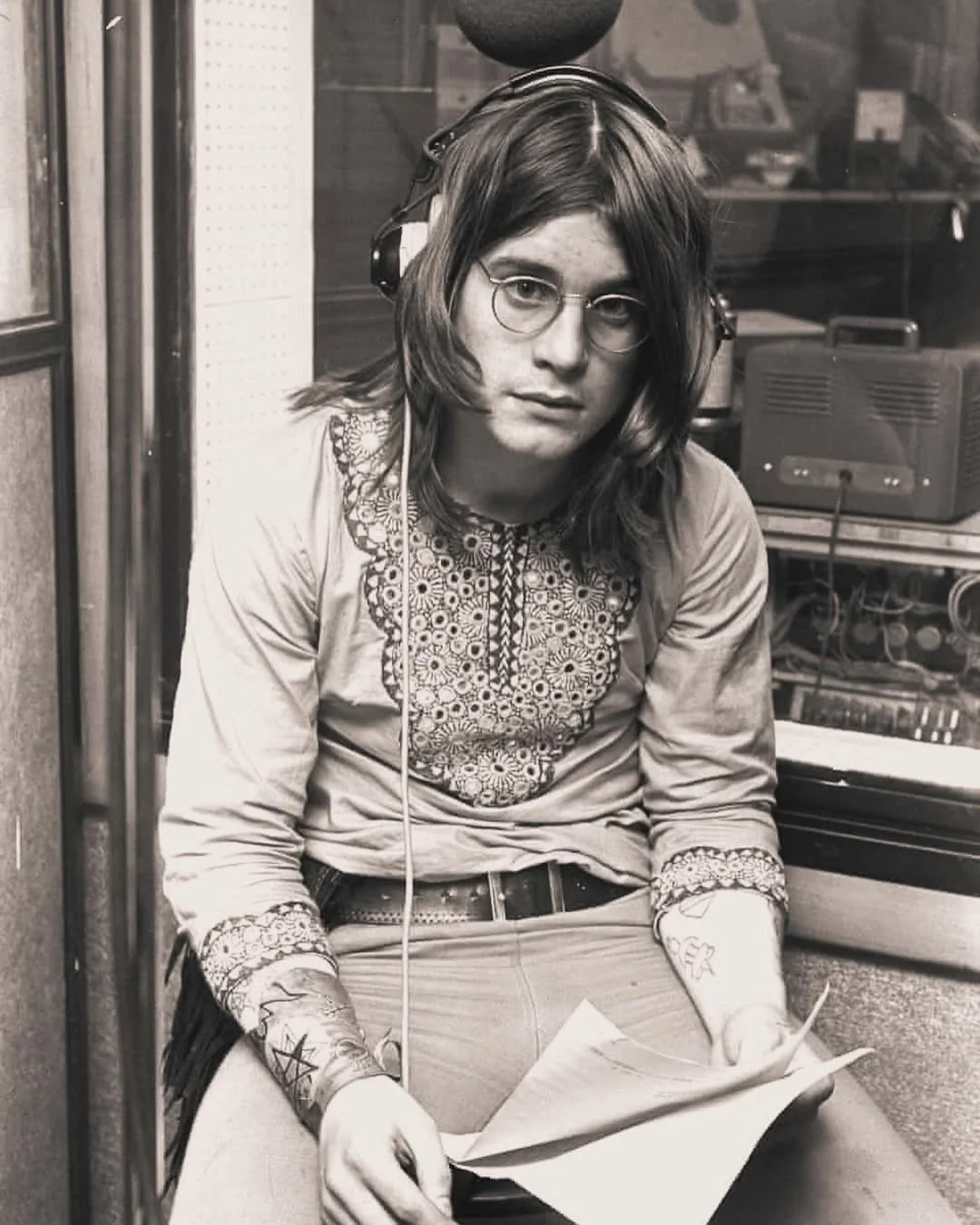 bands in hard rock and heavy metal, in Birmingham just 17 days ago, on July 5.
England’s second-largest city, Birmingham was still dotted with World War II rubble when Osbourne was growing up there; the city was targeted by German bombers due to its importance as a weapons manufacturing center.
By his own admission, he was a terrible student — largely due to his dyslexia and attention deficit hyperactivity disorder, which were only diagnosed when he was in his 30s — and left school at 15. But not before being mildly bullied by, among others, including a teacher, his future bandmate Tony Iommi, who was a year ahead of him. Iommi “may have kicked me in the balls a few times and given me some shit, but nothing more than that,” Osbourne wrote in his autobiography, I Am Ozzy. It was around this time that he himself applied his famous tattoo on his knuckles, which spelled OZZY on the fingers of his left hand, and two smiling faces on his knees, which he said brought him joy while sitting on the toilet.
After his ignominious exit from school, Osbourne seemed to have little future beyond manual labor, though it later became clear that “rock star” may have been the only viable career path for him. The “class clown,” as Iommi described him in his own autobiography, was fired from several jobs in quick succession.
After 18 months working in a slaughterhouse — after failing at several other professions — Osbourne was fired for beating a coworker until he bled with a metal bar. The firing led Osbourne to a short-lived and unlucky criminal career, during which he accidentally stole baby clothes (it was nighttime and he couldn’t see well); a television, which he had to leave behind after it fell on him mid-burglary; and finally, while stealing some shirts, Osbourne wore gloves that didn’t cover his thumb, leaving fingerprints all over the scene and leading the police to his door. (“Not exactly Einstein, is he,” he recalls them saying.) He received a three-month prison sentence and was sent to HM Prison Birmingham, known as Winson Green, where he spent six weeks. (Twenty-something years later, 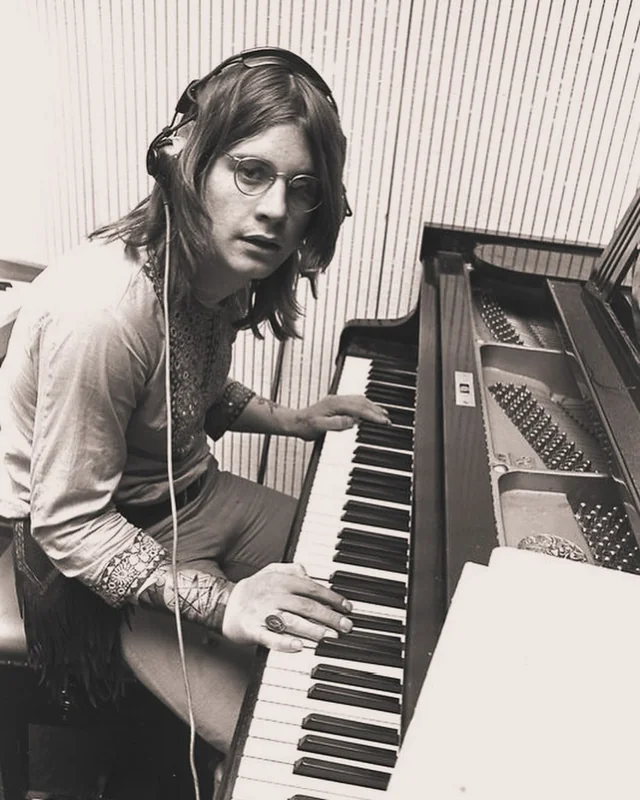 Osbourne’s “last good memory of the 80s” would be playing a show at the same prison.)
After his release, Osbourne’s father — despite money being scarce his whole life — took out a loan to buy his son a PA, the only equipment needed for aspiring rock singers at the time. Then Ozzy placed an ad — “OZZY ZIG NEEDS GIG” — in the window of a local music shop. “One day, I thought,” Osbourne wrote, “people might write newspaper articles about my ad in the Ringway Music window, saying it was the turning point in the life of John Michael Osbourne, ex-car horn tuner.”
The ad brought guitarist and night owl Geezer Butler to his door, starting a brief attempt to form a band — Rare Breed — that came to nothing, but gave Osbourne his first taste of performing. The pair, now friends, went their separate ways a few months later. But, fortuitously, the ad also brought a former acquaintance of Osbourne to his door: guitarist Tony Iommi, accompanied by drummer Bill Ward, both recent failures in England’s relatively vibrant rock touring circuit. (Iommi’s previous band, Mythology, was forced to disband due to a marijuana bust at their hotel during a tour, making them almost impossible to book at the time.)
Iommi was initially dismissive of Ozzy, but the four ended up rehearsing together. Despite the theatrical malevolence for which they would become known, the group first called itself something much more innocuous: the Polka Tulk Blues Band, with singer Ozzy Osbourne, guitarist Tony Iommi, bassist Geezer Butler, drummer Bill Ward, saxophonist Alan Clark, and slide guitarist Jimmy Philips.
The group’s first show was on August 24, 1968, at the County Hall Ballroom in Carlisle, in the northwest of the country. Immediately after, Clark and Philips left, as did the band name (which Ozzy invented after seeing it on a talcum powder jar from his mother). The four were now known, simply, as Earth. But just as they were gaining momentum with tours, Iommi left to join the big band Jethro Tull as their new guitarist.
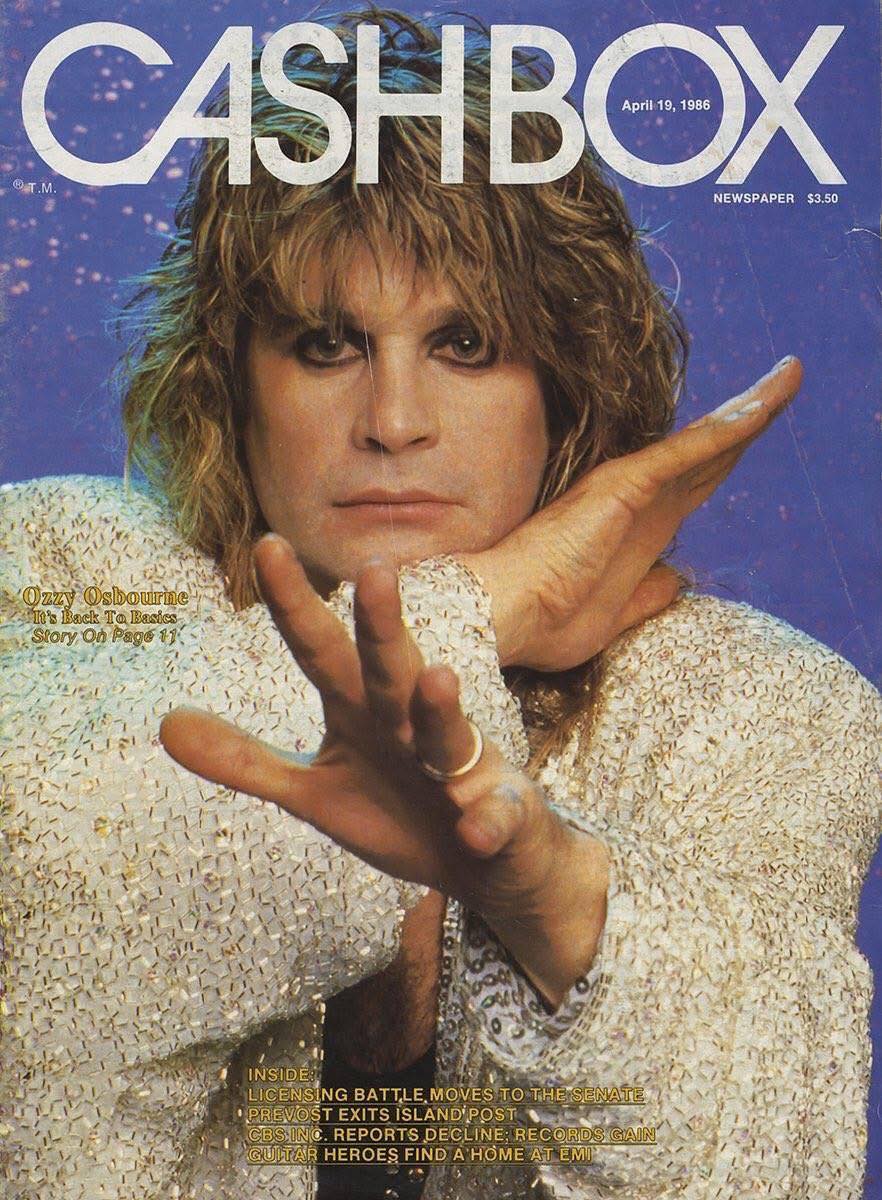 After Iommi returned to Birmingham and his bandmates, Earth redoubled their efforts, inspired by the professionalism Iommi saw during his brief stint with Jethro Tull. They also decided on a new, darker direction. The first fruits of the change would end up being eponymous — but “Black Sabbath” was a song before it was a band, and a horror movie before it was a song, though Osbourne didn’t know at the time (he suspected that Butler, who came up with the song title, had never seen the movie).
Signed by their first manager, Jim Simpson, the four spent virtually all of 1969 touring — including a residency in Hamburg at the Star Club, the same place where Osbourne’s beloved Beatles honed their skills. The group, now officially Black Sabbath, signed a recording contract in early 1970 with Vertigo, a Philips label.
Black Sabbath’s first eponymous album, which they recorded basically by playing a quick live set, was released on February 13, 1970 (a Friday, of course). It was an unexpected and overwhelming success, entering the UK charts the following month and reaching the top 10 in July.
Black Sabbath’s vaguely occult presentation was entirely superficial, but against the backdrop of the Manson murders and the disintegration of the utopian 60s, the band’s overloaded and electrified version of the blues, its blackened psychedelia, and vaguely political appeals made the image stick. (Perhaps too much; Black Sabbath would end up being celebrated by satanic leader Anton LaVey at a parade in San Francisco. “At one point we were invited by a group of satanists to play at Stonehenge. We told them f*** off, so they said they would put a curse on us,” Osbourne wrote. “What a load of shit that was.”) “The good thing about all this satanic stuff was that it gave us infinite free publicity,” Osbourne recalled in his book. “People couldn’t get enough. On the first day of release, Black Sabbath sold five thousand copies, and by the end of the year it was on track to sell a million worldwide.”
But it didn’t stick for everyone — the album was almost universally panned by critics (“the album has nothing to do with spiritualism, occultism, or anything except rigid recitations of Cream clichés,” wrote Rolling Stone) and was practically ignored by radio DJs at the time (except the legendary John Peel, a friend of Jim Simpson, who booked them for one of his historic sessions, though off-air). In any case, that year they performed on Top of the Pops, which Osbourne watched religiously with his family at home while growing up. He was 21.
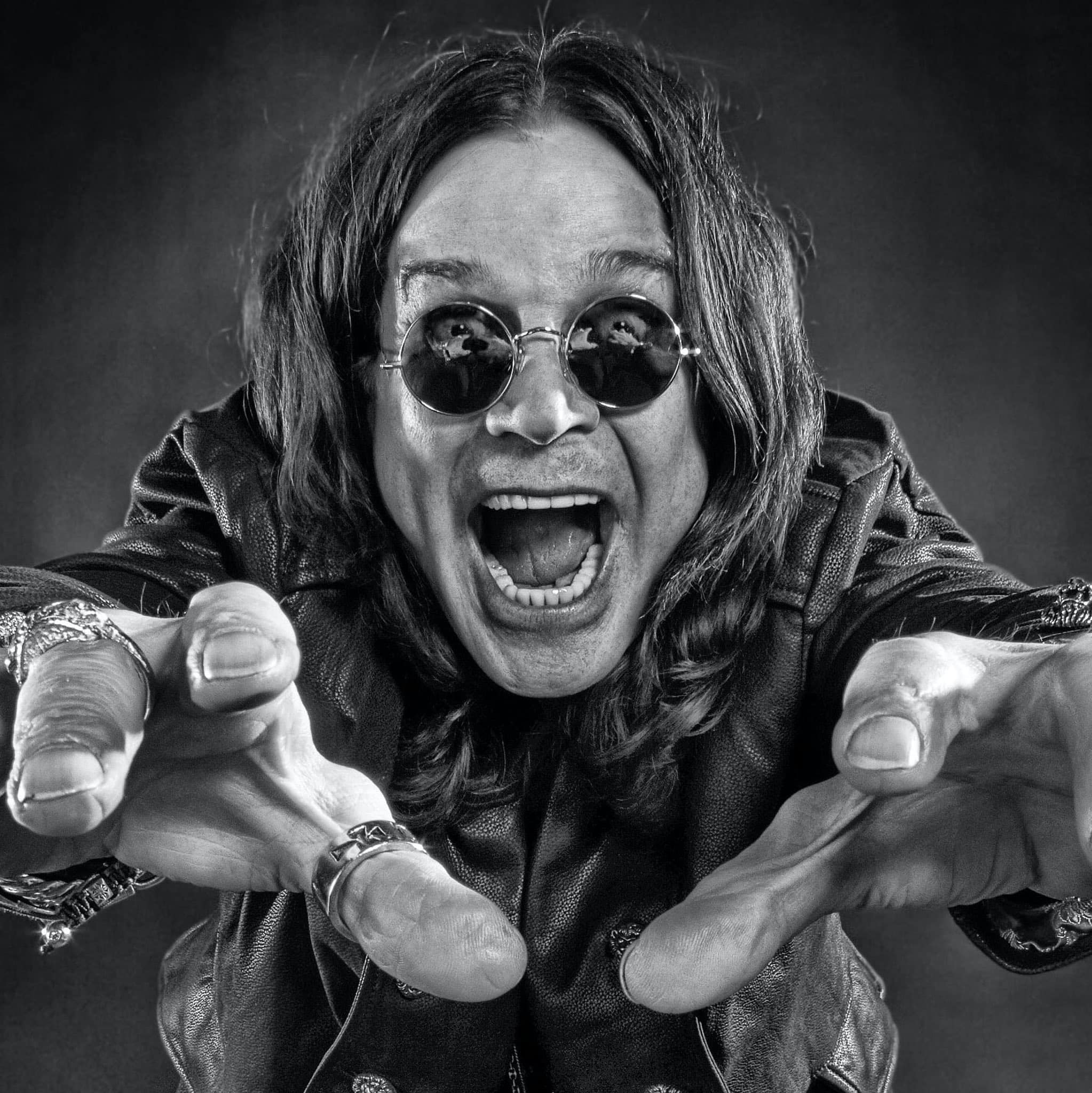 The group already had Paranoid, their indelible follow-up — which contains several canonical rock songs, like “War Pigs / Luke’s Wall,” its title track, and “Iron Man” — written and nearly ready when Black Sabbath peaked on the UK charts. Paranoid was released later in 1970; solidifying the rise of Osbourne, Iommi, Butler, and Ward. After a management change that the group later regretted — hiring Patrick Meehan, who turned out to be “taking almost everything” and for whom they would name the album Sabotage — Black Sabbath was on its way.
The four’s initial rapid success was the spark that ignited a decade of dizzying excess — for which Osbourne, it became evident, was genetically predisposed to endure. But by the end of the 70s, the four barely spoke to each other.
Osbourne’s pursuit of a solo career, aided by his future wife and manager Sharon Osbourne, still Arden at the time — daughter of the well-known executive who first signed Black Sabbath — began in 1980 with the release of Blizzard of Ozz. The album was largely co-written by Osbourne, guitarist Randy Rhoads, and bassist Bob Daisley. Rhoads, whose short career is considered extremely influential in metal sound, died in a plane crash in 1982 while touring with Osbourne. In 1986, Daisley and drummer Lee Kerslake successfully sued for songwriting credits on the album.
Ozzy On His Own
While the rest of the band may have had more musical technique, what Osbourne brought to the table was his stage charisma. “Ozzy was a wild man,” said press officer and journalist Mick Wall, who wrote Black Sabbath: Symptom of the Universe. “He left it all on stage, put everything into it.”
He lived that way off stage too. The band’s initial rapid success was the spark that ignited a decade of dizzying excess — for which Osbourne seemed predisposed. His drug and alcohol use was a burden on the band, and by the end of the decade the four barely spoke. The breaking point came when, after a days-long bender, Osbourne passed out in the wrong room and missed a show. In 1979 he was fired from Black Sabbath.
But it didn’t take long for him to find a young American guitar virtuoso named Randy Rhoads, and start working on a solo project. Their first album together was titled Blizzard of Ozz — a sort of pun on The Wizard of Oz and cocaine. The album did well in England, but the band struggled to break through in the US, despite the record containing possibly his most recognizable solo song, “Crazy Train.” Fortunately, he now had a manager who knew exactly how to push the public’s buttons to draw attention to the band: his future wife Sharon Osbourne.
The two were starting a romantic relationship, and at the same time, Sharon was setting up stunts for Ozzy to get more attention.
“At this stage, Sharon is secretly organizing protests outside his shows, because that generates all this publicity,” said journalist Wall. “All of this is fanning the flames, which is boosting album sales and turning him into a big star.”
Osbourne quickly became known for his old rock star wild antics. Some of those stunts (biting the head off a dove) were planned. Others (biting the head off a bat) were not. But they became part of his identity — something that, to Osbourne’s irritation, journalists would hound him about for the rest of his life.
In 1982, Osbourne was touring the US with his second solo album, Diary of a Madman. Osbourne was sleeping on the tour bus when it stopped at an airfield to fix something wrong with the air conditioning. There, the bus driver convinced Rhoads and makeup artist Rachel Youngblood to take a plane ride with him, promising no funny business. But while trying to buzz the tour bus, the plane clipped the bus and crashed. The driver, Rhoads, and Youngblood died.
In his autobiography, Osbourne described that moment with a mix of confusion, anger, and sadness. But he and Sharon decided to continue the tour. Osbourne even fulfilled his commitment to appear on Late Night with David Letterman, where he explained: “I’m going to carry on because Randy would want me to carry on, and Rachel too. And I’m not going to stop because you can’t kill rock and roll.”
The Osbournes
Soon after the plane crash, Ozzy and Sharon Osbourne married, and later had three children. They would later recount fights intensified by alcohol and drugs. As a father, Osbourne could be fun and adorable, until he got drunk enough to become scary and irritable. In one incident, he tried to kill his wife in a drunken delirium.
“He lunged at me,” Sharon Osbourne told 60 Minutes Australia. “And threw me to the ground and started strangling me.”
He eventually did a long stint in rehab, though he continued to have an intermittent relationship with sobriety. But the family managed to calm things down enough to invite cameras into the home and film The Osbournes. The show was a hit. Premiering on MTV in 2002, and co-produced by Sharon Osbourne, it paved the way for much of the reality TV that would follow (there’s a straight line from The Osbournes to the Kardashian empire).
The Osbournes followed Ozzy, Sharon, Kelly, and Jack (eldest daughter Aimee refused to be filmed) in their daily habitat — Ozzy struggling with the TV, Kelly and Jack bickering, Sharon trying to keep everyone in line. The show softened Ozzy Osbourne’s image enough that it wasn’t a complete shock when he was invited to the 2002 White House Correspondents’ Dinner and received a special mention from President George W. Bush.
The wave of mainstream TV fame affected him. That same night at the White House Correspondents’ Dinner, he started drinking after a long period of sobriety. And seeing his image constantly forced him to confront some things about his health. He developed a stutter. His tremors worsened. In 2020, Osbourne revealed to Good Morning America that he had Parkinson’s disease, after years of rumors about his medical condition. “Hiding something inside for a while is hard,” he said. “Because you never feel good. You feel guilty.”
While the show came and went, Osbourne never lost his ties to the music world he came from. He released solo albums at a steady pace, and he (along with Sharon, of course) organized Ozzfest — an annual music festival dedicated to the kinds of bands that cited Osbourne as a primary influence: Slipknot, Slayer, Tool, and more. It’s a long list of bands — and, perhaps, the most concrete example of Ozzy Osbourne’s legacy.
Source: npr.org by Andrew Flanagan, Andrew Limbong