



The world is racing against time to confront the effects of the climate crisis, according to the latest United Nations climate report*. But not everything is doom and gloom. Experts say there is still time to make a difference.
“We know the status quo is not good enough,” said Special Presidential Envoy for Climate John Kerry on April 14*. “We know we have to do more and do it faster.”
While governments play the role of leaders, ordinary citizens can help reach a solution. Here are eight changes people can consider in their daily lives. Not every change works for everyone, but anything, no matter how small, helps!
Consume Sustainable Foods
Experts agree* that replacing one meat meal with a vegetarian one each week avoids the emission of 3.6kg of carbon per person.
The UN estimates* that one-third of all food produced around the world is never consumed, and 11% of the contents of a typical family’s refrigerator is discarded. Food waste can be reduced by planning meals ahead of time.
And if you have the opportunity, don’t forget to compost fruit and vegetable scraps. Food waste — like fruits and vegetables thrown away
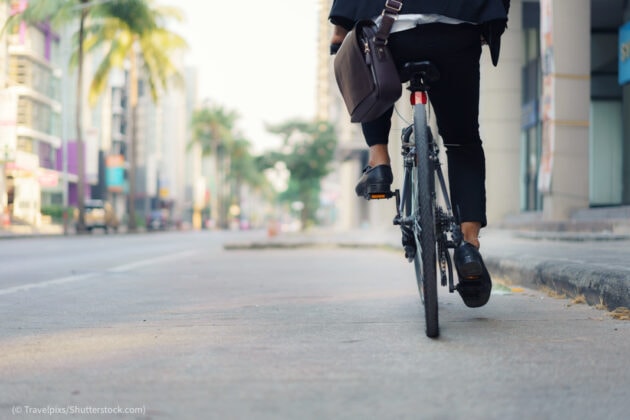 Photo: Travelpixs/www.shutterstock.com
in the trash — accounts for 8% of carbon emissions* annually as well.
Learn How to Dispose of Waste Better
In addition to food waste, learning how and what to recycle can minimize plastic waste pollution in the environment and reduce the production of virgin plastic, that is, non-recycled, a major source of greenhouse gas emissions.
Annually, the world produces about 400 million tons of plastic waste*. Only 10% is recycled.
If your community publishes a recycling guide, learn to identify what goes in the trash and what should be recycled — and make sure that recyclable waste is clean or properly prepared. If it can be composted, even better!
Shop Sustainably
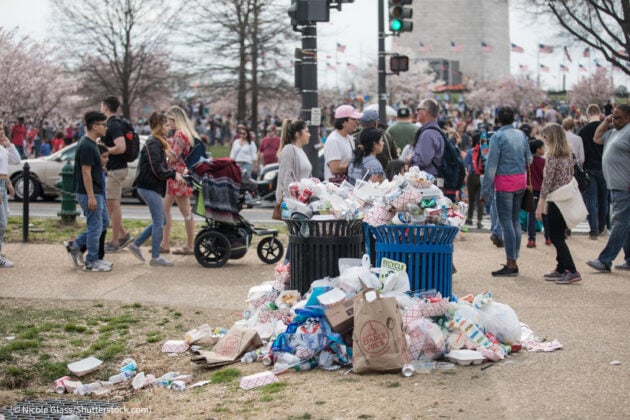 Trash overflows from trash cans on the National Mall in Washington during the Annual Cherry Blossom Festival in 2019 (photo: Nicole Glass/www.shutterstock.com)
Reusing or repurposing older materials reduces the need to acquire new materials.
Buying vintage clothing instead of new clothes is one way. You can read used copies of your favorite novel just as well as new ones.
Look for products in easily recyclable glass containers instead of plastic containers, and replace disposable plastic bags with canvas or reusable bags at the supermarket.
Consider Using Solar or Wind Energy
Some local energy distributors can connect your home to the solar or wind energy grid.
If that’s not an option in your community, consider swapping your traditional light bulbs for LEDs to save electricity. Simply turning off lights and other electronic devices when not in use helps. Some draw “phantom energy,” meaning that devices still use energy even when not in use.
Good news: solar and wind energy are expected to grow globally over the next decade. In the United States alone, solar energy could generate up to 1.5 million jobs by 2035 and account for 40% of the country’s energy by then, according to the U.S. Department of Energy.
Walk or Bike More
Depending on where you live, a car may be a necessity. But if you live where public transportation or carpooling is an option, understand that a typical passenger vehicle* emits 4.6 tons of carbon dioxide each year. These emissions account for nearly half of all carbon emissions related to transportation*.
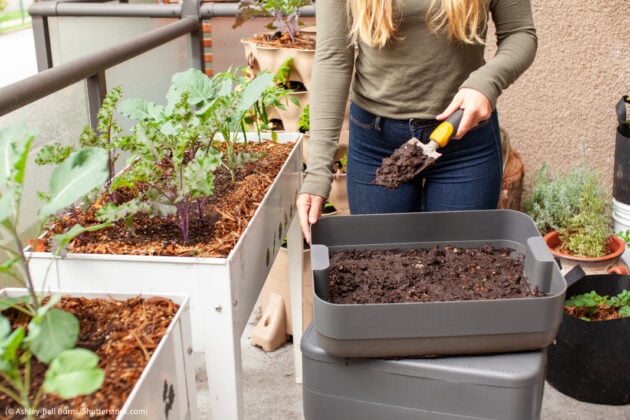 Photo: Ashley-Bell Burns/www.shutterstock.com
If you live close to where you work, biking and walking are even better for the environment and your health!
Volunteer in Your Community
Does your city have a group that plants trees on weekends or organizes beach cleanups nearby? If your community doesn’t have a cleanup campaign, organize one yourself!
Adjust Your Thermostat
Setting the thermostat to warmer (25°C) in the summer and cooler (20°C) in the winter can save resources and energy costs. It’s good for the planet and good for your wallet.
Save Water
Water-efficient appliances can save between 30% and 50% of your water use each year.
And when you’re taking a shower or using the faucet, keep it on only for as long as necessary.
“The fact is we still have time to avoid the worst consequences of the climate crisis,” Kerry said on April 13*. “And we can still achieve a cleaner, safer, and less polluted planet for all of us.”
Source: share.america.gov