



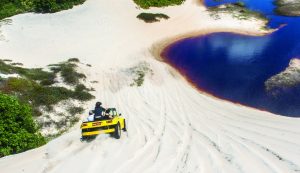
With beautiful beaches, areas of white sand dunes, and a rich and diverse culture, Natal offers its visitors a unique experience of leisure and entertainment. The city received this name (“Natal” means “Christmas” in Portuguese) because, on December 25, 1597, Admiral Antônio da Costa Valente and his men entered the shallows of the Potengi River, after several failed colonization attempts. The date became the anniversary of the capital of Rio Grande do Norte.
With the strengthening of its economy and tourism, the city has come to present an excellent quality of life and boasts a great urban structure, standing out among the capitals of northeastern Brazil.
Ponta Negra Beach, 12 km from the city center, is one of the most well-known beaches in Natal. There you will find Morro do Careca, a dune over 100 m high, a well-known landscape in the city’s postcards.
The cuisine of Rio Grande do Norte is rich: among the main recipe ingredients are Brazilian sun-dried beef, shrimp, fish, manioc, beans, rice, and tapioca. Shrimp has its own annual festival in Natal, in November. Caranguejada, a crab stew popular in local restaurants, tapioca, and ice creams and popsicles made from regional fruits are also some of the local delights.
The Cajueiro de Pirangi is known as the largest cashew tree in the world. It is a gigantic tree on Pirangi do Norte beach, 12 km south of Natal. The tree covers an area of approximately 8,500 square meters, with a perimeter of about 500 m, and produces 70 to 80 thousand cashews during harvest.
Among the monuments of Natal is the Fortress of the Three Kings, a landmark of the city. The site preserves cannons displayed at the top of the building, a chapel with a freshwater well, and accommodations.
Source: www.visitbrasil.com