



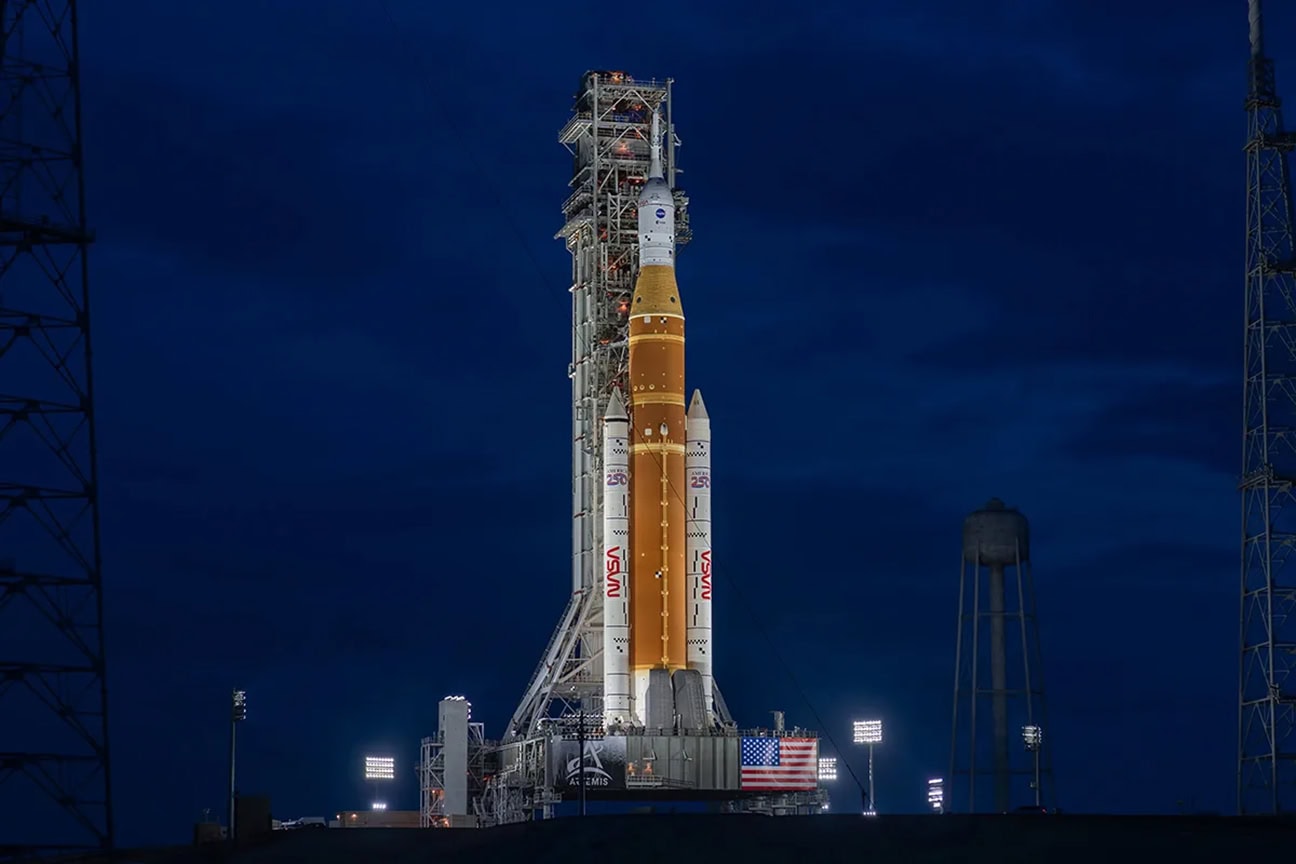
NASA may launch four astronauts on a mission to fly around the Moon as early as March 6.
That’s the launch date the space agency is now targeting, following a successful fueling test of its 98-meter-tall giant lunar rocket, which is on the launch pad at Kennedy Space Center in Florida.
“This is really becoming real,” says Lori Glaze, acting associate administrator of NASA’s Exploration Systems Development Mission Directorate. “It’s time to get serious and start getting excited.”
But she warned that there’s still some work pending on the launch pad, and officials will have to conduct a multi-day flight readiness review at the end of next week to ensure all aspects of the mission are truly ready.
“We need to successfully navigate all of these, but assuming that happens, it puts us in a very good position to target March 6,” she says, noting that the flight readiness review will be “extensive and detailed”.
The Artemis II test flight will send four astronauts on a journey of approximately 965,000 kilometers around the Moon and back. It will be the first time humans venture to the Moon since the last Apollo lunar mission in 1972.
When NASA workers tested the rocket’s fueling earlier this month, they found issues like a liquid hydrogen leak. Replacing some seals and other work appear to have resolved those problems, according to officials who say the latest countdown dress rehearsal proceeded without issues, despite glitches such as loss of ground communications at the Launch Control Center, which required workers to temporarily use backup systems.
Artemis II crew members — NASA astronauts Reid Wiseman, Victor Glover, Christina Koch, and Canadian Space Agency astronaut Jeremy Hansen — are beginning their approximately two-week quarantine to limit exposure to illnesses before the flight.
Glaze says she spoke with several of the astronauts during the recent fueling test, as they were in Florida to observe the preparations. “They’re all very, very excited,” she says. “They’re really building a lot of anticipation for a possible March launch.”
Source: npr.org