



Cinema star and cinematic visionary Robert Redford died at his home in Utah on Tuesday. He was 89 years old.
Inevitably, one word comes up when discussing Robert Redford: golden. Redford shone in more than 80 films, many of them classics. His life included decades of activism and the founding of the Sundance Institute, which profoundly shaped decades of independent cinema.
Fittingly, Redford’s story began in Los Angeles. His working-class family was the only white one in his predominantly Mexican neighborhood. As a child, Redford often misbehaved in school.
“I was constantly on the blackboard, either being punished for things I’d done wrong, and having to do math repetitions on the board, or I was drawing, telling a story,” he told NPR in 2003.
Redford dreamed of becoming an artist. He attended the University of Colorado, Boulder, on a baseball scholarship. Then he worked on an oil drilling rig to save enough money to study painting in Europe for a year. When he returned to the US to enroll in art school at the Pratt Institute in New York, it was Redford’s own beauty that filled the room, says film critic Carrie Rickey.
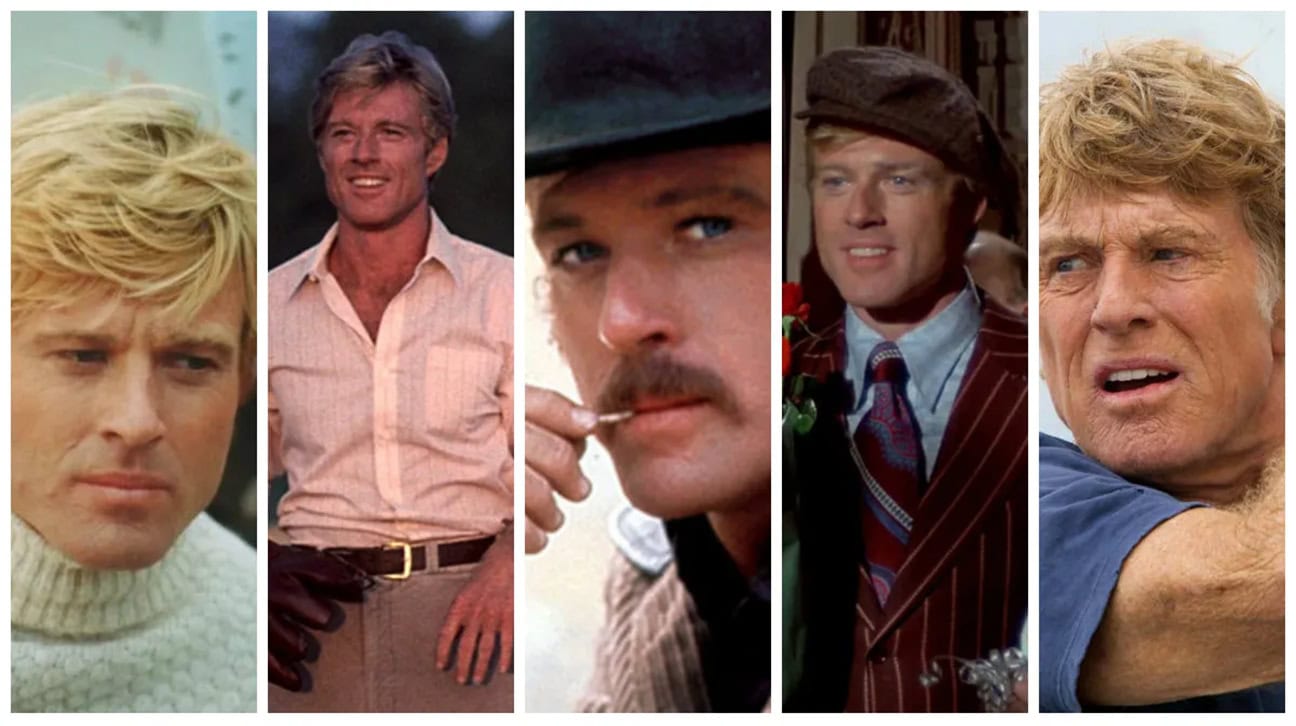 “They say that when he entered the cafeteria, you could hear a pin drop because everyone was looking at him,” she says, recalling her interviews with people who knew Redford as a student. “I think he was deeply ambivalent about his appearance and wanted to communicate that.”
Redford found his way to theater through an interest in set design, and soon he was starring on Broadway in Neil Simon’s hit Barefoot in the Park, alongside Hollywood princess Jane Fonda. The two reprised their roles in the 1967 film. Along the way, Redford appeared in several of the era’s best TV shows, like Playhouse 90, Route 66 and Alfred Hitchcock Presents, and he memorably played Death in a classic episode of The Twilight Zone. But Redford got his big chance when Paul Newman and screenwriter William Goldman campaigned for Redford to co-star in
Butch Cassidy and the Sundance Kid, despite the studio’s objections. (Executives thought Redford’s appearance was generic, according to Goldman, and tried to cast more well-known actors, like Marlon Brando, Steve McQueen and Warren Beatty.) Butch Cassidy and the Sundance Kid ended up being 1969’s biggest hit, and led to a series of other successes: The Sting, The Way We Were, All the President’s Men and Jeremiah Johnson, which remained one of the actor’s personal favorites. But Redford yearned for a career behind the cameras. He experimented with distributing documentaries directly to university film societies in the early 1970s. His directorial debut film in 1980, Ordinary People, earned Redford an Oscar for best director and best picture (infamously defeating Martin Scorsese and Raging Bull).
Throughout the 1980s, Redford remained one of Hollywood’s most popular and bankable actors. He starred in some of the era’s most lavish period dramas, like The Natural and Out of Africa, one of the films he made with Meryl Streep. But unlike Streep, Redford never won a single acting Oscar, noted critic Carrie Rickey.
“He tended to be minimalist on screen, often interrupting himself to sound like real speech,” Rickey observed. “Even as he continued starring in films, with his inimitable blend of shaded sun, Redford’s off-screen ambitions found their apotheosis with the Sundance Institute. He transformed the industry by founding it in 1981. It became a launchpad for generations of filmmakers, too many to cite, including directors like Quentin Tarantino, Steven Soderbergh, Kevin Smith and Robert Rodriguez.
“He changed so many lives,” Rickey observed. “And he changed films, both as a director and as head of Sundance. Who else can say that?”
Over the years, Sundance evolved into an independent powerhouse, with prestigious programs for theater, music, Native American cinema and documentaries that helped produce Oscar winners from American Dream to When We Were Kings, Summer of Soul, Citizenfour and Crip Camp.
“All the films I made are about the country I live and grew up in,” Redford told NPR in 2013. He wasn’t interested in America in black and white, blue or red, he said. “I was interested in the gray part, where the complexity resides.”
Redford said he thought celebrity led to excessive cultural simplification. “It has a dangerous side,” he said. “I think people should pay much more attention to the issues, instead of who’s in the Top 10 of this, or Top 5, or the sexiest or most beautiful or this or that.”
The things Redford cared about included the environment and indigenous rights. A passionate and reserved man, he was, in the end, what he always strove to be—an artist.
Source: npr.org by Neda Ulaby