



The Brazilian Federal Police are investigating a “genocide” against the Yanomami people following the revelation that nearly one hundred children from the indigenous group have died, according to the country’s Ministry of Justice.
The announcement came after a government report revealed that at least one hundred Yanomami children living in Brazil’s largest indigenous reserve — all under the age of five — died last year from malnutrition, pneumonia, and malaria.
The newly inaugurated president Luiz Inácio Lula da Silva described an “inhumane” scene after personally visiting the community in the northern Amazonian state of Roraima.
The Yanomami territory, home to over 30,000 indigenous people, spans 37,000 square miles (96,000 square kilometers) between the states of Roraima and Amazonas.
Conditions in the Yanomami reserve have become increasingly violent, with illegal miners regularly killing indigenous residents, sexually abusing women and children, and contaminating the area’s rivers with mercury used to separate gold from sediment, according to complaints from indigenous organizations.
The rise of illegal mining in the Amazon has also fueled the spread of diseases such as malaria, tuberculosis, and Covid-19 among this population.
Indigenous Peoples’ Rights in Brazil
According to the 2010 census by the Brazilian Institute of Geography and Statistics, there are 896,917 indigenous people in Brazil. The country voted in favor of the United Nations Declaration on the Rights of Indigenous Peoples (2007), the American Declaration on the Rights of Indigenous Peoples (2016), and signed ILO Convention 169.
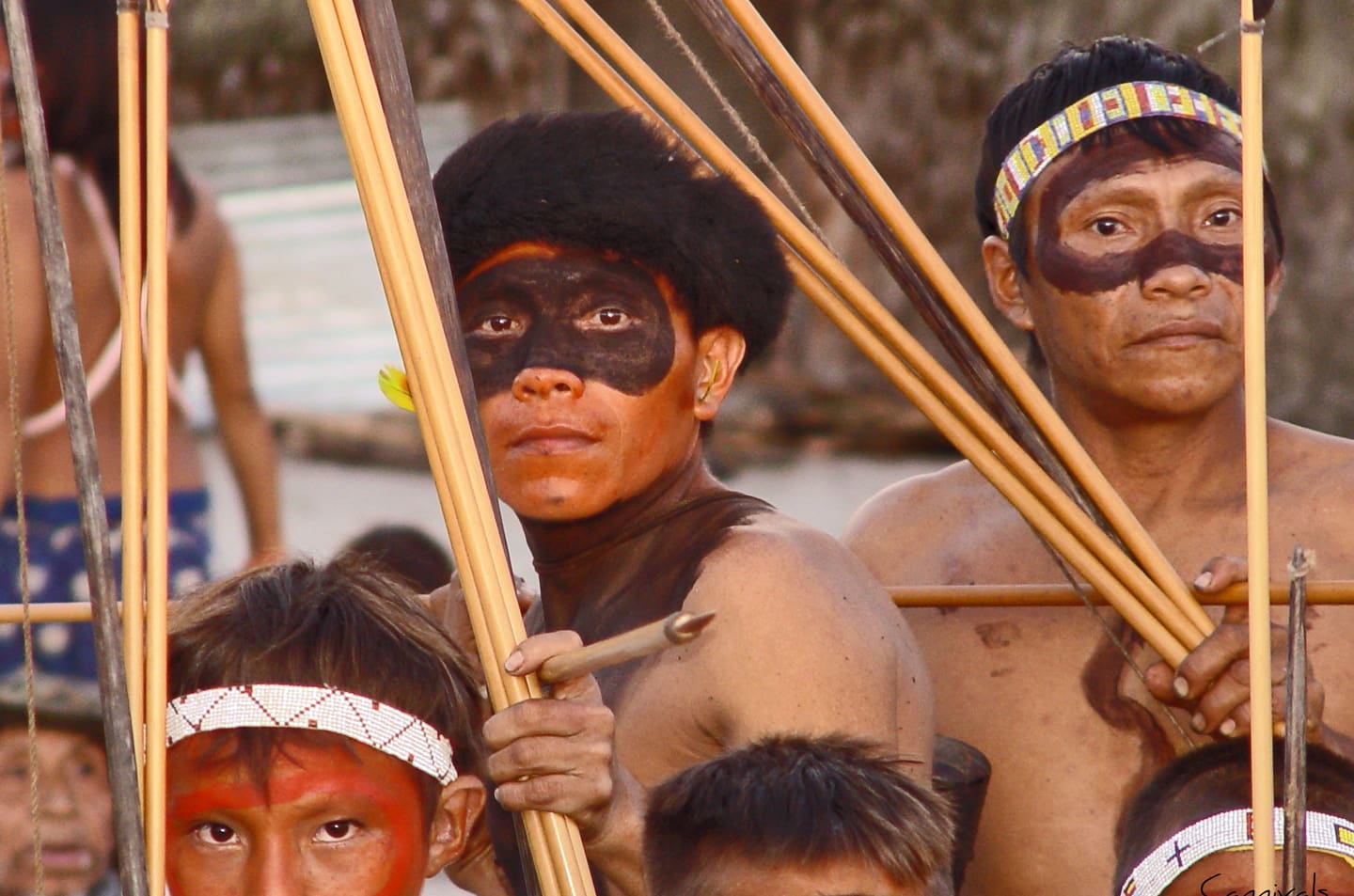
The 1988 Constitution recognizes indigenous peoples as the first and natural owners of the land and guarantees them the right to the land. The exploration and extraction of mineral wealth on indigenous lands must be carried out solely with the authorization of the National Congress after hearing the involved communities, which must be guaranteed participation in the benefits of mining activities. The expulsion of indigenous peoples from their lands is prohibited.
Indigenous Peoples in Brazil
There are 896,917 indigenous people in Brazil, distributed among 305 ethnic groups. The main indigenous ethnic group is the Tikúna, which represents 6.8% of the total indigenous population.
There are about 274 languages. Among indigenous people over five years old, only 37.4% speak an indigenous language, while 76.9% speak Portuguese. It is estimated that there are 115 peoples living in isolation, 1 of which are confirmed and the rest are in the process of identification.
502,783 individuals from the indigenous population in Brazil live in rural areas and 315,180 in urban areas. A total of 505 Indigenous Lands have been identified, covering 12.5% of Brazilian territory (106.7 million hectares). Most of these territories are concentrated in the Amazon.
Brazil is the South American country with the highest known concentration of isolated Indigenous Peoples in the states of Acre, Amazonas, Amapá, Goiás, Maranhão, Mato Grosso, Pará, Rondônia, Roraima, and Tocantins. Currently, there are 107 records of the presence of Indigenous Peoples in isolation in the Amazon region.
Source: AFP and IWGIA