



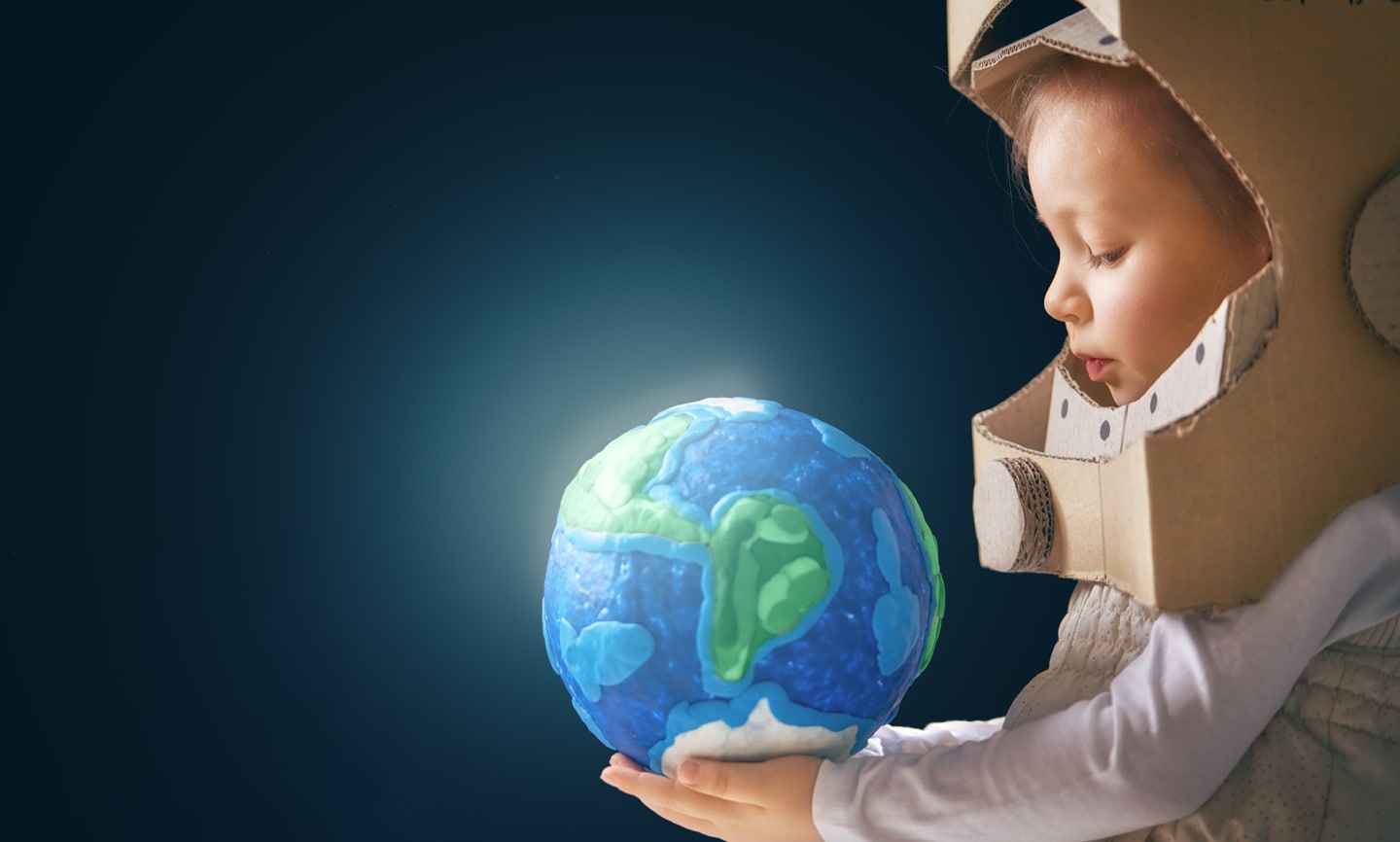
If we were to approach rivers, mountains, dragonflies, redwoods, and reptiles as if they were all alive, intelligent, imbued with soul, imagination, and purpose, what could the world become? Who would we become if we intentionally engaged with such an animated Earth? The world would come alive if we taught our children – and ourselves! – to sing and celebrate the stories embedded in the body of the Earth, in the granite bones of the mountains and the rainy tears of the sky, in the trembling volcanic bellies and green, fragrant hills? And what if we understood that by nurturing the land and its creatures with generous praise and gratitude, with our remembrance or tears, we would rejuvenate our own relationship with the wild Earth and possibly revitalize the anima mundi – or soul of the world?Toward an Animated World A sense of the numinous and animating dimension of the world, its psyche or soul – its anima mundi – began to recede from people’s minds centuries ago. The modern scientific and industrial endeavor is based on the separation of psyche from matter – how else could we endure vivisection, the removal of mountain tops, rivers poisoned with effluents? Most have never questioned the common view that the world is made up of dead or insentient matter, even though our own senses and experiences may sometimes suggest otherwise. For contemporary people, expressing the possibility (or certainty) that there is sentience, psyche, or soul present in everything can be socially risky, though it does not threaten life; but when the radical cosmologist Giordano Bruno asserted the animated nature of all matter in the sixteenth century, he was burned at the stake for beliefs that challenged the divinely ordained authority of the Medieval Church. With Bruno’s execution and the loss of so many other human and non-human beings, the anima mundi – uncelebrated, dishonored – slipped even further into the shadows. We generally consider our bodies as our own, distinct from what is outside our skin, but our bodies depend on air, water, sunlight – and food, which in turn emerged from a primordial supernova billions of years ago. Who can be sure where our bodies begin or end? For most contemporary adults, intentionally engaging with the non-human world requires vivid imagination. But an enchanted world is the natural home of human children. Until the spell is broken, the world shines and overflows with companions and playmates, fairies and elves. Everything is alive and meaningful. Stones, clouds, and butterflies are capable of conversation. For most adults, the spell was broken long ago, and an enchanted worldview from anyone over six is easily dismissed as naivety, animism, magical thinking, or viewed with suspicion – perhaps mental illness or crazy mysticism. Yet who does not long, perhaps secretly or desperately, to live in a sentient and meaningful cosmos? It is one thing to imagine that grass, mountains, the Moon, willows, weasels, and otters are worthy – and receptive – to our praise and respectful attitudes; it is another to experience that the creatures and the body of the Earth itself are aware of us and somehow responsive. If, in growing awareness of the world, you were taught – as children have been taught in many traditional cultures – that the non-human world is in conversation with you, asking for your devoted attention, your experience of the world, your participation, would reflect that fundamental understanding.Approaching the Mystery In mainstream religious traditions, a creator may be ostentatiously worshipped while creation itself is dishonored; our political system and economy are filled with people who claim, for example, loyalty to a religion, but do not recoil from reservations for a disembodied god or an afterlife, while the physical universe – creation itself – is widely considered inanimate, dead, a warehouse of meaningless objects for exploitation and consumption. However, some contemporary people, even now, find the presence of the great mystery in the physical universe itself – in the green genius of photosynthesizers, in the owl carrying a shrew to the sky, in the epic cosmology inscribed in the dark skies, in the love dance of the Moon with the tides, in the perplexing layers of geological history. Paying attention, kneeling in the grass – these are acts of reciprocity, and who knows if the Earth does not respond to that loving attention? A practice of attending to an animated world may have a cumulative effect of rearranging our own consciousness. An experience of sitting in contemplation with the prairie grass, for example, may resurface in vitality later when we realize we are metaphorically picking the weeds from the warehouse in our ordinary campaign against unwanted tenants. A feeling of praising the wild stream becomes present to us again later when we are about to pour questionable cleaning products down the drain, or when we are carelessly letting the water run from the tap, our only concern being whether it is purified to our own standards. If the world seems empty of mystery, devoid of intelligence or feeling, without purpose, absent of psyche, could it be because we entered the world with heavy feet and dulled senses, our imaginations hijacked by corporate advertising, bland “entertainment,” mindless screen addictions, and media-manufactured fear? Perhaps some are meant to provide objects for consumption, but I cannot say I know anyone who truly flourishes under such circumstances. Revitalizing the soul of the world depends on a conscious and engaged relationship between humans and the land. If our discernment of the anima mundi is tenuous – as it is for most contemporary people – intentional acts of radical imagination may stir and awaken our perceptions. James Hillman writes that our “imaginative recognition, the childlike act of imagining the world, animates the world and returns it to the soul.” Perhaps the world deeply longs for the consciously imaginative human to participate in the birth of a new era in the human-Earth relationship. A practice of approaching the world as if everything were alive – saturated with psyche, purpose, and intelligence – reanimates us; in the company of our growing human vitality, the world sparkles with possibility and pain, no longer insentient, no longer without its own longings, its psychic depths, its soul. By Geneen Marie Haugen (adapted)
Imagining the Earth
-
Actor Juca de Oliveira Dies at 91
Brazil lost one of the most prominent names in national performing arts in the early hours of this Saturday (21). Actor, author, and director Juca de Oliveira passed away at 91 years old in São Paulo, victim of pneumonia associated with a cardiac condition. The information was confirmed by the family’s press office to TV…