



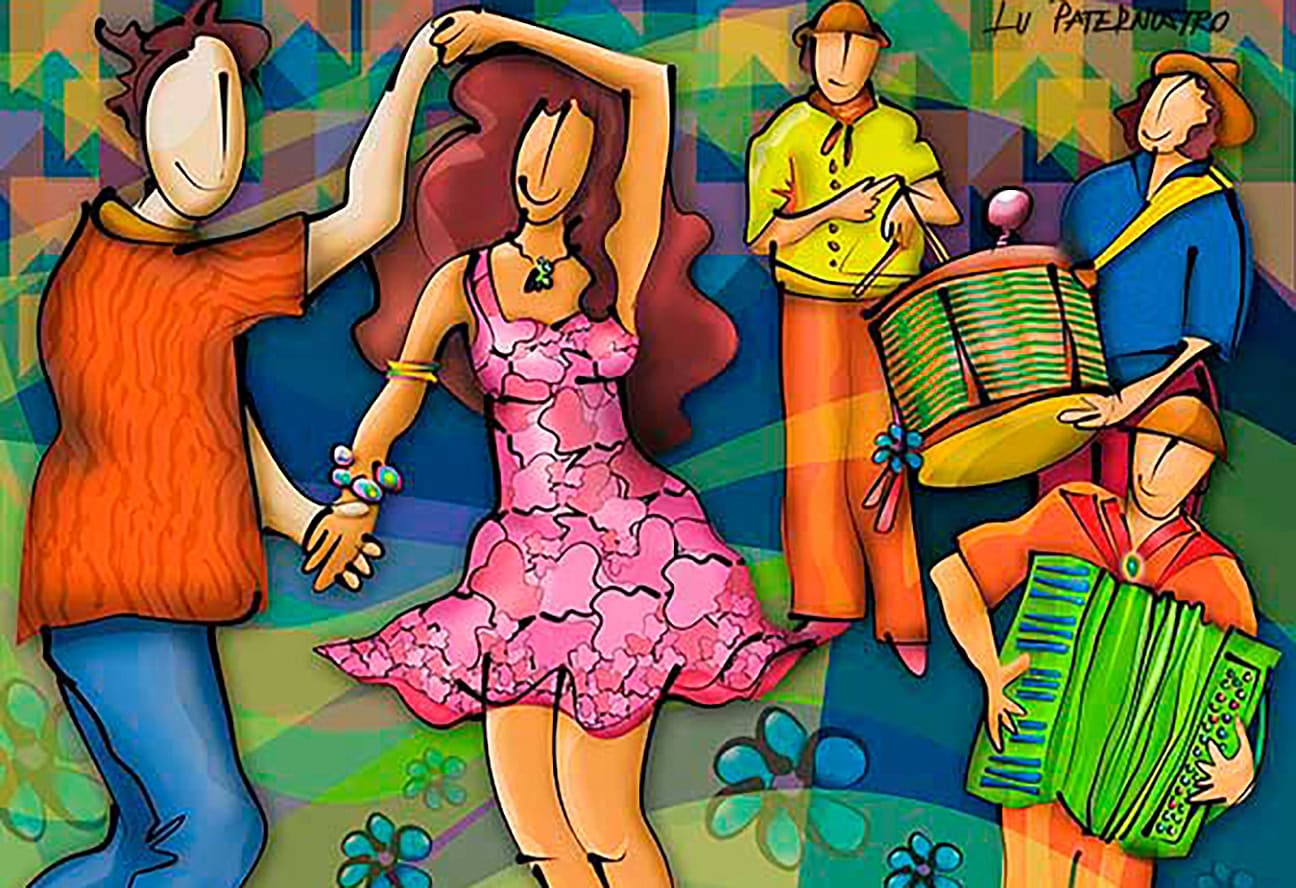
In a unanimous decision, the Advisory Council of Cultural Heritage of the National Institute of Historical and Artistic Heritage (Iphan) declared the traditional matrices of forró as Cultural Heritage of Brazil.
The council, composed of representatives from public, private institutions, and civil society, also elected forró as a super musical genre, as it encompasses northeastern rhythms, including xote, xaxado, baião, chamego, quadrilha, arrasta-pé, and pé-de-serra.
The request for registration to make forró a cultural heritage was made in 2011 by the Cultural Association Balaio do Nordeste, in the state of Paraíba. Over the past ten years, in partnership with the communities that hold it, a detailed description of the traditional matrices has been carried out, with documentary and audiovisual records.
Council member Maria Cecília Londres, the rapporteur of the proposal, provided an extensive explanation about the origins of the northeastern musical rhythm and the word forró. The rapporteur emphasized the relevance of forró for encompassing activities such as handicrafts, accordion orchestras, dance schools, and the preservation of instruments (rabeca, accordion, triangle, pífano, zabumba, etc.).
Maria Cecília also mentioned the importance of forrozeiros organizations, created in several states to keep forró alive. In concluding her vote, the rapporteur stated that she was fully in favor of registering the traditional matrices of forró as cultural heritage of Brazil.
Source: Agência Brasil