



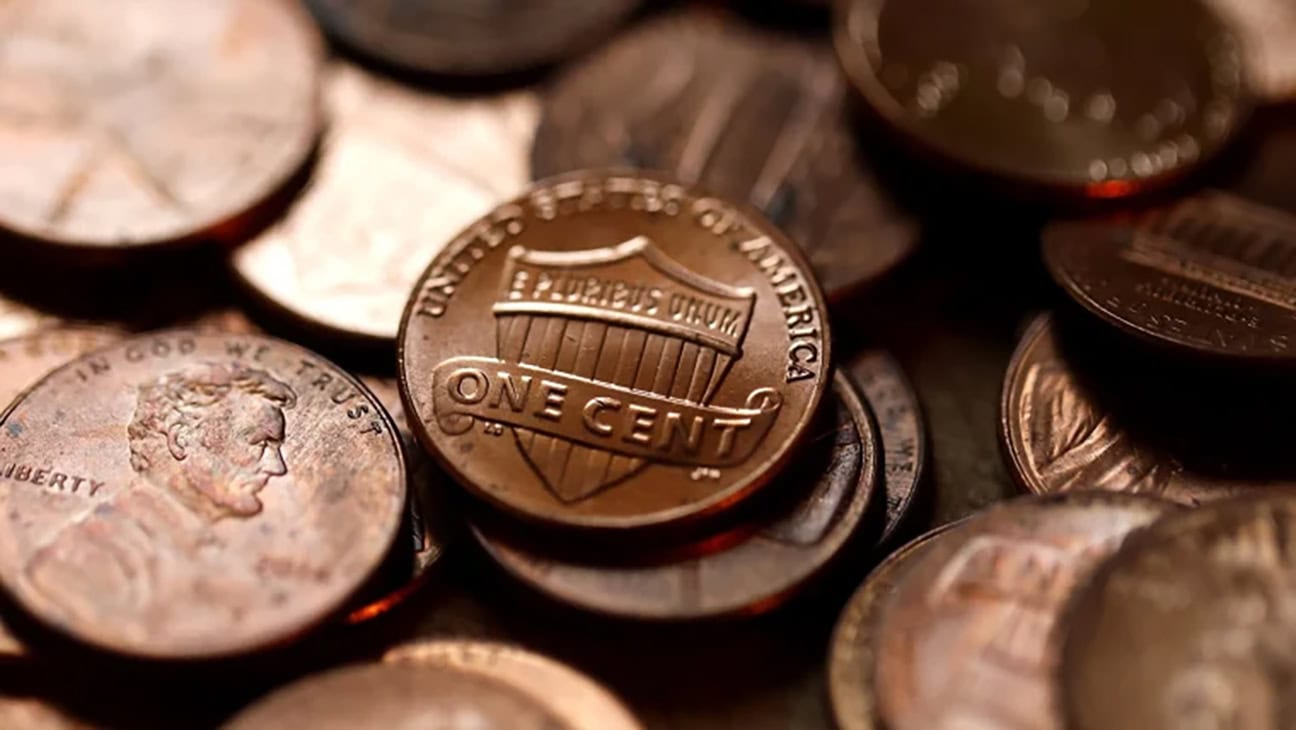
Unfortunately, dear penny, you served us well.
We picked you up, you brought us luck.
We gave you to others in exchange for their thoughts.
And remember when we pondered if throwing you from the Empire State Building could kill a pedestrian? That was fun. (More on that later.)
Now you’re dead — but not gone (more on that later too) — at 232 advanced years old. When polished, you look as young as when you were newly minted, but now you’re worth less to us, and we move on to bigger expenses. The nation once used you to pay Union soldiers in the Civil War; now, you barely buy a piece of gum (and only in large quantities!).
Like almost all Americans, you descend from an immigrant, the British penny. Those coins were so valuable that they were divided into halves and even quarters — your extinct British cousins, the halfpenny and the farthing. In Britain, the history of the coin dates back to the time when kings and queens had names like Offa, Cynethryth and Aethelred, the Unready, and your name likely traces its origin from the German for pan — pfanne for pan, which evolved into pfennig, to penny.
The first one-cent coin in the United States came from a private mint in 1787 and wasn’t called a penny. It was the fugio cent — fugio for “flee” in Latin, meaning time flies. The 100% copper coin bore the surprising words “mind your business,” more a reference to “penny wise, pound foolish” than a warning against curiosity.
The U.S. minted its first official penny in 1793. Abraham Lincoln appeared on the coin starting in 1909, to honor the centennial of his birth, the first time a president’s image adorned an American coin. The words “In God We Trust” were added at the same time. Always pioneering, you, the humble penny, were the first to bear those words before Congress put them on all coins and made it the national motto nearly half a century later.
Now, with just 2.5% copper and the rest zinc, you don’t even cover the cost of your own production, according to the U.S. Mint, which says it took 3.69 of you to produce just one more in 2024.
Although we won’t find new pennies anymore, we know you’ll stick around for another 30 years or more, as that’s the typical lifespan of a coin, according to the U.S. Treasury.
So, fortunately for us, we’ll still have the perfect coins to put in our penny loafers in the 2050s, when we can expect them to come back into fashion. (In the 1930s, kids put money in their shoes for emergency calls from payphones, and thus the Weejun was born. Maybe someone will create a stylish phone shoe before the penny disappears?)
In the meantime, you live on in other ways. We’ll certainly celebrate you through aphorisms, and that’s where the penny drops. We’ll always be “in for a penny, in for a pound.” Proudly we’ll trade pennies for thoughts as we keep giving our two cents’ worth of opinion. We’ll still pinch them, because a penny saved is, as always, a penny earned. We’ll put a shiny penny in the bride’s shoe for luck.
James Geary, author of The World in a Phrase: A Brief History of the Aphorism, says the penny is the perfect coin for these little pearls of wisdom.
“The penny lends itself to aphorisms because both are small — the aphorism is the shortest form of literature, and the penny is the smallest monetary denomination,” says Geary.
Yes, you’re small, but mighty. However, we’ll never kill anything with you, whether from the Empire State or any other tall building. Your dimensions — three-quarters of an inch thick and weighing less than a tenth of an ounce — are better suited for spinning and floating in the air than for reaching lethal velocity.
As the Mythbusters demonstrated, the falling penny myth isn’t worth a dime. But with 10 cents, the dime is at least profitable to produce.
Along with the dime, your survivors include the nickel and the quarter.
Rest well, sweet penny.
United States Mint Holds Historic Ceremonial Coining for Final Production of Circulating One-Cent Coin
>
The United States Mint (Mint) held a ceremonial coinage event today at its Philadelphia facility, where United States Treasurer Brandon Beach struck the last circulating one-cent coin (penny). The event marks the official end of 232 years of penny production as a circulating coin.
“Today the Mint celebrates 232 years of manufacturing the penny,” said Kristie McNally, Acting Mint Director. “Although general production ends today, the penny’s legacy endures. As its use in commerce continues to evolve, its importance in American history will endure.”
The penny, first authorized by the Coinage Act of 1792, played an important role in American everyday life — from the early days of the U.S. economy to the present. However, economic and production factors, combined with changes in consumer behavior, have made its continued production unsustainable. In the last decade, the cost of producing each penny rose from 1.42 cents to 3.69 cents per penny.
Although production for circulation has ceased, the penny remains legal tender. It is estimated that there are 300 billion pennies in circulation — far more than needed for commerce. Retailers and other businesses can continue pricing goods and services in penny increments.
The Mint will continue producing numismatic versions of the penny in limited quantities for historical and collector purposes.
About the United States Mint
Congress created the United States Mint in 1792, and the Mint became part of the Department of the Treasury in 1873. As the nation’s sole manufacturer of legal tender coinage, the Mint is responsible for producing circulating coins so the nation can carry out its commerce and business. The Mint also produces numismatic products, including proof, uncirculated, and commemorative coins; Congressional Gold Medals; silver and bronze medals; and silver and gold bullion coins. Its numismatic programs are self-sustaining and operate at no cost to taxpayers.