



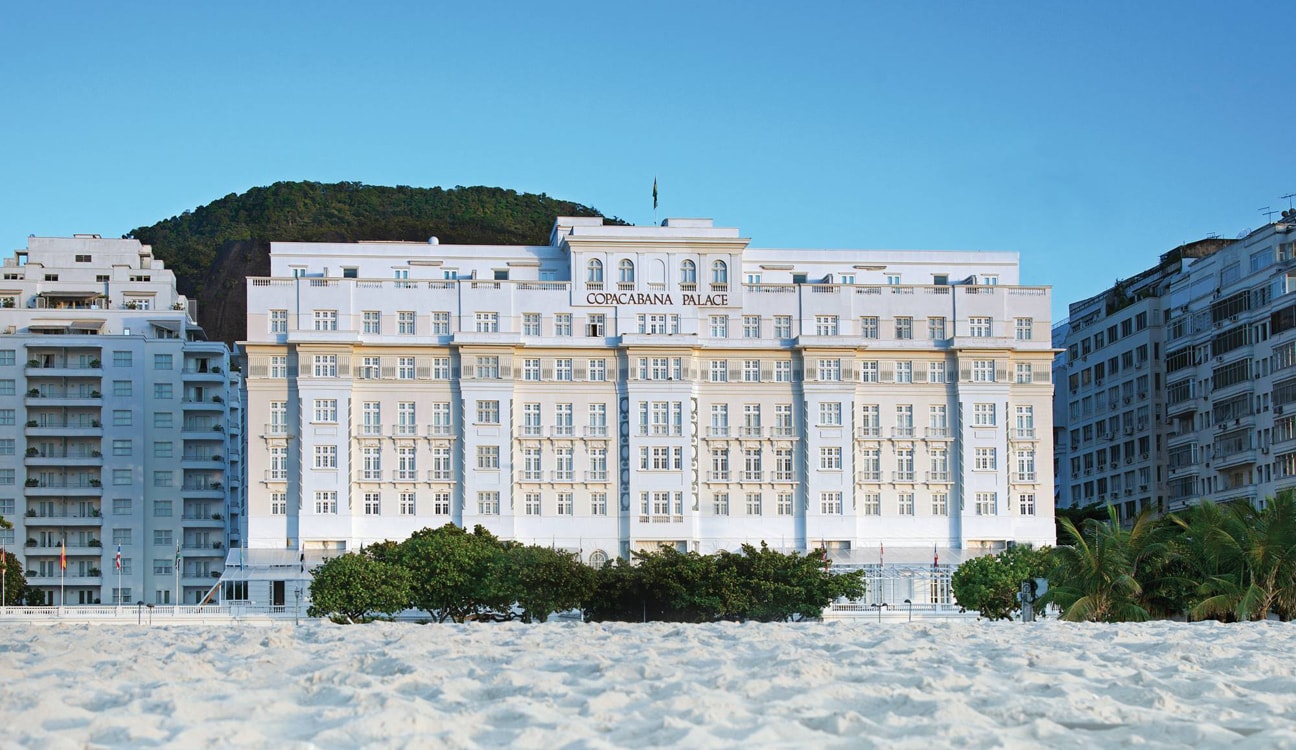
Situated by the beach that is one of the icons of Rio de Janeiro, the Copacabana Palace, with 239 rooms and suites and an imposing facade, is hard to miss.
For Mariana Sousa, a hospitality student at the Federal Fluminense University (UFF) in Rio, working at the hotel was an opportunity to gain a unique experience. She started as an intern and was later hired. The phone that accompanied her in her role as a guest services attendant greatly inspired her final course project. “The Phone, Together with the History of Luxury Hotels in Rio de Janeiro” was published as an article in Hospitality Magazine.
“You have to write down everything possible and imaginable because imagine if you forget or write down the wrong room number for a wake-up call. And what if the next day the guest misses a flight? And what if that flight was to take the guest to a meeting that could close a multi-million dollar contract? All of this could result from not correctly recording the room number. It may seem like a simple thing, but the potential consequences are astronomical,” she explains.VIP Treatment
Throughout its existence, the Copacabana Palace has been graced by the presence of kings, artists, intellectuals, and politicians, including Hollywood actress Ava Gardner; singer Janis Joplin; Princess Diana and Prince Charles (now King Charles); Rolling Stones frontman Mick Jagger; filmmaker Orson Welles; Beatle Paul McCartney; and future kings of the United Kingdom Edward VIII and George VI.
Internally, in terms of service, guests were categorized by color, indicating whether they were celebrities, public figures, frequent guests, journalists, executives, or affiliated with the hotel network. To cater to its most esteemed guests, the hotel introduced a unique internal document known as “show me you know me,” intended only for its staff. Mariana details: “Certain departments within the hotel received this document, which contained a photograph of the VIP guest along with personalized information about that person, for example, the guest likes chocolate, is allergic to such and such, likes so many pillows.”
In addition to its sumptuous accommodations, the Copacabana Palace boasts an impressive range of amenities, including 13 event rooms with a capacity for up to 2,000 guests, a semi-Olympic pool, a spa, a tennis court, and a fitness center. Notably, it is the only hotel in Latin America with two Michelin-starred restaurants — MEE and Ristorante Hotel Cipriani — distinguished by their international reviews that attest to their culinary excellence. Additionally, the hotel offers an international cuisine restaurant known as Pergula.
The hotel was built at the request of then-president Epitácio Pessoa. In 1919, he sought out entrepreneurs Octávio Guinle and Octávio Rocha Miranda with the task of building accommodations to host visitors of the Centenary Exhibition of Brazilian Independence. During this significant event, Brazil would welcome heads of state and distinguished personalities from around the world. Pessoa wanted to position Brazil as a renowned and respected nation on the international stage of the time.
The hotel was not completed in time for the centenary in 1922. It was formally inaugurated on August 13, 1923, in the presence of President Artur Bernardes.
The hotel’s design was entrusted to French architect Joseph Gire, famous for his contributions to the city, including the Hotel Glória and the Joseph Gire Building, which later earned the nickname “The Building of the Night.” Built with German cement and adorned with Carrara marble, the structure was enriched with glass and chandeliers from the former Czechoslovakia, French furniture, English carpets, and Bohemian crystals.
In 1989, the family of Octávio Guinle relinquished ownership of the Copacabana Palace, selling it to the Orient-Express group, which later adopted the name Belmond. Currently, the hotel belongs to the French conglomerate LVMH, following the acquisition of Belmond in December 2018.
Source: Agência Brasil