



A Brazilian filmmaker hopes that the uncertainty brought about by the COVID-19 pandemic will generate more empathy and solidarity towards others, including refugees, an optimistic position also adopted by the UN Refugee Agency (UNHCR) in the South American country.
Karim Aïnouz is the director of “Central Airport THF,” a documentary that describes the situation of asylum seekers housed in the former Tempelhof Airport in Berlin, which is now available on streaming platforms.
Built in the 1920s, the gigantic airport was renovated in the 1930s by the Nazi regime. Decommissioned in 2008, it served as a shelter for asylum seekers from 2015 to 2019, and has since been transformed into a public park.
The documentary follows the life of young Syrian student Ibrahim and Iraqi physiotherapist Qutaiba over the course of a year. As they go through interviews, German classes, and medical exams, they try to cope with 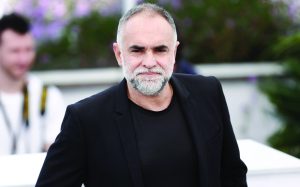 homesickness and the anxiety generated by the possibility of deportation.
Mr. Aïnouz believes that it is possible to draw parallels between their situation and the experience of billions of people currently confined to their homes amid the COVID-19 pandemic, facing financial difficulties and the fear of infection.
“This inability to know what the future holds, the level of uncertainty, and the fact that the decision about their future no longer belongs to them, the situation is similar to what refugees were facing at that time,” Mr. Aïnouz said in an interview with the United Nations in the Brazilian city of Rio de Janeiro.
“There is also a lesson in humility. These are people who have nothing, who have lost everything they had. They only have ‘from now on.’ So, I thought it would be interesting to show the film at this specific moment,” he said. The documentary was originally scheduled to premiere in Brazilian cinemas on March 26, 2020, but due to the COVID-19 pandemic, it was decided to release it directly on streaming platforms.
For the filmmaker, the documentary not only allows viewers to put themselves in the shoes of refugees during the current crisis but also to relate to the most vulnerable people in society, such as the homeless and the poor.
“In Brazil, when contrasting the living conditions of poor neighborhoods with the very affluent ones, one could say that we have Brazilian refugees living within the country itself,” said the filmmaker. “I hope this pandemic brings us closer to the pain of these people and makes us more compassionate and less hostile.”
Hope for a Better Future
Despite living in such a period of uncertainty and waiting, when they cannot return home or know for sure what the future holds, the refugees portrayed in “Central Airport THF” remain hopeful that their lives will change for the better in the welcoming community.
“When you see a 17-year-old boy who leaves his country, not because he wants to, but because he is fleeing from war, risking his own life to be in a  place that is not his home, and he still has hope… it is very important that we try to show compassion for one another,” says Mr. Aïnouz.
According to the filmmaker, the documentary presents an important lesson for everyone: people must have faith in the future and imagine that the future will certainly be better than the past. “Let’s imagine that our differences unite us instead of separating us,” he says. “I hope the film generates a greater degree of empathy than it would have if released at another time,” he added.
UN Support for Refugees
José Egas, representative of the UN Refugee Agency (UNHCR) in Brazil, draws a parallel between the refugees in the film and the situation of refugees today.
“With a very sensitive eye, the director portrays a situation that, although very particular, reflects a global perspective. The isolation faced by the refugees in this documentary, as well as their desires and resilience, can be easily extrapolated to the current reality. In this sense, we hope the documentary touches hearts and minds, promoting better attitudes towards refugees,” said Mr. Egas.
Several countries in the region have now implemented special measures, allowing the hiring of qualified foreign health professionals and technicians, including those awaiting licensing or whose certification has not yet been validated by the host countries. Other states have adopted accelerated recognition processes to expedite their inclusion in national health responses.
Refugee and migrant health workers are now working with national health systems responding to the pandemic, while many others are ready to support and give back to the communities that host them.
The UNHCR is supporting these efforts that explore the skills and resources that refugee doctors can offer.