



Several months ago, I wrote an article for The Brasilians about Lu, the most followed non-human influencer in the world, with tens of millions of followers on social media. Lu is the main spokesperson and an omnipresent virtual sales associate of Magazine Luiza, a giant in omnichannel retail with over 1,300 physical stores and a massive digital presence in e-commerce in Brazil.
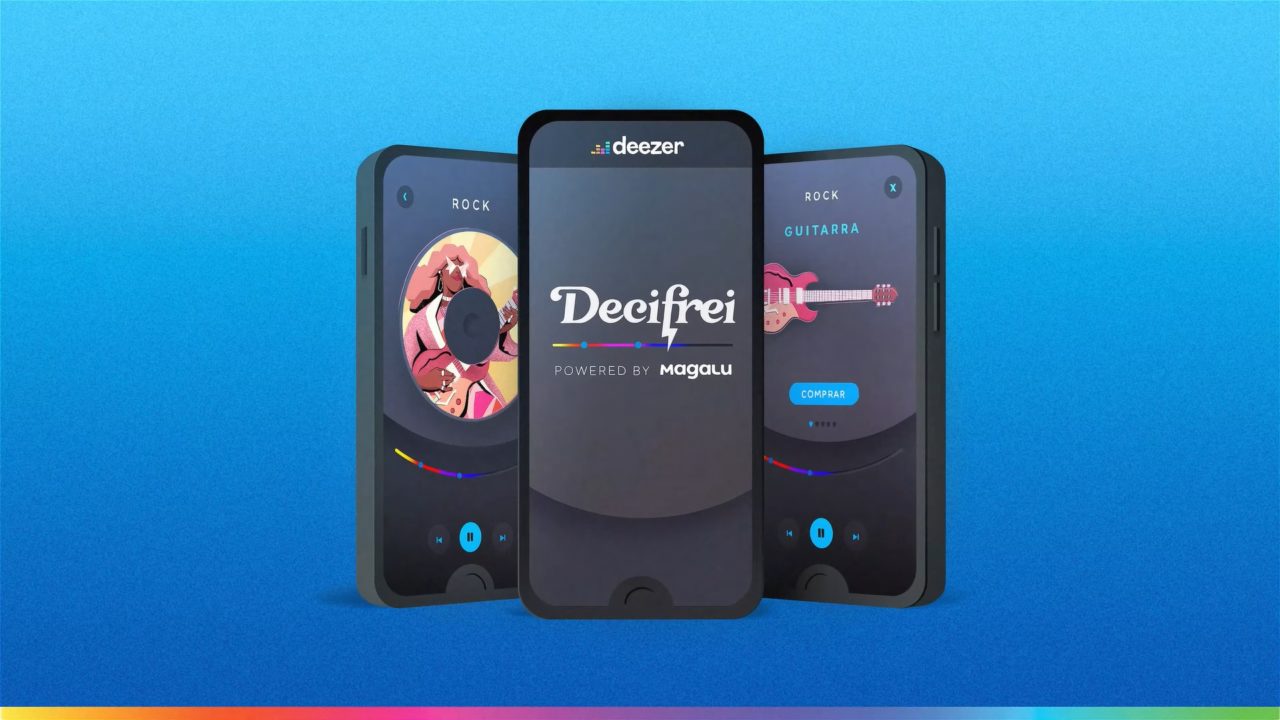
Now the company, colloquially known in Brazil simply as Magalu, is innovating again, this time launching an innovative shopping experience that some have dubbed the inaugural shot of a completely new format in global online retail called “sound commerce.” Magalu calls the experience Decifrei, Portuguese for “Deciphered”; in English, it is being branded as ‘Shoppin’ Inside Songs.’ Think of it as eCommerce that happens through music and sound.
Has your mind exploded yet?
It all started – like most things in this new reality we are living in – in the early days of the pandemic, when Magalu’s marketers – eager to reinforce the idea that the omnichannel retailer was more than just a website selling electronics and appliances – noticed that searches for musical instruments and recording accessories were skyrocketing. Queries for guitars, amplifiers, drums, microphones, production equipment, etc., were on the rise, as people, confined at home during the lockdown and with plenty of idle time on their hands, wanted to learn to play instruments or upgrade the ones they already had.
This observation led the retailer to quickly develop a robust category of musical instruments. Magalu’s buying team sought over 100,000 unique product offers of musical instruments to sell on its extensive e-commerce platform. But to bring this new category of musical instrument shopping to life in a truly innovative way, Magalu teamed up with advertising giant Ogilvy to think outside the box – and I mean way outside the box – and offer a new shopping method that ultimately pioneered something that retail analysts are starting to call S-commerce, or sound commerce.
First, Magalu and Ogilvy partnered with Deezer, a popular music streaming service in Brazil. Together, they hired a team of professional music producers not only to develop streaming playlists covering virtually all musical categories, from hip hop to classic rock and Brazilian sertanejo, but also to identify the specific instruments and equipment used to produce each song, allowing fans to buy exactly the same model of instrument or piece of equipment used in the original recording of the song. In cases where a given instrument is no longer manufactured – think of instruments used by the Beatles or Elvis – the producers highlighted the most similar item still in production.
Here’s how it works: As users scroll through the Decifrei app, they find curated playlists covering a variety of different genres. For each featured track, all the main instruments used in the original recording are highlighted with a “buy now” button that takes the listener to a Magalu e-commerce page, where that same model of instrument can be purchased with a simple click.
Take, for example, the Pop genre. When listeners arrive at Camila Cabello’s 2018 hit “Havana,” the first piece of equipment that appears is the Shure SM7B Microphone that the Latin singer used to record her sultry R&B ballad. Click the “buy now at Magalu” button below the song and voilà, the listener is taken to Magalu’s product page displaying exactly the same product. The Shure SM7B Microphone can be yours for R$4,574.15 or about US$869. You may not sound like Camila Cabello when recording your own version of “Havana” at home, but you certainly can’t blame the microphone.
This inspired way of listening to music and transforming each track into a personalized musical instrument store achieved immediate success, with musical instrument sales rising over 50% in the first month and traffic increasing nearly 200%, all while generating significant buzz around Magalu’s e-commerce marketplace. The genius behind the initiative was even rewarded at the world’s largest advertising event, taking home a trophy for creative eCommerce at the Cannes Lion.
The emergence of S-Commerce is further proof that, although eCommerce was born in the USA, its future may very well be unfolding in places around the globe like Brazil.
ARICK WIERSON
CNN columnist, television producer, and political consultant
Twitter: @ArickWierson