



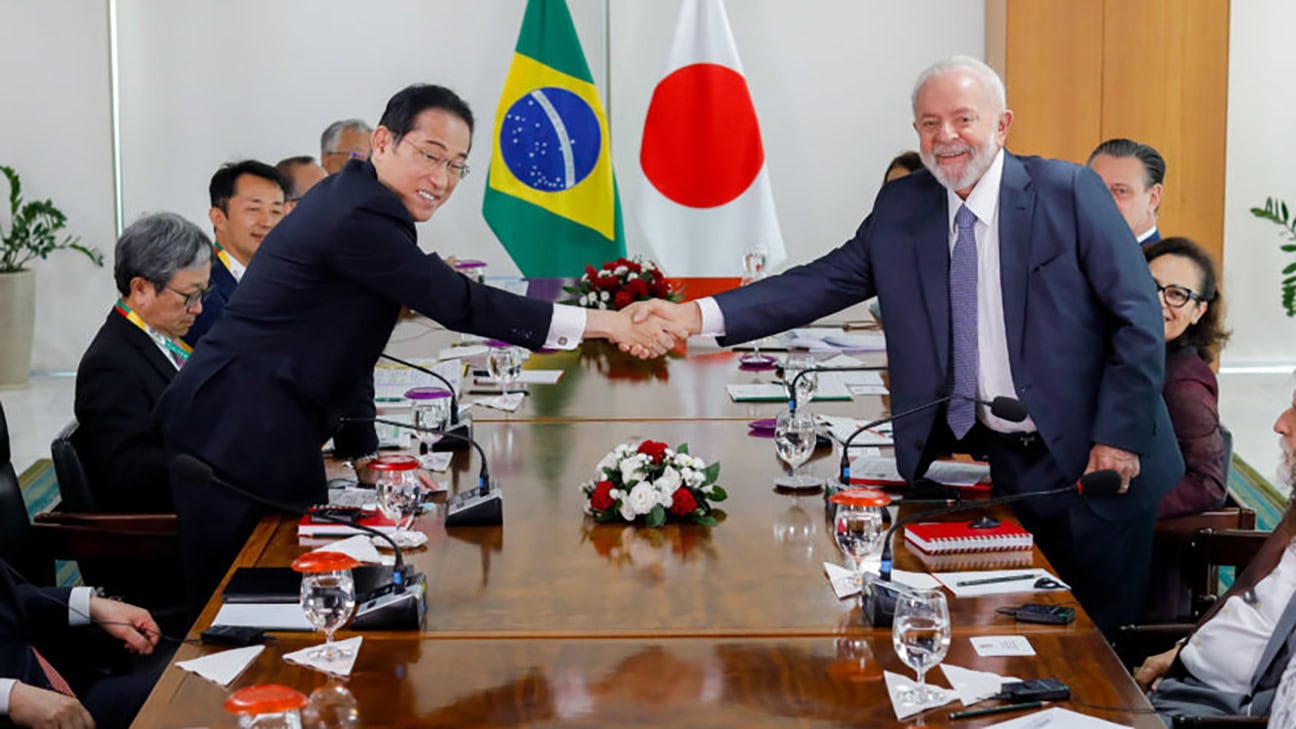
The Amnesty Commission, an autonomous advisory body of the Ministry of Human Rights and Citizenship, approved the recognition by the Brazilian state that Japanese immigrants and their descendants born in the country were politically persecuted during World War II (1939-1945).
The admission of persecution and/or complicity by the state was a response to the request for collective reparation presented by audiovisual producer Mário Jun Okuhara and the Okinawa Kenjin Association of Brazil on behalf of the entire Japanese community. In 2021, with a different composition, the commission denied a similar request.
During the public hearing of the request last month in Brasília, the president of the Amnesty Commission, Eneá de Stutz e Almeida, apologized on behalf of the Brazilian state to the descendants of the Japanese immigrants present at the session.
“I want to apologize on behalf of the Brazilian state for the persecution that your ancestors suffered, for all the atrocities and cruelties, prejudice, xenophobia, and racism. May these stories be told so that this never happens again,” declared Eneá.
Amnesty
According to Law No. 10,559 of 2002, those who, between September 18, 1946, and October 5, 1988, were harmed by institutional, complementary, or exceptional acts, as well as those who were punished or persecuted for exclusively political reasons, can be declared political amnesty recipients. In the case of the Japanese community, since it is a collective request, political amnesty, with the character of constitutional reparation, does not involve economic compensation – unlike individual cases.
During World War II, people born in Germany, Italy, and Japan living in Brazil were legally prohibited from residing in coastal cities. The justification was that, in the event of an attack, some of these citizens could assist Axis combat ships by transmitting signals and information. Among the three nationalities, the Japanese were, at the time, the majority on the Brazilian coast and were the most affected by the measure.
Present at the session, the Minister of Human Rights and Citizenship, Silvio Almeida (in the photo), classified the official recognition “of the Brazilian state’s acknowledgment of the serious human rights violations perpetrated on national territory against Japanese immigrants and their descendants” as an “act of justice.”
Brazil’s participation alongside Allied forces during World War II led to the arbitrary persecution of members of the Japanese community residing in Brazil. This included detentions, undue restrictions on freedom of expression and association, torture, and confiscation of property, among other acts of repression that aligned with the stigmatization process promoted by the state apparatus,” commented the minister.
Also, during the hearing of the request, the Minister of Institutional Relations, Alexandre Padilha, highlighted that Brazil is home to the second-largest Japanese community outside Japan and that the decision of the Amnesty Commission does justice to the role it played in shaping the country’s identity. “The work, judgment, and verdict of this commission play a fundamental role in stating that episodes [similar to those] judged here can never be repeated in Brazil or in the world,” he concluded.
Source: Rede Cultura.org