



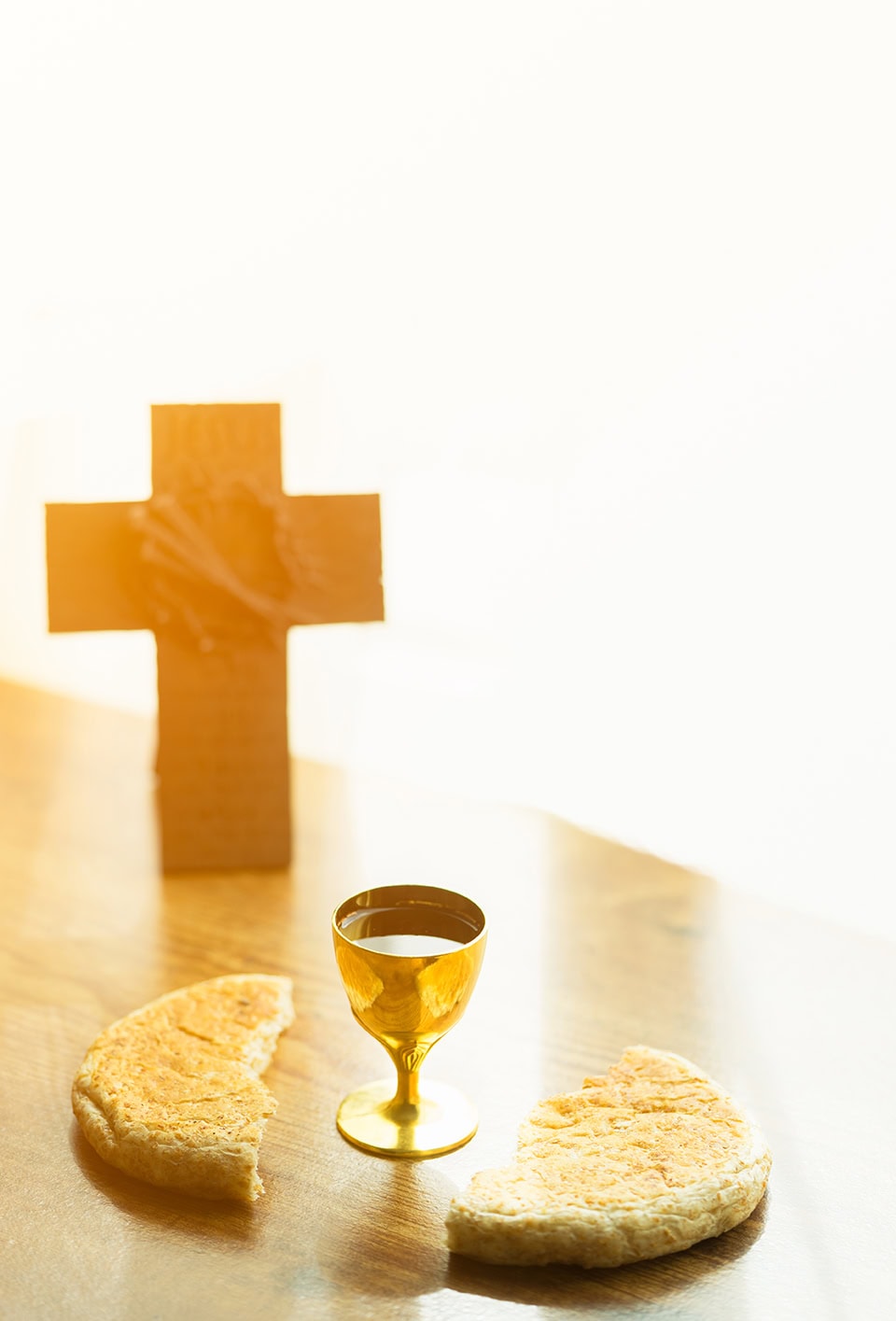
Corpus Christi, also called the Solemnity of the Most Holy Sacrament of the Body and Blood of Christ, Corpus Domini (Latin expression meaning Body of Christ or Body of the Lord), is a liturgical commemoration of the Catholic Apostolic Roman Church and the Anglican Church (the latter until 1548) that occurs on the Thursday following the Sunday of the Most Holy Trinity, which in turn takes place on the Sunday following Pentecost. It is a Holy Day of Obligation, in which participation in Holy Mass is mandatory, in the manner established by the episcopal conference of the respective
country.
For Roman Apostolic Catholics, the procession through public streets complies with a recommendation from the Code of Canon Law (canon 944), which requires the diocesan bishop to arrange for it “to publicly witness adoration and veneration for the Most Holy Eucharist, especially on the solemnity of the Body and Blood of Christ”.
History
The Solemnity of the Body and Blood of Christ originated in 1247 in the diocese of Liège, Belgium, to celebrate the real presence of Christ in the Eucharist in response to the theses of Berengar of Tours, who claimed Christ’s presence was not real but merely symbolic.
Pope Urban IV, at the time Canon James Pantaleon de Troyes, archdeacon of the Diocesan Chapter of Liège, Belgium, reportedly received the revelation from Augustinian nun Juliana of Mont Cornillon, who claimed to have had visions of
Christ expressing a desire for the mystery of the Eucharist to be celebrated with special prominence. Around 1264, in Bolsena, a city near Orvieto (where the then Pope Urban IV held his court), the episode known as the Miracle of Bolsena occurred, in which a priest celebrating Holy Mass, at the moment of breaking the Sacred Host, saw blood flow from it, soaking the corporal (the cloth on which the chalice and paten rest during Mass). The pope ordered the miraculous objects to be brought to Orvieto in a grand procession on June 19, 1264, where they were solemnly received by His Holiness and taken to the Cathedral of Santa Prisca. This was the
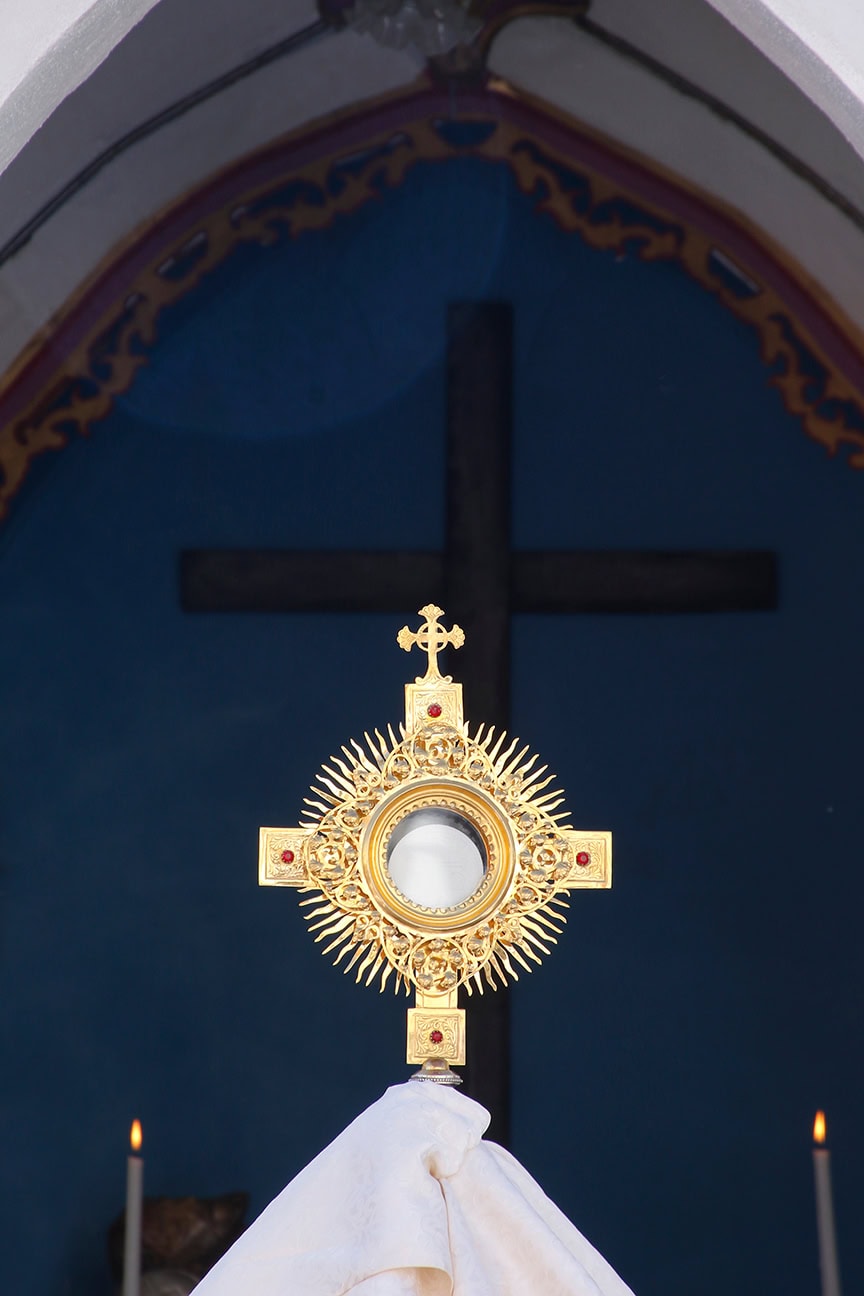
first known procession of the Eucharistic Corporal. The Corpus Christi feast was officially instituted by Urban IV with the publication of the bull Transiturus on September 8, 1264, to be celebrated on the Thursday after the octave of Pentecost.
For greater splendor of the solemnity, Urban IV desired an Office to be sung during the celebration. The chosen Office was composed by Saint Thomas Aquinas, titled Lauda Sion (Praise Zion). This hymn remains in use today in Corpus Christi celebrations.
Urban IV’s decree had little impact because the pope died shortly afterward, less than a month after publishing the bull Transiturus. However, it spread to some churches, such as the diocese of Cologne, Germany, where Corpus Christi has been celebrated since before 1270. The procession originated in Cologne and spread first in Germany, then France and Italy. In Rome, it is documented since 1350.
The Eucharist is one of the seven sacraments and was instituted at the Last Supper. According to Saint Augustine, it is a memorial of immense benefit for the faithful, left in the visible forms of bread and wine.
Corpus Christi is celebrated 60 days after Easter, falling between May 21 and June 24.
Corpus Christi Carpets
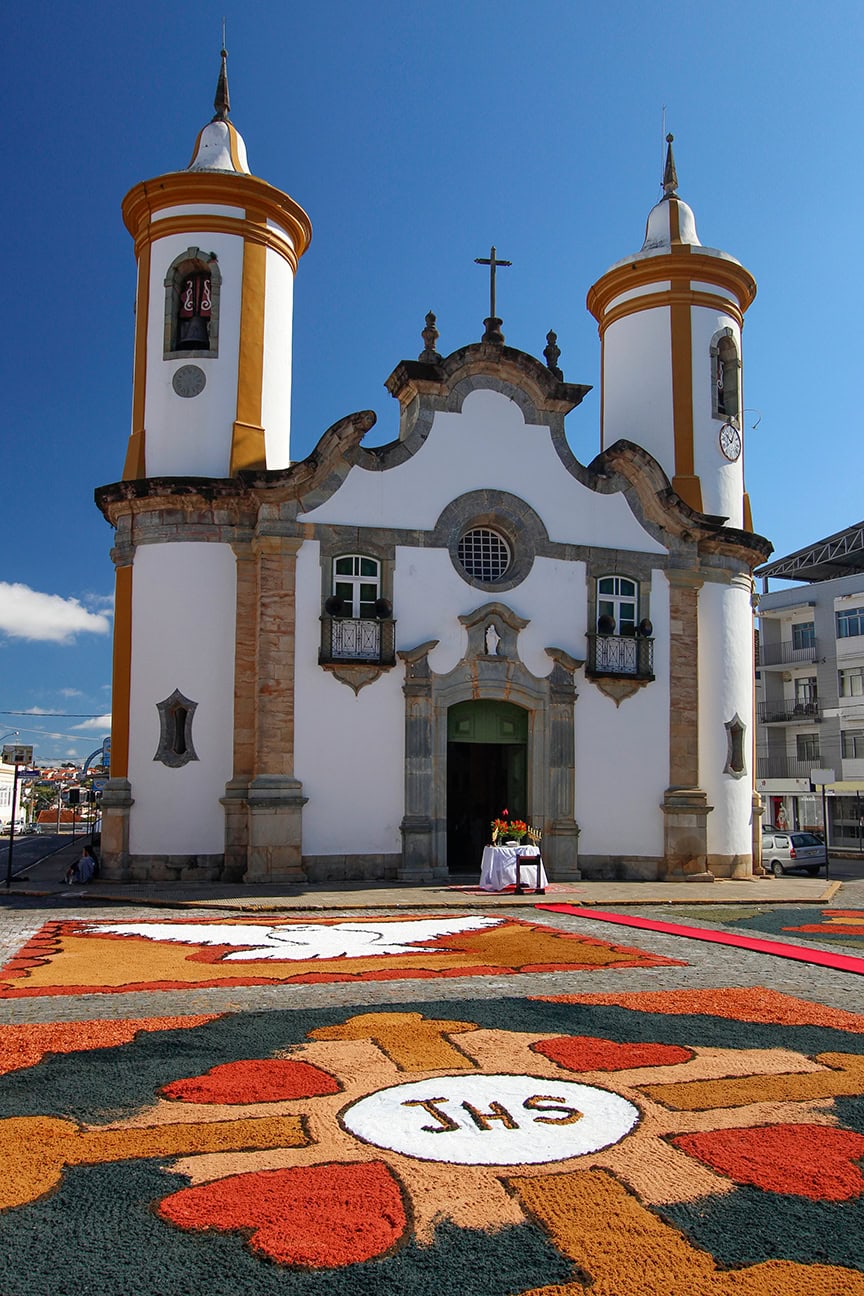
Corpus Christi carpets are a popular Catholic tradition common in various cities in Brazil and Portugal, crafted during the Corpus Christi celebration. Originating in Portugal and later spread to Brazil during the colonial period, the practice involves creating representations of biblical scenes, devotional objects, or simple ornamental themes on the streets through which the Eucharist procession will pass. The most common are drawings alluding to the figure of Christ, bread, and chalice.
In Brazil, the tradition is especially prevalent in Southeastern cities, forming an important part of the
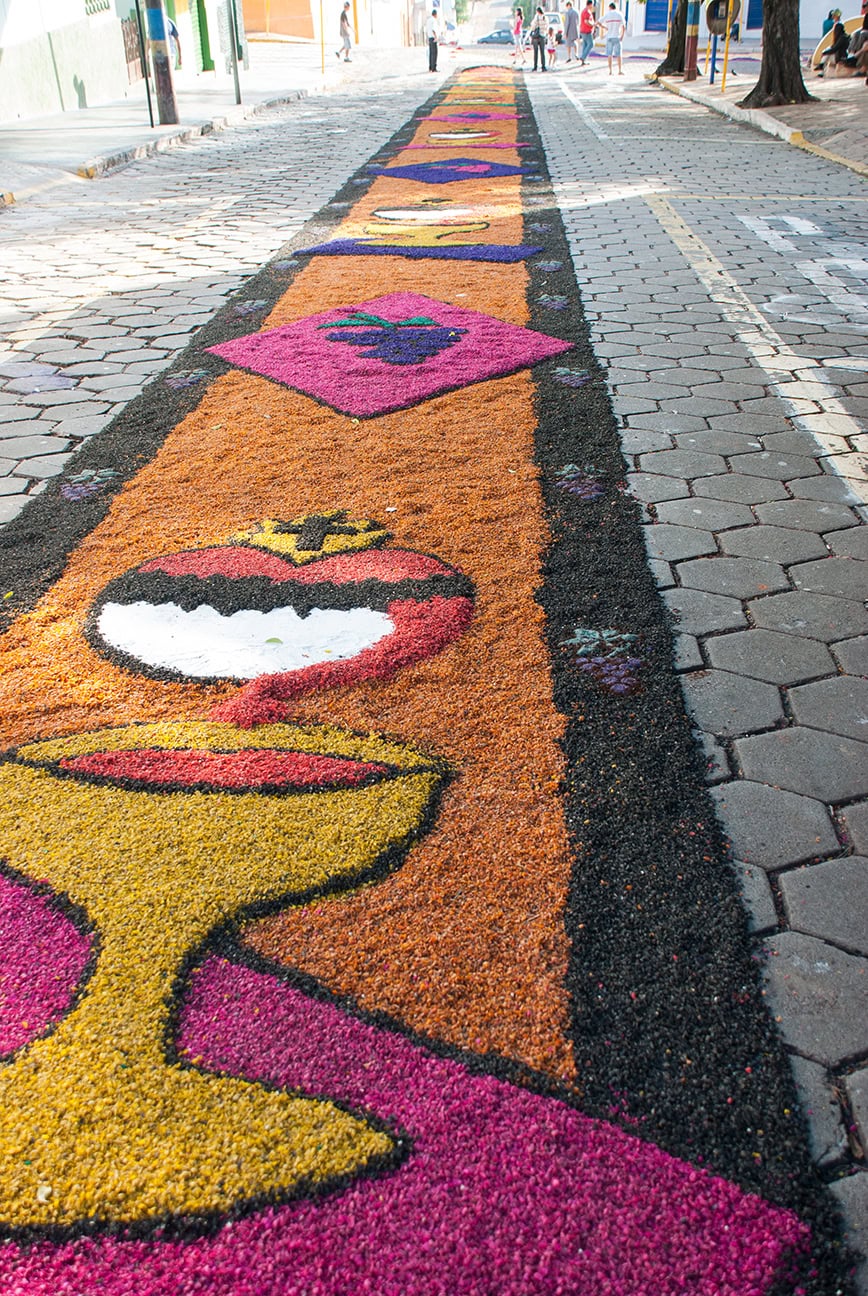
culture of historic cities like Ouro Preto. Groups of parishioners gather the night before Corpus Christi to make them, turning the practice into a space for socialization among the faithful.
In Brazil
In Brazil, Corpus Christi is an optional holiday point and may be a municipal holiday.
In many Portuguese and Brazilian cities, streets along the procession route are customarily adorned with vividly colored carpets and religious-inspired designs, a tradition begun by the Brotherhood of the Most Holy Sacrament. This longstanding festivity is a key tradition in Brazil, particularly in “historic cities”.
In Pirenópolis, Goiás, the Corpus Christi celebration is a deeply rooted tradition dating back to the early 18th century, with the founding of the Venerable Brotherhood of the Most Holy Sacrament of the Rosário Matrix. To this day, the brotherhood plays a key role in organizing the festivities with the community.
Over the centuries, the local community has voluntarily united for the celebrations, adding the beautiful carpet tradition. Made with colored sawdust, sand, cerrado seeds, and flowers, these carpets adorn the old stone streets. The procession traditionally occurs at dawn, preceding the solemn Mass. Even during exceptional circumstances like the COVID-19 pandemic in 2020 and 2021, the carpet tradition continued, though the traditional procession was suspended.
Moreover, Corpus Christi marks the close of the Festa do Divino, the last day the masked cavalhadas participants parade the streets, and the day the Emperor of the Divine receives the Crown of the Divine, beginning his reign and setting the stage for the next year’s Festa do Divino in Pirenópolis.
Due to its profound cultural importance, in 2019 the Corpus Christi celebration was officially recognized as Municipal Intangible Cultural Heritage.
In Curitiba, Paraná, it is renowned for hosting the world’s largest Corpus Christi celebration, part of the city’s official calendar and the State of Paraná’s official tourist calendar. It features 2 kilometers of carpet made by over 4,000 volunteers.
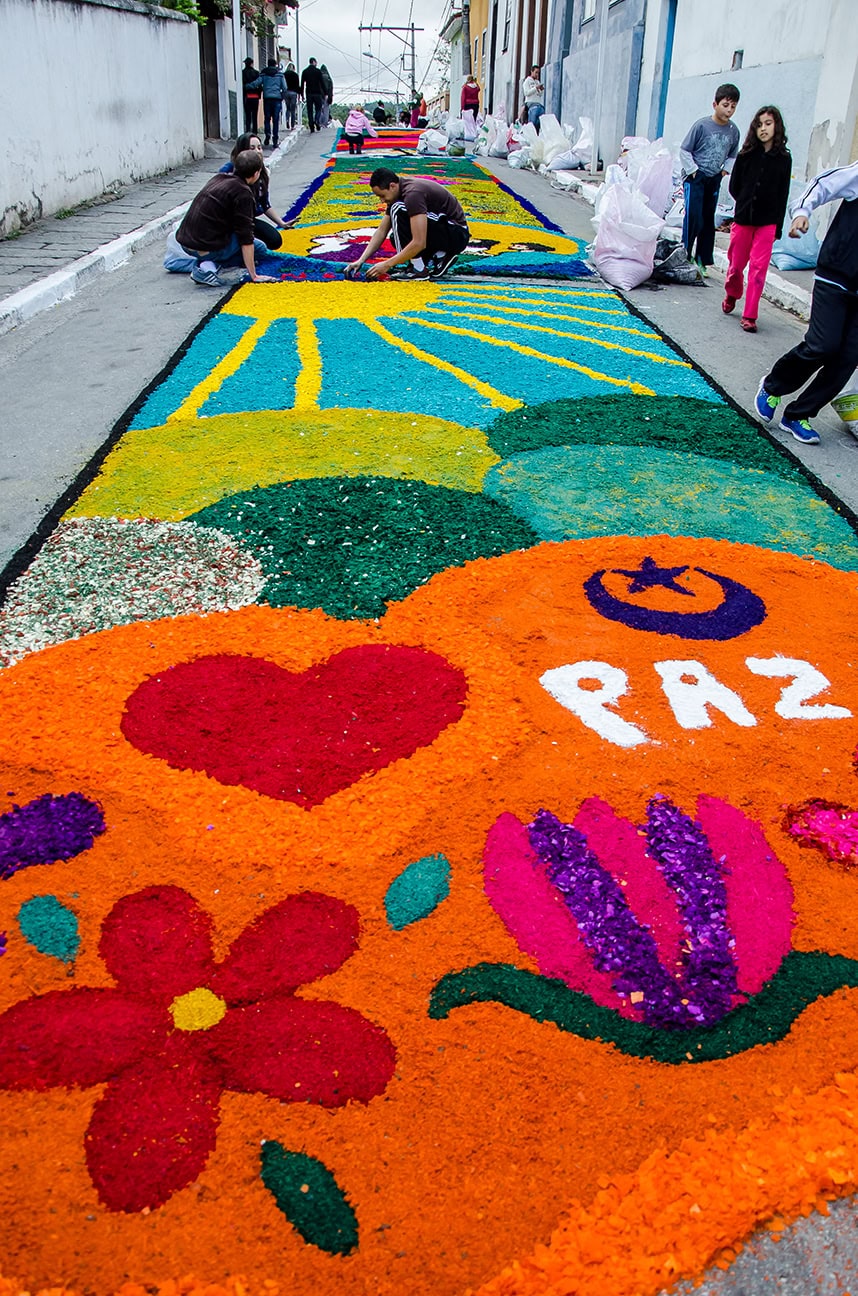
In Castelo, Espírito Santo, streets are decorated with huge colorful carpets made of flowers, colored sawdust, grains, marble, granite, and recycled materials. Themes reflect current issues like environmental preservation or violence against women, often with rhetorical questions prompting reflection.
The municipality of Matão, São Paulo, is famous for colorful carpets of ground glass, dolomites, sawdust, and flowers forming a cross over 12 blocks in the city center along the Eucharist procession route.
The city of Mariana, Minas Gerais, celebrates with streets adorned in sawdust carpets and paintings. In Coronel Fabriciano, faithful create sawdust carpets marking the procession from the Cathedral of São Sebastião through central streets. This tradition, originating in the 1940s with São Sebastião Parish, has been designated city cultural heritage.
São Paulo cities like Jaguariúna, Monte Mor, Santo André, Santana de Parnaíba, São Joaquim da Barra, Igarapava; Minas Gerais’ Uberaba; and Bahia’s Jacobina follow suit, decorating streets around the main church with sawdust, leather shavings, colored sands—whatever creativity offers for this holy day.
In Caieiras, local youth creatively craft carpets along the procession route from Santo Antônio Matriz Church to São Francisco de Assis Church, culminating in a luminous procession with the Most Holy Sacrament.
In Porto Ferreira, the feast emphasizes sharing among the city’s three parishes. Food collected for street decorations along the Most Holy Sacrament route is donated post-ceremony to families aided by groups like Pastoral da Criança and Pastoral da Saúde.
In Borborema, São Paulo, streets are decorated with linens, embroideries, and crafts from over 50 local stores and factories. After the procession, items are sold, with proceeds benefiting the São Sebastião Elderly Home.
 In Ibitinga (SP), faithful prepare embroidered fabric carpets placed over 10 blocks near the Matriz Church along the procession route. Annually, residents donate bed, table, and bath linens embroidered by local embroiderers.
In Vera Cruz (São Paulo), earth and colored sawdust carpets are traditional. Since 1937, Sagrado Coração de Jesus parish has organized decorations covering downtown streets—one of the country’s largest, spanning over 700 meters and up to 30 meters wide in places.
In Cabo Frio (Rio de Janeiro), the main avenue is decorated with salt carpets colored using special paints.
In São Gonçalo, Rio de Janeiro, Latin America’s largest salt carpet ensemble is created, stretching 2 km.
In Portugal
On this day, all 20 Portuguese dioceses hold solemn processions from cathedrals, as do many other locales, drawing large crowds. They reach peak splendor in Braga, Porto, and Lisbon.
Ordered by Dom Dinis, Corpus Christi began being celebrated in 1282, though references exist from Dom Afonso III’s time. Formerly, it featured dances, revelries, and processions blending sacred and profane: profession representatives, allegorical floats, devils, serpents, coca figures, gigantones, to bagpipes and instruments parading streets. In Penafiel, trades dances like blacksmiths’, masons’, and flower sellers’ persist. The celebration holds strong connotations in Minho, especially Monção and Ponte de Lima, where O Corpo de Deus endures for centuries.
Source: Wikipedia
Photos: www.shutterstock.com