



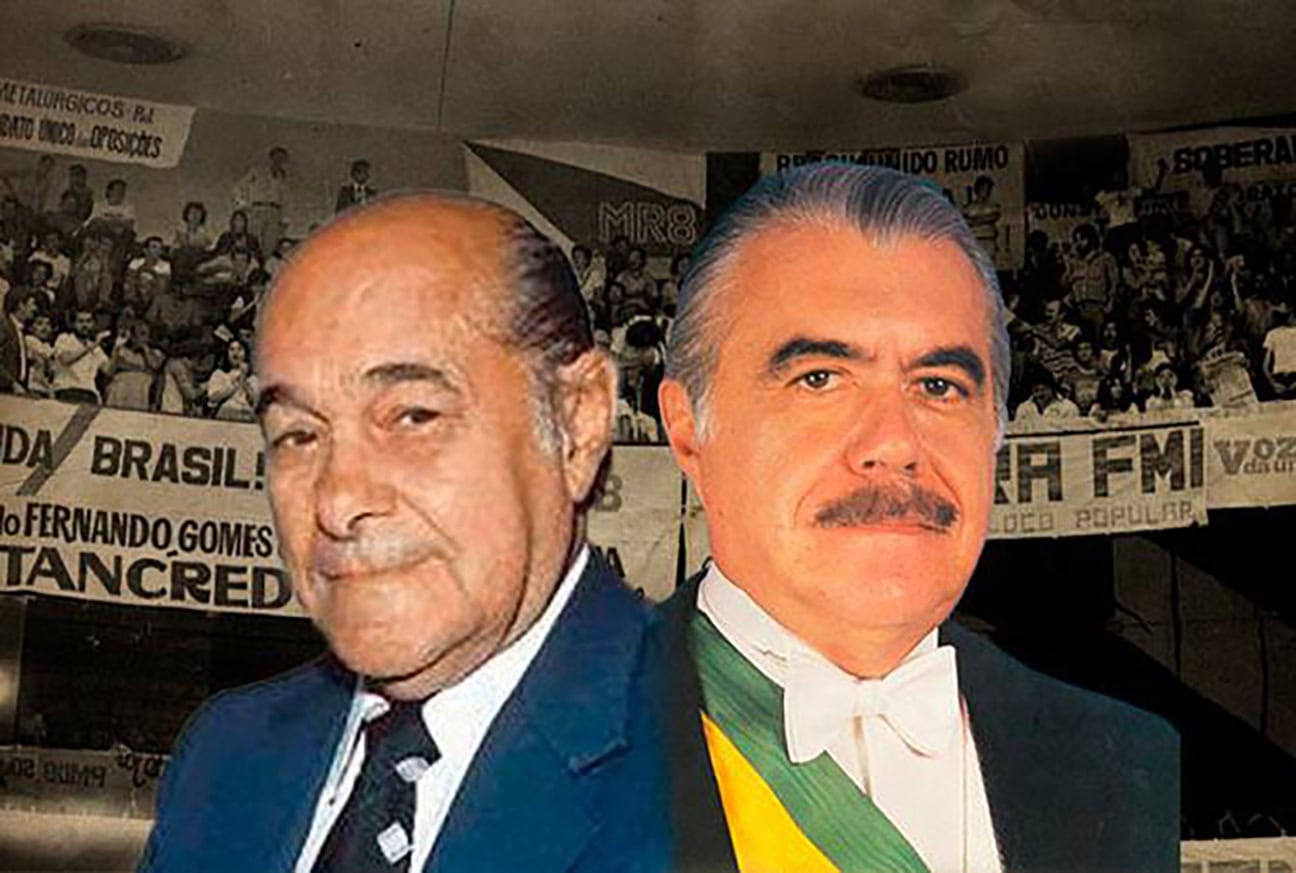
Brazil’s current democratic regime celebrated its 40th anniversary. It is the longest uninterrupted democratic period in the country’s history since the proclamation of the republic in 1889.
A long process resulted in the end of 21 years of civil-military dictatorship (1964–1985), with the nation’s redemocratization marked by the inauguration of José Sarney as president on March 15, 1985.
Until then, Sarney had been the vice president of the elected president Tancredo Neves. The election took place two months earlier by indirect vote — that is, through the National Congress. However, Neves’s health deteriorated, and he had to be hospitalized the day before the inauguration ceremony. Sarney then assumed the presidency temporarily.
“[Neves] did not want to undergo surgery without seeing that the democratic transition would occur because he knew we could face a political setback if we fell into disagreement,” Sarney noted during an event in Brasília celebrating the date.
Emphasizing that Brazil faced great uncertainties about the political future of the nation and the fear that the military would refuse to return power to society and restore direct voting, Sarney said that Tancredo only agreed to undergo intestinal surgery when he was assured that Sarney would take office, that the Federal Constitution would be observed, and that “the democratic transition would be guided by law.”
Neves died on April 21 after 39 days in the hospital, at the age of 75. The official cause of death was a generalized infection. After his death, Congress inaugurated Sarney as president.
“Those were years of struggle. I remember the intimate battles I participated in to ensure a smooth democratic transition. Setbacks were not only possible but likely, but we managed to overcome them,” Sarney declared.
As commander-in-chief of the Armed Forces, he instructed the then Minister of the Army, General Leônidas Pires Gonçalves, to “bring the Armed Forces back to the barracks.”
“As commander-in-chief, I gave [the military] my guidelines. There were two. First, the duty of every commander is to care for their subordinates. Second, the transition should be made with the Armed Forces and not against them, because that had been the subject of a pact built by all [political] leaders,” said the former president, describing the democratic transition as a victory for the people.
“Reunited with Democracy”
The Brazilian president Luiz Inácio Lula da Silva used his social media to celebrate the date. On X, he wrote that, besides the significance of the inauguration of a new president, March 15, 1985, entered history as “the day Brazil reunited with democracy.”
“President José Sarney governed under the constant threat of those who longed for the return of the dictatorship, but with extraordinary skill and political commitment, he created the conditions for us to write the Citizen Constitution of 1988 and change the history of Brazil,” he wrote.
“In these 40 years of democracy, despite very difficult moments, we have taken important steps to build the country of our dreams — a democratic, free, and sovereign country. We have enormous challenges ahead, but Brazil is now a country that grows with social inclusion,” the president added.
“We must defend it every day against those who, even today, plan a return to authoritarianism. We must show the new generations what it was like and what it would be like to live under a dictatorship again, and to have all rights denied, including the right to life,” he concluded.
An Ongoing Construction
In a video message, the president of the Superior Electoral Court and Minister of the Supreme Federal Court, Cármen Lúcia, said that democracy is a permanent construction.
“Forty years have passed since that March 15. After more than 20 years of authoritarian regime, my generation was able to witness the introduction of one of the frontiers we sought — a democratic rule of law, in which the president would come precisely from the struggles in the public squares, from legitimacy in the streets of Brazil,” she declared.
“These were not easy times. Nor were those that preceded [the indirect election of Tancredo and Sarney], which were tumultuous due to the lack of rights, the lack of respect for dignity, especially for the freedom to think, to participate,” she added, praising Sarney’s administration for ensuring the creation of a Constituent Assembly that included not only women but also other social groups.
“In these 40 years, in this process of redemocratization, we had the presence of women much greater than in other moments of Brazilian history. It is still short of what is necessary to ensure that equality is properly guaranteed, not only in normative texts but in the dynamics of life. To have democracy, we must have freedom and equality,” she argued.
Source: Agência Brasil