



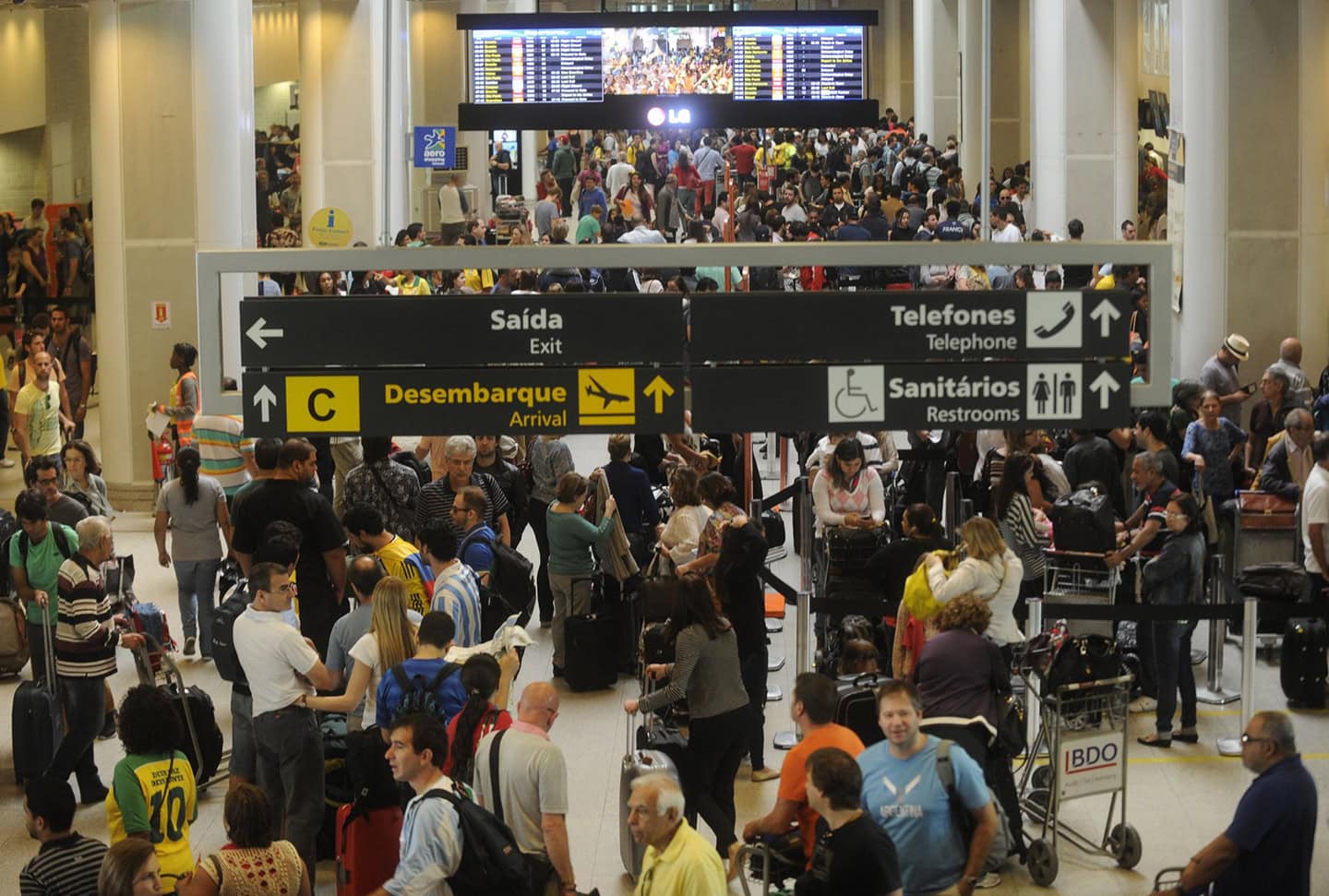
From January to May this year, Brazil welcomed 3,264,765 international tourists. The number for the first five months grew by 8.6% compared to the first five months of 2023, when the recorded entries were 3,005,505. This performance is the third best in the historical series, which began in 1995, behind only 2017, with 3.3 million, and 2018, with 3.4 million, and represents a growth of 4.3% compared to the same period in 2019, before the Covid-19 pandemic, when the record of foreign visitors was 3,131,108.
The data comes from Embratur, the Ministry of Tourism (MTur), and the Federal Police (PF), and one of the main highlights is the arrival of Chilean tourists, which recorded a jump of 46.3% during the period.
The president of the Agency, Marcelo Freixo, celebrated the growth of international tourism during this period. “This beginning of the year has been very positive for Brazil, both in terms of tourist arrivals and foreign exchange,” he said. “This has happened because we are working to ensure that the whole world knows that Brazil is back, as President Lula often says. We are positioning ourselves on the most important issues of our time, such as the environment, sustainability, respect for diversity, and democracy, building this Brazil. And people want to visit our country, which is diverse, continental, and plays a fundamental role in solving the world’s economic and environmental problems,” he added.
The Minister of Tourism, Celso Sabino, also expressed optimism about the results. “With these promising numbers, Brazil reinforces its image as being at the top of the list of the most desired destinations in Latin America. And the expectation is that the sector will continue to grow in the coming months, hosting important events such as the G20 meeting and Rock in Rio. A tourism movement that impacts economic development and job creation in the country,” he declared.
Who is coming to Brazil?
The main sources of tourists to Brazil in the first five months of 2024 were Argentina, with 1,132,872, the United States, with 298,021, and Chile in third place, with 294,485. The performance of the Andean country, which represents a percentage increase of 46.3% in arrivals compared to the same period last year – when it sent 201.3 thousand tourists to Brazil – is explained, in part, by the expansion of the air network between the countries. There are 41.5% more flights than in 2019 and 2.4 million more seats.
Chile has become a strategic source for Brazilian destinations, as Argentina, still first in the ranking, has shown declines in the volume of tourists due to the local economic crisis.
In fourth place is Paraguay, with 243,479, and in fifth is Uruguay, with 210,915. Five European countries complete the top 10: France, with 97,207, Portugal, with 91,885, Germany, with 83,387, the United Kingdom, with 74,181, and Italy, with 61,661.
Source: Embratur