



“If I cared about subsidies,” Elon Musk said in 2015, “I would have gone into the oil and gas industry.”
However, the history of Musk’s business empire tells a different story.
Musk’s companies have long been fueled by taxpayer money, whether in the form of massive government contracts, low-interest loans, tax exemptions, and other supports that helped make Musk one of the richest people in the world.
Over the past two decades, companies managed by Musk have received tens of billions of dollars in federal support.
A tally by The Washington Post found that at least $38 billion in government support has been directed to Musk’s companies, an estimate that likely understates the scope of the support, since some defense and intelligence contracts are not publicly available.
In turn, the US government has become dependent on Musk, from space travel to national security and the future of green transportation.
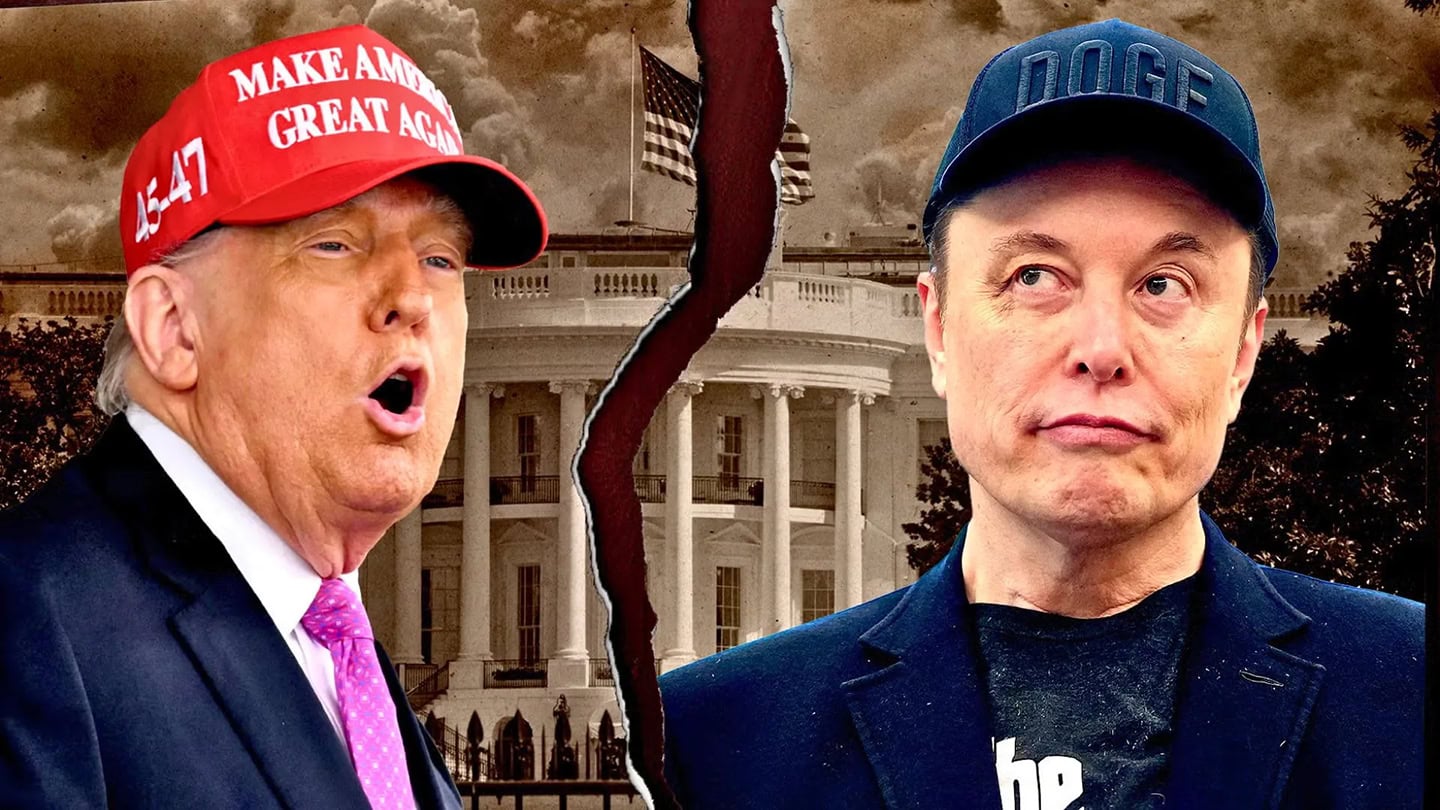
So, when President Trump on Thursday threatened to end Musk’s subsidies and government contracts in a spiraling feud between the former political allies, it was met with some skepticism.
Musk has deep ties to the US space program and the intelligence community. Musk’s companies have become inextricably linked to the federal government, particularly SpaceX’s crucial role in the US space program.
The company’s rockets now provide the only way for US astronauts to go to and from the International Space Station.
“While their political partnership seems to have come to an end, it’s hard to imagine the government canceling SpaceX contracts anytime soon,” said Dan Grazier, senior fellow and program director at the Stimson Center, a think tank focused on national security.
“It will take some time before any competitor can fill the gap, so it seems the president and the tech mogul will have to find a way to get along,” he said.
It’s unclear if Musk was trolling or being serious, but he responded to Trump’s threats by saying SpaceX would begin decommissioning its Dragon spacecraft, which has been used for years to transport crews and cargo to the space station.
In fact, there are now astronauts on the station. They were taken there by a SpaceX capsule.
Cutting ties with the federal government would leave those crew members stranded and complicate the Trump administration’s goal of landing astronauts on the moon in the coming years.
Later on Thursday, Musk appeared to back down, writing on X: “OK, we won’t decommission the Dragon.”
SpaceX is also building hundreds of spy satellites for the Pentagon, Reuters reported in March, work that, if abandoned, could have national security implications and provoke a reaction from the intelligence community.
Additionally, SpaceX’s Starlink satellite network is a player in a multi-billion-dollar federal effort to expand internet access to underserved parts of the country.
Ukraine has also heavily relied on Starlink services since Russia launched a full-scale invasion of the country in 2022, leading top Pentagon officials to coordinate directly with Musk, The New Yorker reported.
Federal Support for Tesla and EV Infrastructure in Doubt
Tesla, the largest US electric vehicle company (which also controls the country’s largest charging network), has been a major beneficiary of federal support.
This will likely change with the massive congressional reconciliation bill championed by Trump.
The version of the bill passed by the House would cut consumer tax credits for electric vehicle purchases and drastically reduce federal funding for charging stations.
While automotive industry experts see these cuts as hurting traditional automakers more than Tesla, Trump accused Musk of not supporting the bill because it eliminated electric vehicle subsidies.
Musk previously opposed EV tax credits, seeing them as mainly benefiting his competitors, but changed his mind as Tesla’s profits and sales plummeted globally since Musk began overseeing mass layoffs and other restructurings through the cost-cutting unit, the Department of Government Efficiency.
The end of federal programs aimed at expanding the EV sector would not damage Tesla as severely as other problems the automaker is facing, said John Helveston, a George Washington University professor who studies the electric vehicle industry.
“Musk did Tesla no favors by taking extremely unpopular actions during his time at DOGE, and globally the business is suffering from other decisions, like focusing on the Cybertruck instead of launching more practical new models that consumers actually want,” he said. “In the European Union, sales have dropped sharply due to political damage, and sales in China have fallen due to intense competition from very competitive Chinese EVs.”
During the Biden administration, Congress allocated billions of dollars to expand electric vehicle charging stations across the country. A key pillar of that plan was to make Tesla’s chargers compatible with other vehicles, something Tesla agreed to in exchange for a share of the federal funds. That plan was halted by the Trump administration, even before Congress tried to pass the Trump-backed tax policy bill that would further reverse EV support.
Jeffrey Sonnenfeld, associate dean of the Yale School of Management, said more pain for Tesla could eventually precipitate Musk’s wealth.
“Tesla relies enormously on federal generosity for building EV charging infrastructure, not to mention federal regulatory approval for its ongoing experiments in autonomous driving and robotics,” Sonnenfeld said.
“His wealth is highly precarious,” he said, noting that most of Musk’s fortune is tied to his Tesla stake. “The reality is that Musk’s position is much weaker than many realize.”
With or without subsidies, Musk “will continue to prosper”
The bitter implosion between Trump and Musk on Thursday came just months after Trump turned the White House South Lawn entrance into a Tesla showroom, and after the White House chose Starlink to help expand internet across the White House campus.
Both were performative gestures that crystallized the billionaire’s cozy relationship with the president, who was willing to promote Musk after he spent more than a quarter of a billion dollars to support Trump’s presidential campaign.
So, will the Trump-Musk breakup cut the other way and cause pain to Musk’s companies?
Paul Levinson, a professor at Fordham University, said it might lead to more short-term drops in Tesla’s stock and a hit to his wealth. But even if some of the federal money flowing to Musk’s business empire disappears, it probably won’t stop the billionaire in the long term, he said.
“Musk has ample resources to sustain these losses, reorganize and rebuild his companies and holdings, and come out ahead and on top,” Levinson said. “In short: if all the Trump administration does in its feud with Musk is attack his financial interests, Musk has a high probability not only of surviving, but of continuing to prosper.”
Source: www.npr.org by Bobby Allyn