



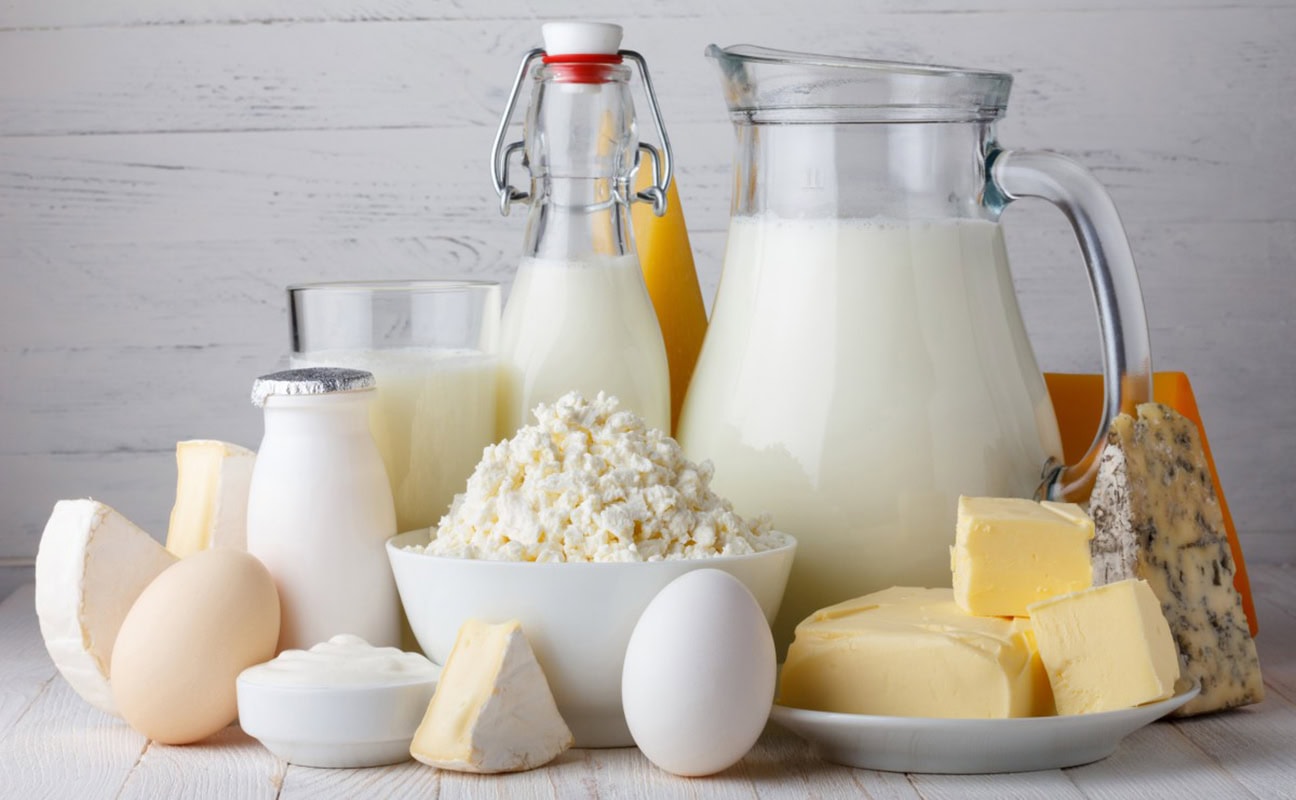
When new dietary guidelines are released later this month, the Trump administration is expected to overturn long-standing advice on whole milk and its full-fat friends in the dairy aisle.
For decades, the American public has been advised to opt for fat-free or low-fat dairy options, mainly due to concerns about limiting saturated fat intake in these foods.
Although the public doesn’t always follow this advice — cheese is the main source of saturated fat in our diet —, Health Secretary Robert F. Kennedy has promised to end the “attack on whole milk, cheese, and yogurt” and give these foods new prominence in the guidelines that will be released.
So, what’s the argument for abandoning skim milk and other low-fat alternatives?
Richard Bruno, professor of human nutrition at Ohio State University, says the nutrition field has been debating this issue for many years.
“There has been a lot of controversy,” says Bruno, who is the author of numerous studies on the topic.
Views have evolved in recent years, as researchers have begun to discover that “saturated fat from dairy foods doesn’t seem to behave the way we thought, based on historical evidence linking saturated fat to heart disease,” he says.
Since dairy is such a broad category — and fat content varies widely among foods like milk, yogurt, and cheese —, it’s challenging to make blanket statements. However, Bruno and others in the field say that upon examining the data, the rationale for a general recommendation to prioritize skim milk and low-fat dairy quickly disappears.
“If we’re saying low-fat is better than high-fat, we should have studies clearly demonstrating that, because guidelines should be evidence-based,” says Benoît Lamarche, who directs the Center for Nutrition, Health, and Society in Quebec and is a professor at Université Laval.
That’s why Lamarche gathered leaders in the nutrition field last year, including several who worked on dietary guidelines, to review the evidence on dairy fat and its link to cardiometabolic health.
Their conclusion?
“The evidence shows they have the same effect and the evidence is of low quality, with only a few studies examining this,” he says.
Lamarche says the argument against whole dairy is largely “circumstantial.”
Previous research showed that people at higher risk of heart disease tended to have a dietary pattern that included more whole dairy, but there were other factors — and foods in their diet — that could explain that finding.
“We don’t have rigorous and strict evidence opposing the two types of dairy and their effect on health,” he says. “We need to stop distracting people with this recommendation.”
Some recent studies even indicate that consuming higher-fat dairy is not only neutral but, in some cases, may bring benefits beyond low-fat options, at least when part of a healthy dietary pattern.
A small trial found that participants who followed the “DASH” diet — developed by National Institutes of Health scientists to reduce hypertension — and used whole dairy had comparable improvements in blood pressure to those who consumed low-fat dairy, and better blood lipid levels, which is a risk factor for heart disease.
Another study that followed 18 adults in Europe for three weeks found that drinking whole milk outperformed skim milk in raising HDL, or “good” cholesterol.
Bruno says the hypothesis is that certain bioactive components in the milk fat membrane, such as phospholipids, “mitigate any putative risks associated with this higher saturated fat intake.”
The key, he says, seems to be how dairy fat is consumed.
For example, research shows that butter — also derived from dairy but composed mainly of fat and water — has the predicted negative consequences on cholesterol; however, this is not true when people consume the same amount of saturated fat in the form of cheese, which comes with calcium, protein, minerals, and other components.
In fact, Lamarche notes that there is strong evidence from observational studies that cheese is associated with a lower risk of stroke.
“Is this real or confounded by something else?” he says. “We don’t know, but the data are quite consistent on this.”
Similarly, there is a well-documented link between yogurt and the prevention of type 2 diabetes, which led the Food and Drug Administration to issue a health claim about these products (although, of course, the yogurt universe spans from whole milk Greek yogurt to skim varieties loaded with sugar).
While some recent trials examining higher-fat dairy products show promise, Bruno believes it is “premature to have a one-size-fits-all recommendation that consumers should prioritize whole over skim.”
Even in the case of milk, the evidence is scant in either direction, and Lamarche argues that U.S. and Canadian guidelines should be neutral on the issue for now, until better data exist.
In its reports, the scientific advisory committee that provides guidance to the federal government for the 2025 dietary guidelines decided not to change existing recommendations supporting low-fat milk because it “could not draw a conclusion on the relationship between consumption of milk with different fat contents” — advice that Kennedy may well ignore, given his public comments disparaging the scientific report.
Frank Hu, chair of the nutrition department at Harvard T.H. Chan School of Public Health, agrees that there are still no clear answers, meaning there’s no reason to start promoting whole dairy as superior, especially since a glass of whole milk and cheese come with more total calories and saturated fat.
In his view, however, the much bigger problem is that Americans mainly consume dairy products in the form of pizza, burgers, sandwiches, and other foods “loaded with sodium, refined starch, and processed meats.”
In that context, it probably doesn’t make much difference whether the cheese you’re eating is low- or high-fat. On the other hand, it’s relatively easy “to incorporate a moderate amount of dairy into your overall diet, whether whole or low-fat,” he says.
“If you’re replacing your carbs, especially refined carbs and sugar, with dairy products, even some whole ones, that’s probably a good thing.”
Source: npr.org by Will Stone