



Do you know that black plastic spatula in your kitchen drawer? It might be time to toss it out. Recently, there has been a lot of talk about the dangers of cooking with black plastic utensils. The main claim: using black plastic to stir food in pots and pans over high heat can release chemicals into the food you will ingest. The reason? The use of unregulated recycled plastics in these kitchen utensils, which can become toxic when exposed to heat.Is it really bad to cook with black plastic utensils?While many have been quick to condemn the use of black plastic utensils, experts say it all comes down to the type of plastic used. “In general, plastic kitchen utensils, such as those made from polypropylene or known as PP, are considered safe because they are durable and can withstand high temperatures,” says Dr. Li Li, assistant professor at the University of Nevada Reno, to NBC News. “However, some plastic utensils may be made from recycled plastics, and some of these plastics may come from products that are not originally intended for food use, such as electronics. An example of this is flame retardants, such as polybrominated diphenyl ethers (PBDEs),” says Li. These PBDEs have been linked to various health issues. “When heated, these chemicals can leach into food, posing long-term health risks such as endocrine disruption or increased cancer risk,” says Dr. Susan Harlander, who holds a PhD in food science and nutrition and is the vice president of technology at Ra Foods.How to safely use black plastic utensils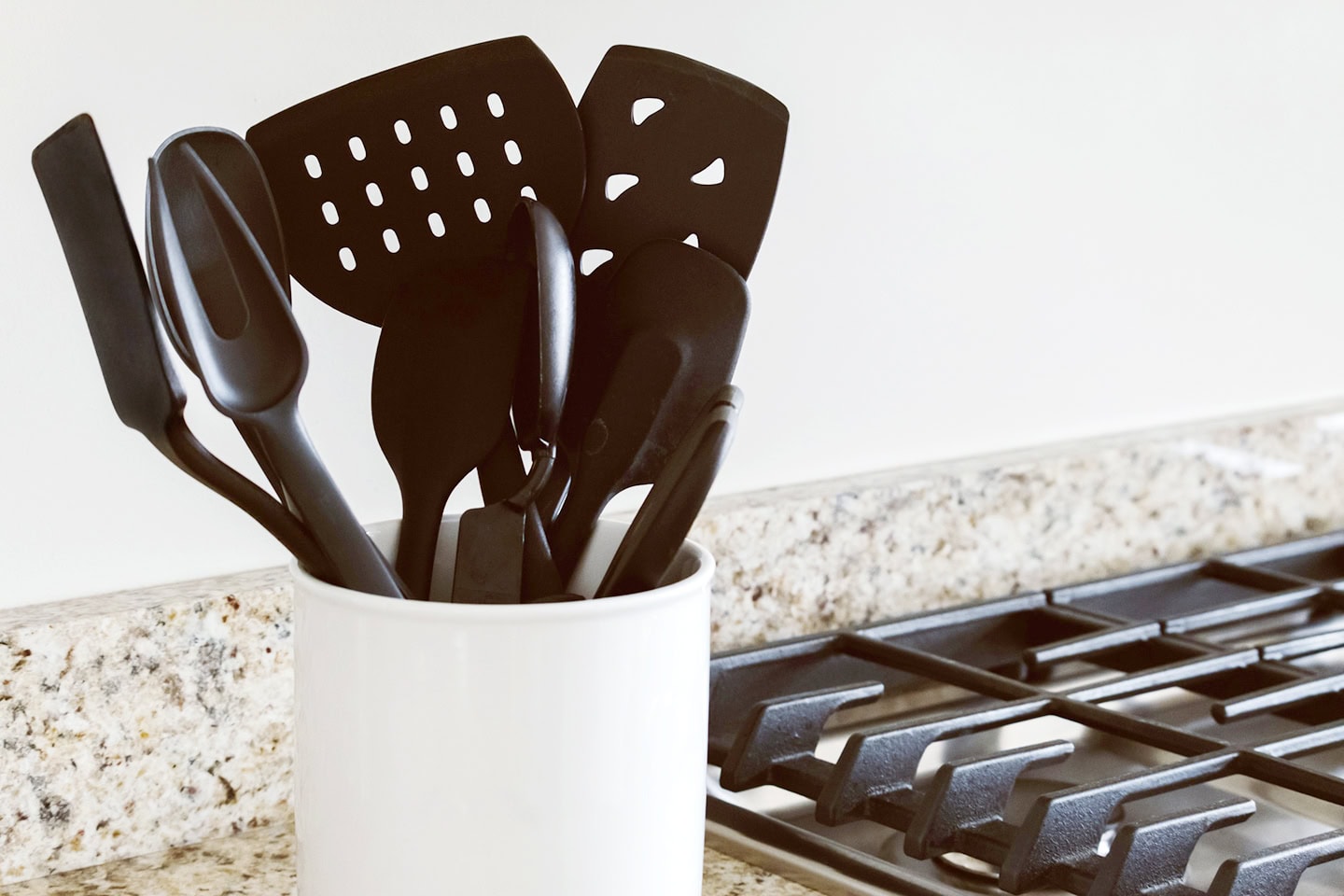 If you don’t want to give up your black plastic utensils — after all, they are some of the most affordable — you can mitigate the risks. The easiest way would be to avoid using any utensil made from recycled plastic. Unfortunately, most utensils are not labeled with the type of plastic used. With that in mind, it is possible to reduce risk factors, even if yours are made from recycled materials, by not using the utensils over direct heat.Don’t want to take the risk?There are countless alternatives to black plastic kitchen utensils. Here is a list of materials that experts recommend for those trying to avoid black plastic:• Wood or bamboo: They are natural, non-toxic, biodegradable, and suitable for non-stick kitchen utensils. One thing to remember: wood is more porous, so it requires careful cleaning to avoid bacterial growth. • Food-grade stainless steel: This material is durable, heat-resistant, and recyclable. Just know that stainless steel utensils cannot be used on non-stick pans, as they can scratch the surface and remove the protective coating. • Silicone: food-grade silicone is heat-resistant and safe for non-stick surfaces, making this material a good option for those who like to cook over high heat or use non-stick pans.Source: NBC News
Do You Need to Throw Away Your Black Plastic Kitchen Utensils?
-
Facial biometrics will be mandatory for mobile phone users
Starting in 2027, mobile phone users will need to undergo biometric validation to contract and maintain phone lines. The requirement was approved by the National Telecommunications Agency (Anatel) and aims to curb fraud, since the line holder will now be identified. Biometrics will be performed through facial recognition with proof of life, which will be…