



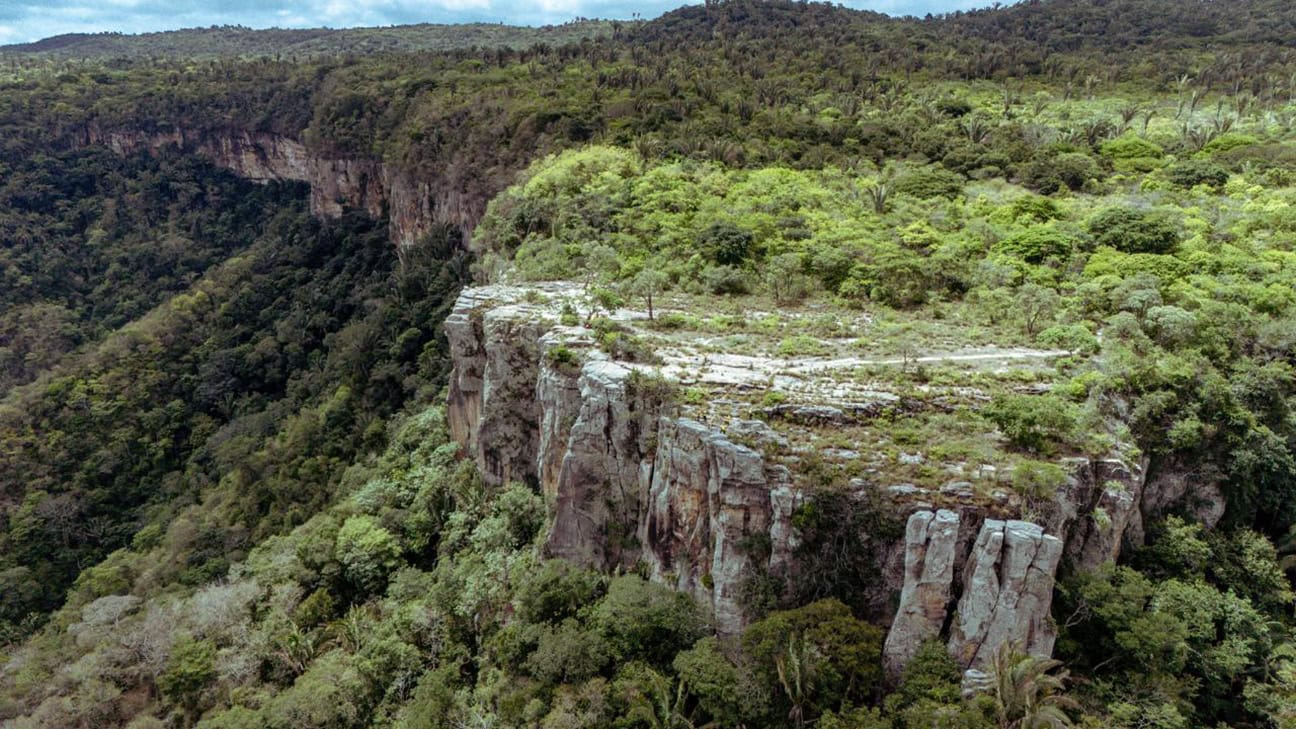
A new ecotourism and adventure route is now part of the map of long-distance trails in Brazil, connecting the states of Piauí and Ceará in a 180-kilometer course. Fully signposted and structured, the “Trilha Caminhos da Ibiapaba” crosses areas of Caatinga, Atlantic Forest, and Cerrado, promoting immersion in natural landscapes and archaeological sites, as well as boosting community tourism in the region.
Divided into 13 sections, the route covers the municipalities of Tianguá, Ubajara, and Ibiapina in the state of Ceará, as well as the cities of São João da Fronteira, Brasileira, and Piracuruca in the state of Piauí. The route connects three important conservation units: Sete Cidades National Park (PI), Ubajara National Park (CE), and the Serra da Ibiapaba Environmental Protection Area (APA), located between the two states.
“Trilha Caminhos da Ibiapaba” is one of the 22 trails approved by the National Network of Long-Distance Trails and Connectivity (RedeTrilhas), a public policy coordinated by the Ministry of Environment and Climate Change (MMA) and the Chico Mendes Institute for Biodiversity Conservation (ICMBio), in partnership with the Ministry of Tourism. It is the first long-distance trail to cross the Caatinga biome.
According to Tourism Minister Gustavo Feliciano, the initiative reinforces the sustainable development strategy in the region. “The launch of the Trilha Caminhos da Ibiapaba reinforces the federal government’s commitment to a tourism model that combines experience, conservation, and productive inclusion. The trail consolidates the Northeast as a reference in sustainable tourism, generating opportunities, stimulating local entrepreneurship, and promoting regional development in a planned and responsible manner,” he stated.
Along the route, which can be traveled on foot or by bicycle, visitors will find viewpoints, waterfalls, and archaeological remains. The signage follows the national standard, identified by yellow and black markings, ensuring guidance for independent adventurers and those opting to be accompanied by local guides. The route already features tour operators, visitor guides, and a network of registered partner accommodations.
Hospitality and gastronomy businesses were mapped and invited to join the project, receiving official identification plaques. According to Fabiana Oliveira, General Coordinator of Tourism Products and Experiences at the Ministry of Tourism, the initiative expands the offer of responsible experiences across the country. “Long-distance trails like the Trilha Caminhos da Ibiapaba strengthen local production chains, stimulate community tourism, value heritage, and increase visibility for destinations aligned with good conservation practices,” she highlighted.
Thiago Beraldo, the project’s technical coordinator, emphasized the socioeconomic impact of the initiative. “In addition to its environmental importance, it is essential for initiatives like this to also generate social and economic value for owners of private lands along the route and for the communities encountered along the way,” he stated.
The route’s implementation was led by the Brazilian Institute of Municipal Administration (IBAM), in coordination with local governments and supported by the GEF Terrestre program, an initiative of the Ministry of Environment (MMA) funded by the Global Environment Facility (GEF). The Brazilian Biodiversity Fund (FUNBIO) serves as the executing partner, and the Inter-American Development Bank (BID) as the implementing agency.
The route’s development involved rural residents and landowners, reviving historical paths linked to ancient drovers and peddlers. With support from environmental managers, sections were redefined to prioritize shaded areas and natural viewpoints. “It is a complete crossing with natural and cultural elements and various usage possibilities, reviving the culture of drovers and peddlers who helped shape the history of the Northeast,” stated Pedro da Cunha e Menezes, Director of Protected Areas at the Ministry of Environment.
Highlights include the reconfiguration of nearly 40 kilometers within Ubajara National Park, replacing former highway routes with paths embedded in natural areas. In São João da Fronteira (PI), community engagement led to the creation of a complementary route, the São João da Fronteira Trail, a shorter path through carnauba palms and rock paintings, expanding options for different visitor profiles.
For Carla Guaitanele, ICMBio’s General Coordinator of Public Use and Environmental Services, the trail bolsters conservation strategies through social participation. “With this initiative, ICMBio advances its mission to conserve nature with people, offering visitors the chance to discover and fall in love with the Serra da Ibiapaba’s landscapes, geological monuments, and preserved fauna and flora, while experiencing the culture and hospitality of local communities that provide support points along the trail,” she commented.
According to Rodolfo Marçal, FUNBIO manager for the GEF Terrestre program, the project integrates environmental and social agendas. “The Trilha Caminhos da Ibiapaba project commits to environmental conservation as a driver for an economy where local communities are protagonists of social transformation,” he observed. He added: “The plan is for the program to support implementation of other strategic routes in the program’s other two target biomes, the Pampa and the Pantanal.”
Source: brasil247.com