



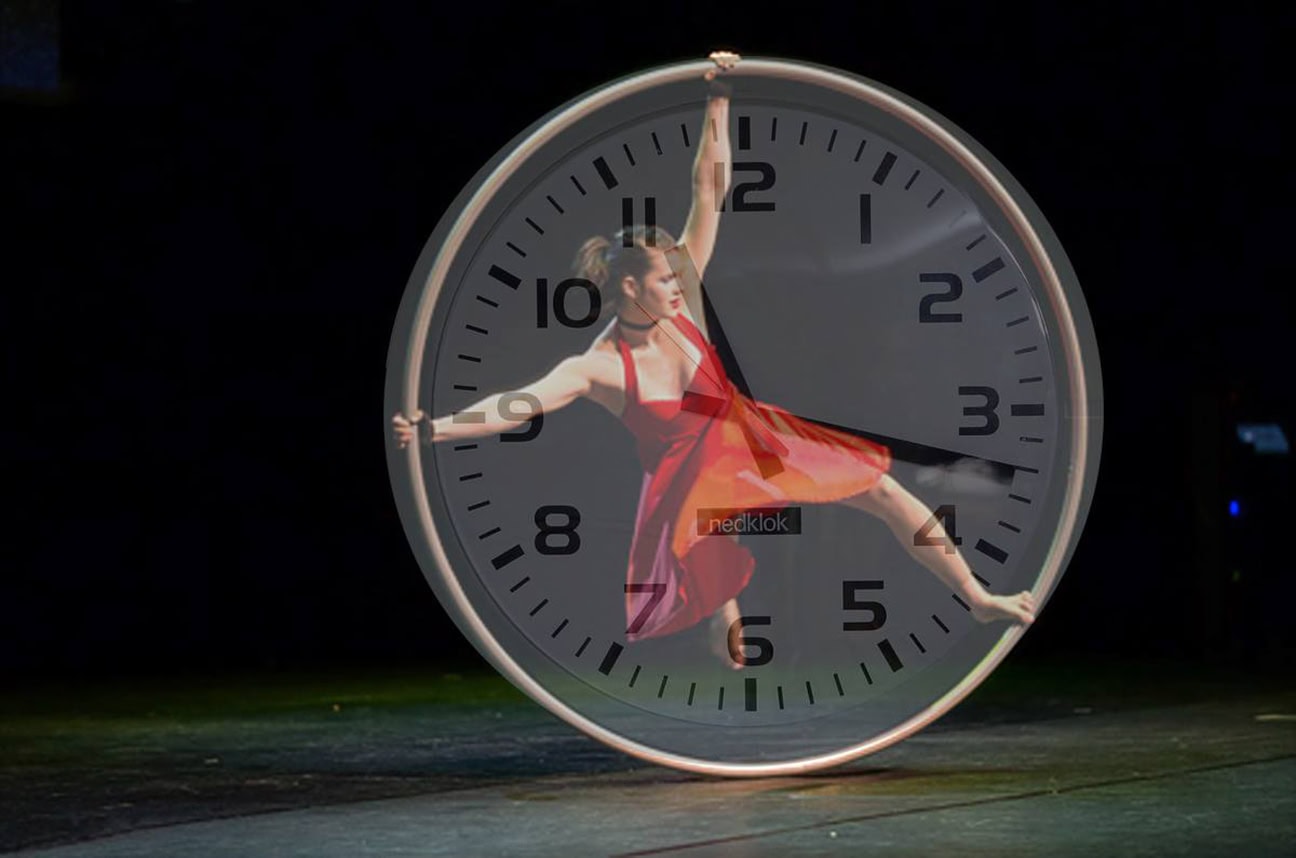
The return to “standard time” is better for our health, according to sleep scientists, but the time change can be disruptive, and our bodies also need to adjust to more hours of darkness as we approach winter.
The body is an exquisite time-measuring machine. And growing evidence shows that if you align your daily habits with your circadian rhythms—including when you sleep, eat, and exercise—you can help ward off chronic diseases and optimize good health.
Let’s start with a quick summary: “Your body is full of clocks,” explains Emily Manoogian, researcher and chronobiologist at the Salk Institute for Biological Studies. In addition to the master clock in the brain, there are time-measuring mechanisms in all organs and cells.
“Every cell in your body that has DNA has a molecular clock that keeps its own time,” she says. They are part of your body’s circadian system, helping you stay in sync with the 24-hour cycle.
But our bodies don’t keep perfect time on their own. Every day, we drift a little from the 24-hour cycle and need a reset, explains Satchin Panda, researcher at the Salk Institute and author of The Circadian Code: Lose Weight, Supercharge Your Energy, and Transform Your Health from Morning to Midnight.
“The master clock in your brain coordinates all the other clocks through a series of different signals,” explains Manoogian, including external signals—like light, food, and movement. And that’s why the timing of our habits can play a fundamental role in keeping our clocks in sync.
Sunlight serves as the external signal to resynchronize the master clock. That’s why it’s helpful to open the curtains in the morning and spend time outdoors.
And, it seems, our first bite of food of the day also acts as an external signal to synchronize the clocks in our digestive system and throughout the body.
“Food is also a signal to reset the clocks, especially in your gut,” says Manoogian. “It’s one of the reasons why it’s important to make sure you eat at the right time in relation to light.”
Eating is a signal to activate your digestive and metabolic organs, which are primed to function better during the day. At night, the metabolic system is ready to rest as well.
“When you’re sleeping, your body expects to fast. And so it shuts down the part of the system that takes glucose from the blood and stores it,” she explains.
When people eat too close to bedtime or in the middle of the night, their metabolic organs aren’t optimized to do their job. The misalignment can lead to poor blood sugar control. Her research shows that restricting the number of hours you eat during the day to about a 10-hour window can lead to significant improvements in metabolic health.
There is much evidence that eating out of sync with your circadian rhythms can increase the risk of metabolic diseases, including diabetes and obesity. Studies show that shift workers or night workers have a higher risk of developing these conditions, in part due to disruption of natural rhythms.
And when it comes to exercise, some people do better in the morning, others in the afternoon, says Dr. Phyllis Zee, director of the Center for Sleep and Circadian Medicine at Northwestern University Feinberg School of Medicine. But science shows that exercising late at night, right before bed, can disrupt sleep.
“There is a peak time for almost all physiological processes,” says Zee. “The timing of eating, the time you exercise, physical activity—all of that helps entrain the clocks in your body to stay in sync,” she says.
If you dine and go to bed more or less at the same time most nights, your ‘creature of habit’ routines may be worth it. “Science shows that regularity is very important for the circadian system and for health,” says Zee.
And while each person is unique, she says, a general rule is to start limiting exposure to light, food, and heavy exercise a few hours before bedtime.
But as scientists have learned more about the importance of keeping our biological clocks in sync, society has gone in the opposite direction. Manoogian points to midnight food menu ads and 24/7 work and entertainment as examples of our modern 24/7 life.
One way to resist is to track your daily habits. Michelle Pittsley, who lives in Vista, California, started using an app called myCircadianClock to log her eating and blood glucose. She says it helped her stick to a time-restricted eating window and track her progress. The app was developed by Salk scientists as a research tool and is used in Salk Institute studies. It’s free for any adult who downloads it. The app provides guidance on when to sleep, eat, and exercise. (Note: if you sign up, you’re sharing data with researchers.)
When we have “broken” circadian rhythms, the risk of chronic diseases increases, including obesity, diabetes, heart disease, fatty liver disease, intestinal diseases, and common cancers, say Panda and Manoogian. If you want to be more intentional about aligning your habits for better health, here are three strategies to try.
1. Skip the nighttime snack and limit your eating hours
People who restrict their eating to a 10-hour window can reduce their risk of type 2 diabetes, says Manoogian. She and Panda co-authored a study with 108 adults, average age 59, who had symptoms of metabolic disease. They found that those who followed time-restricted eating saw a significant reduction in their hemoglobin A1c (which is a person’s average glucose level over a few months), compared to participants who didn’t restrict their eating window.
Participants weren’t asked to reduce calories, just to restrict the eating window for a three-month period.
“It was exciting to see that time-restricted eating alone reduced their type 2 diabetes risk by 60%,” says Manoogian, because the reduction in blood sugar, if maintained, reduces the risk of the disease.
Research also suggests that eating your biggest meal of the day in the afternoon, rather than later at night, can be beneficial for those who want to lose weight. A Spanish study found that early eaters lost 25% more weight than late eaters. Panda says that when his mother gave up a nighttime snack that included tea with sugar and milk and an occasional snack, that single change led to a significant drop in her blood sugar levels.
2. Go to bed more or less at the same time most nights
“Keeping the same sleep schedule is ideal,” says Manoogian. Consistency gives your body a chance to anticipate and keep internal clocks synchronized. During sleep, waste is cleared from our brains, memories are consolidated, and there’s a pile of evidence showing that rest is critical for our health.
But don’t blame yourself for an off night. And, of course, there will be disruptions due to travel, work deadlines, or weekend celebrations. “Getting out of your circadian system isn’t like breaking an arm,” says Manoogian. Think of the damage from erratic schedules like how dripping water can erode a stone. “Small impacts, over and over, can wear down the system,” she says. And the result is that you may feel slower and older.
There are many bedtime rituals to promote good nighttime sleep, including limiting light before bed and sleeping in the dark. Zee’s research shows that even small amounts of light during sleep can have adverse effects on cardiovascular and metabolic health.
3. Schedule exercise for your ‘sweet spot,’ but not too late at night
Whether you’re a morning or evening person can influence your ideal exercise time, so it varies from person to person, says Zee. “The best time to exercise depends, in part, on what we call your chronotype,” she says, which is a person’s innate preference for sleep timing or when they feel most alert and energetic. One way to estimate your tendency is with a Morningness-Eveningness questionnaire.
“If you’re a morning person, then morning exercise can be beneficial,” creating a consistent structure, says Zee, but people who get more alert later in the day may want to delay it. As people balance competing obligations, exercise can be fit into the schedule that works for your agenda, even if it’s not your biological clock’s preferred window. She says it’s important to remember that exercise is beneficial no matter what time you do it.
But keep this in mind: “Exercise is a stimulating signal to tell your body you should be awake,” says Manoogian, so it’s no surprise that recent research shows that exercising right before bed can disrupt sleep quality.
Source: npr.org by Allison Aubrey