



Joaquim José da Silva Xavier, better known by his nickname “Tiradentes,” was a revolutionary from colonial Brazil, born in 1746 on the Fazenda de Pombal, in the captaincy of Minas Gerais. He was the son of the Portuguese Domingos da Silva Xavier, a landowner, and Maria Paula da Encarnação Xavier, a Portuguese woman born in the Brazilian colony, being the fourth of nine children.
In 1751, his mother died, and in 1757, his father passed away. With the premature death of his parents, his family soon lost their properties due to debts. He did not receive formal education and was placed under the guardianship of his uncle and godfather Sebastião Ferreira Leitão, who was a dentist. He worked as a peddler and miner, became a partner in a pharmacy assisting the poor at the Rosário bridge in Vila Rica, and also dedicated himself to pharmaceutical practices and the profession of dentistry, which earned him the nickname Tiradentes.
 In 1772, after defending a slave, he was arrested and lost his peddler’s license. With the knowledge he acquired from mining work, he became a technician in land recognition and resource exploration. He began working for the government in recognizing and surveying the southeastern hinterlands. In 1780, he enlisted in the 6th Company of Dragoons of the Regular Cavalry Regiment of the Captaincy of Minas Gerais; in 1781, he was appointed commander of the Dragoon detachment patrolling the “Caminho Novo,” a road that served as a route for the mining production of the captaincy to the port of Rio de Janeiro. Dissatisfied with not being promoted in his military career, having reached the rank of ensign, the initial officer rank at the time, and having lost his position as marshal of the Caminho Novo patrol, he requested leave from the cavalry in 1787.
From this moment, history begins to diverge, where one path reveals a revolutionary Tiradentes and another reveals a disgruntled Tiradentes.
The Great Luso-Brazilian Encyclopedia highlights that after leaving the Cavalry, he set out to explore a small mine, but as this initiative yielded no results, he incurred debts that partly changed his character, turning him into a rebel. He then moved to Rio de Janeiro, where he lived for about a year, attempting to promote a public initiative to channel the waters of the Andaraí and Maracanã rivers to improve water distribution, but the government vetoed his proposal. This increased his indignation towards Portuguese rule. He returned to Minas Gerais in 1789, where revolutionary ideas were already circulating in some mining towns, something that piqued his interest. Some historians report that Tiradentes established relations with Dr. José Alves Maciel, who had just returned from Europe and was influenced by democratic ideas, which inspired Tiradentes to fight for independence.
Another account that has gained more credibility is that when he returned to Minas Gerais, he met a movement allied with members of the clergy and the local elite, among whom were priests Carlos Correia de Toledo e Melo, José da Silva e Oliveira Rolim, and Manuel Rodrigues da Costa, Lieutenant Colonel Francisco de Paula Freire de Andrade, Colonels Domingos de Abreu Vieira and Joaquim Silvério dos Reis, poets Cláudio Manuel da Costa, Inácio José de Alvarenga Peixoto, and Tomás Antônio Gonzaga, a former ombudsman, who planned the independence of Minas Gerais, later known as the “Inconfidência Mineira.”
This entire movement began in Vila Rica (now Ouro Preto), which was the richest city in the state, having a European lifestyle with orchestras, theater, and literary groups. This movement started due to the tax imposed on the gold extracted from the mines. This tax began in 1756. At that time, the Marquis of Pombal imposed a gold tax of 1/5 on the weight of gold that was to be sent to Portugal for 10 consecutive years (10 years that ended up lasting 60 years). With the gold mines in Vila Rica running out, the miners could not pay the fifth of the tax, and to make matters worse, the Portuguese Empire established a fixed quota of 1,500 kg per year, regardless of the amount extracted. Following the appointment of Luís da Cunha Meneses as governor of the captaincy in 1783, part of the local elite was marginalized in favor of his group of friends. The feeling of revolt peaked with the decree of the derrama, an administrative measure that allowed the forced collection of taxes to be executed by the new governor of the Captaincy, Luís Antônio Furtado de Mendonça, 6th Viscount of Barbacena, which particularly affected the mining elites. This was necessary to settle the accumulated mining debt since 1762, which at the time amounted to 768 arrobas of gold in overdue taxes.
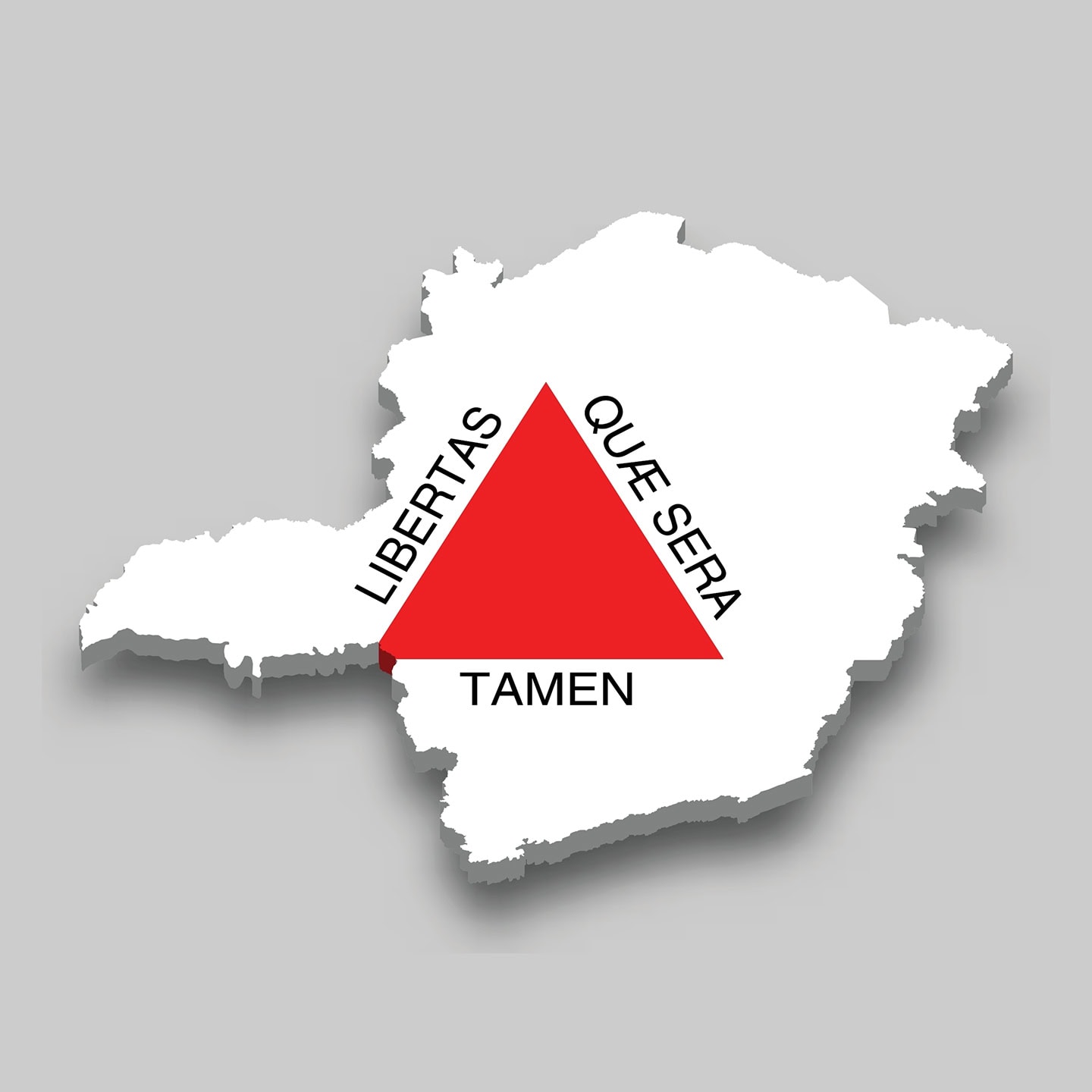
Contrary to what is reported in history, Tiradentes was one of the members of the Inconfidentes movement, not the leader or one of the main architects. Being a man known by both the poor and the elite of Minas, he served as a mediator between the two classes. Another important detail was that all members were linked to Freemasonry, under the banner and masonic motto of Libertas Quae Sera Tamen, which adorns the perfect triangle, with this fragment from Virgil.
The idea of the Inconfidência sought to mobilize the mining people to initiate a revolution to proclaim the independence of Minas Gerais and establish a republic. Contrary to what has been conjectured, the Inconfidentes did not intend to liberate Brazil, but rather Minas Gerais.
On March 15, 1789, the Inconfidentes took to the streets ready to fight for their ideals and rights; however, the movement did not succeed. Joaquim Silvério dos Reis (a member of the Inconfidentes) betrayed the others and, along with Basílio de Brito Malheiro do Lago and Inácio Correia de Pamplona, in exchange for the forgiveness of his debts with the Royal Treasury, reported the plan to the authorities.
 On March 14, the Viscount of Barbacena had already suspended the derrama, which completely deflated the movement. Upon learning of the conspiracy, Barbacena sent Silvério dos Reis to Rio to present himself to the viceroy, who immediately opened an investigation (devassa). Alerted, Ensign Tiradentes, who was on licensed travel to Rio de Janeiro, hid in a friend’s house but was discovered and arrested on May 10. Days later, the Viscount of Barbacena began arresting the Inconfidentes.
On June 15, 1789, the trial against the Inconfidentes began.
Tiradentes was imprisoned in the “Cadeia Velha,” located in the building of the old Chamber of Rio de Janeiro, where the current Palácio de Tiradentes is located. During the nearly 4 years he was imprisoned, the trial process was still unfolding in court, until in 1792, it reached a verdict. And it is from this moment that the story of Tiradentes begins to be mythologized.
According to lawyer Mário Caldonazo, the public defender of the 29 accused had 21 days to read the entire case and prepare the defense arguments. The process lasted from 1789 to 1791, and Tiradentes was interrogated 11 times. In the first testimonies, Tiradentes denied any involvement, just like the other accused, later admitting authorship and exonerating his companions. These 11 testimonies were conducted because the inquisitors were insecure in Tiradentes’ statements, as the lack of firmness in his testimonies did not demonstrate the role of leader that he proclaimed himself to be. Studies suggest that Tiradentes, being the member with the least cultural preparation and few friends, was the best choice to serve as a scapegoat to save the true leaders from death, as some of them were members of the Army, such as Lieutenant Colonel Francisco de Paula Freire de Andrade, commander of the Dragoons, and Colonel Domingos de Abreu e Vieira, as well as including priests, artists, public officials, merchants, etc.
Imprisoned, all the Inconfidentes waited three years for the conclusion of the process. Some were sentenced to death and others to exile; a few hours later, by a letter of clemency from D. Maria I, all sentences were changed to exile, except for Tiradentes, who remained sentenced to capital punishment, but not by cruel death as provided by the Kingdom’s Ordinances: Tiradentes was hanged.
 The defendants were sentenced for the crime of “lesa-majestade,” defined by the Afonsine and Philippine ordinances as treason against the king. This crime was compared to leprosy by the Philippine ordinances.
And so, on a Saturday morning, April 21, 1792, Tiradentes paraded in procession through the streets of downtown Rio de Janeiro, on the route between the public jail and where the gallows had been erected. The general government sought to turn this into a demonstration of strength of the Portuguese crown, staging a true spectacle. The reading of the sentence lasted eighteen hours, after which there were speeches praising the queen, and the procession was accompanied by a real fanfare and composed of the entire local troop.
Executed and quartered, with his blood, the certificate that the sentence had been fulfilled was drawn up, declaring his memory and his descendants infamous. His head was raised on a post in Vila Rica, having been quickly co-opted and never located again; the other remains were distributed along the Caminho Novo: Santana de Cebolas (now Inconfidência, a district of Paraíba do Sul), Varginha do Lourenço, Barbacena, and Queluz (formerly Carijós, now Conselheiro Lafaiete), places where he had made his revolutionary speeches. They razed the house where he lived, throwing salt on the ground so that nothing would grow there. Some versions suggest that his hanging was staged, that he had been murdered in prison.
Another, less reliable version, depicts that throughout the process, he voluntarily admitted to being the leader of the movement because he had the promise that they would spare his life in the event of a death sentence. On April 21, 1792, with the help of Freemason companions, he was swapped for a thief, the carpenter Isidro Gouveia. The thief had been sentenced to death in 1790 and assumed the identity of Tiradentes in exchange for financial help to his family, offered to him by Freemasonry. Gouveia was taken to the gallows, and witnesses who witnessed his death claimed to be surprised because he appeared to be much younger than his 45 years. In the book from 1811 by Hipólito da Costa (“Narrativa da Perseguição”), the physical difference between Tiradentes and the one executed on April 21, 1792, is documented. The writer Martim Francisco Ribeiro de Andrada III wrote in the book “Contribuindo,” from 1921: “No one saw his face, and to this day, it is debated whether he was ugly or handsome.”
The body of the thief Gouveia was quartered, and the pieces were scattered along the road to Vila Rica (MG), the city where the movement developed. The head was never found, as it was hidden to prevent the farce from being discovered. The other Inconfidentes were sentenced to exile or acquitted.
Tiradentes did not die as a hero or a martyr. He died as a rebel, as a traitor, who had the misfortune of coming off worse. The Portuguese Crown could not let this go unpunished. It had to set an example, and this fell on the shoulders of Tiradentes, who ended up serving as an example to the population, that anyone attempting to promote any revolutionary act would suffer the same consequences.
Only nearly a century later, during the republican process that culminated in the Proclamation of the Republic on November 15, 1889, did he begin to be remembered by history and became a “martyr” or a “national hero.” Until then, he lived in anonymity.
But how did he become a martyr, a hero?
There were several revolts that occurred in Brazil during these periods, starting from the Inconfidência Mineira (1789), among the most important were the Conjuração Baiana (1798), the Revolução Pernambucana (1817), the Guerra dos Farrapos (1835-1845), and the Guerra do Paraguai (1864-1870). All these movements had leaders, candidates to be popular heroes, but why the choice of Tiradentes?
There are several reasons. First, he belonged to the army, which was largely responsible for the Proclamation of the Republic. He was a man of the lower class (aiming to refer to the issue of the “people,” of the “popular”), he was the only one to be blamed and executed, and his execution was presided over by speeches that saved and glorified Queen Dona Maria I. The republicans saw this as a reaffirmation of their ideals, that is, a “rebel against the oppression of the Portuguese monarchy,” implying to the people that this is what they wanted, that republicanism would be the freedom from monarchical oppression.
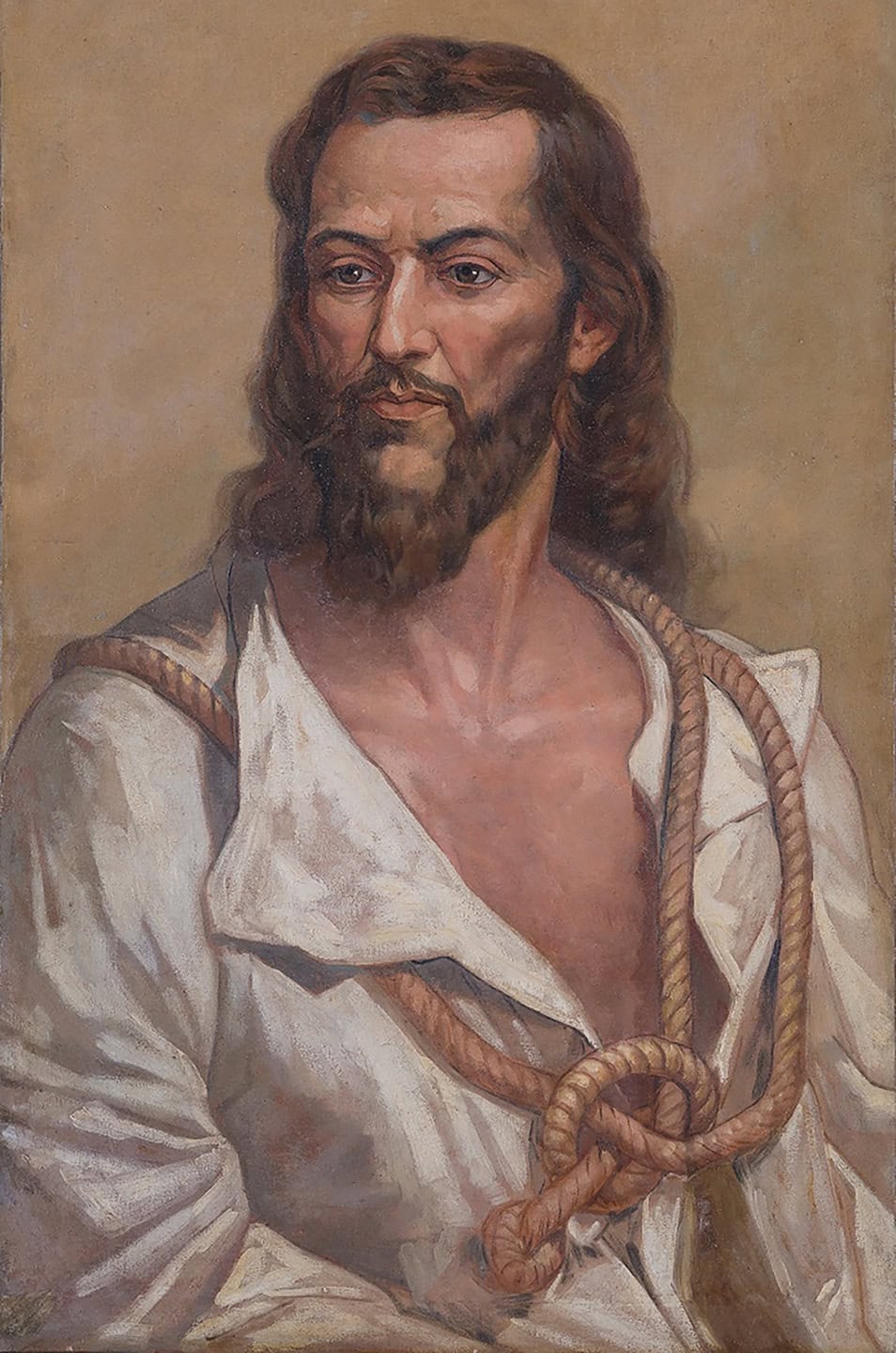
Another discussion is regarding his image, his portrayal. No portrait of him was painted at the time. The republicans then used an image similar to that of Jesus Christ, that is, a man with a long beard and hair. The first image of him dates back to 1889, and it is certain that the painters had no way to portray him at the time, creating a “character.”
In this case, in 1889, the renowned artist André Delpino (1864-1942) was commissioned to paint the official image of Tiradentes. Then, Delpino drew a profile image of the martyr of the Inconfidência, still wearing the “death knot” around his neck.
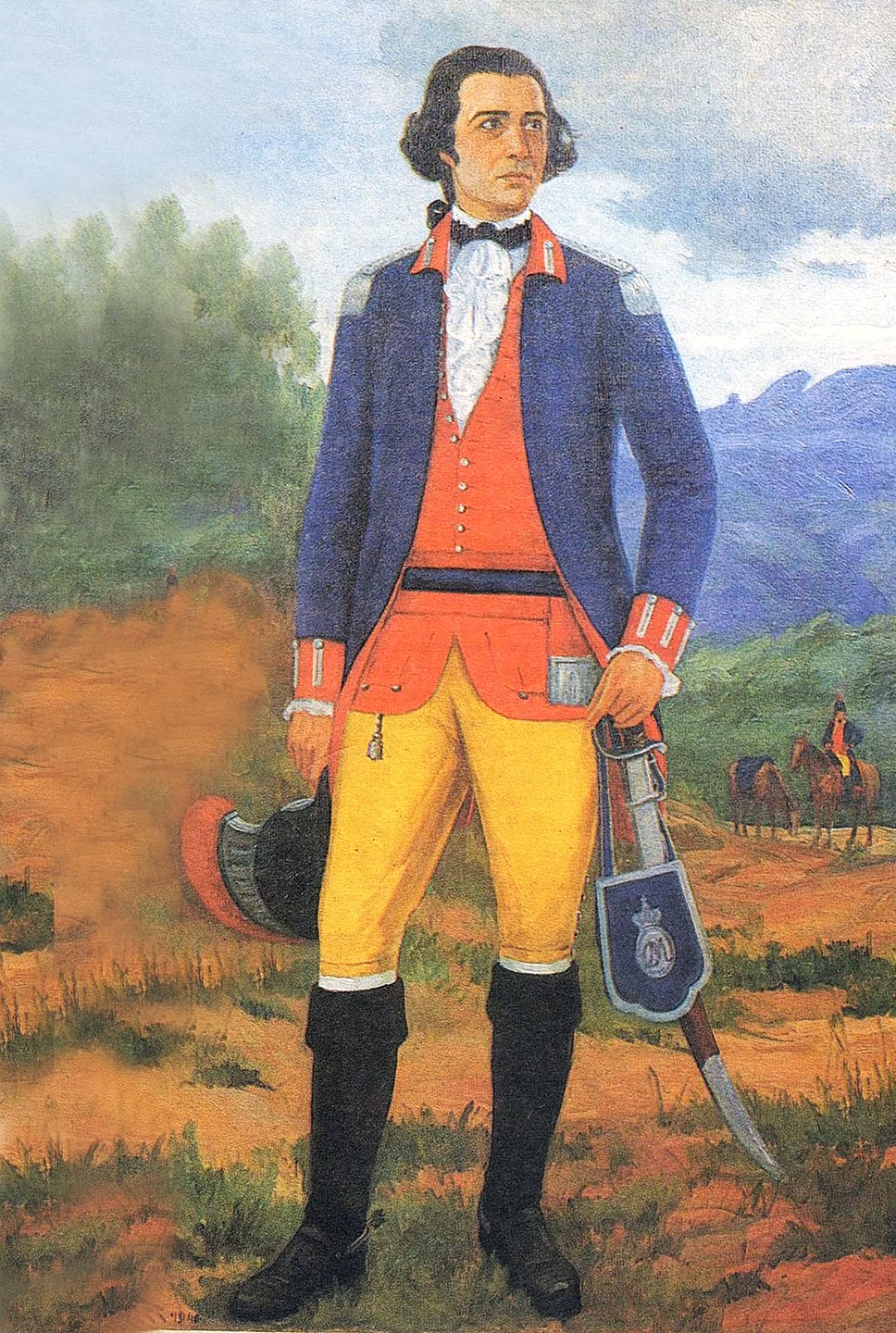
Today, historians have shown that in reality, the story is different. As Tiradentes served in the army, he was an ensign, and he could not have long hair and beard, at most a mustache. In prison, it was common for prisoners to have their heads shaved or hair cut short and their beards trimmed to avoid problems with lice, something common in many old prisons, as prisoners did not have the right to bathe frequently, and to prevent the proliferation of lice, it was common to have hair and beard trimmed.
Thus, the idea of representing Tiradentes with long hair and beard, resembling Jesus, was a way to reinforce his mythologization and the image of a “good man.” Furthermore, Brazil has been predominantly Catholic since colonial times and still is today, and Jesus Christ was the most recognized figure by the people.
Therefore, making Tiradentes resemble Jesus was a good way to make him known in the eyes of the nation and reinforce his importance. Upon completing this mythologization of Tiradentes’ image, the republican representatives consecrated a commemorative date that indeed became a national holiday, April 21 (almost nullifying the date of the “Discovery of Brazil” on April 22).
And then, was Tiradentes really a hero or was he a created martyr?