



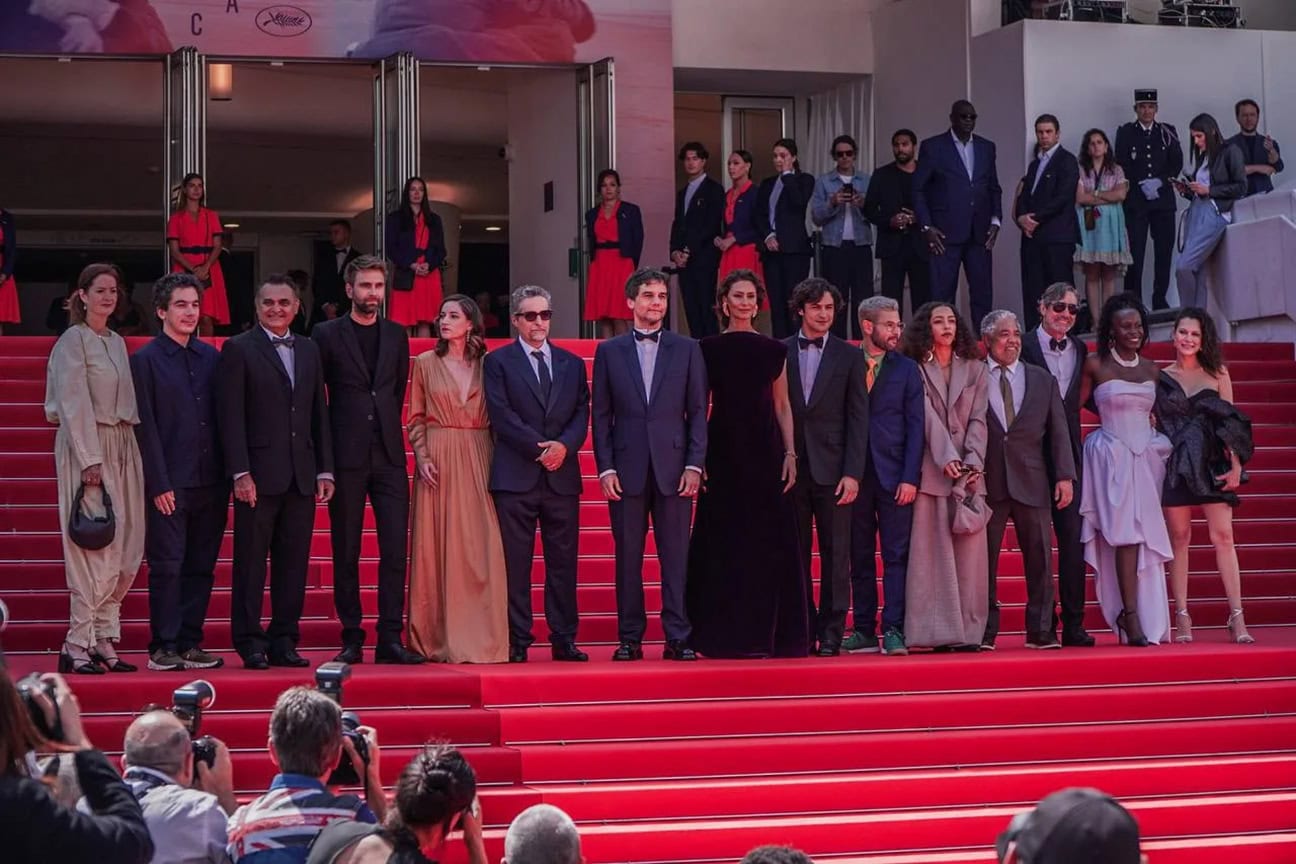
The feature film “The Secret Agent”, by filmmaker Kleber Mendonça Filho, had its world premiere this Sunday (18) at the 78th edition of the Cannes Film Festival in France. The production, starring Wagner Moura, is one of the contenders for the Palme d’Or, the event’s main prize. The screening was accompanied by a Brazilian cultural celebration and received applause from the audience for approximately 15 minutes.
The film is a co-production between Brazil, Germany, France, and the Netherlands, and received funding from the Audiovisual Sectoral Fund (FSA), linked to the National Cinema Agency (Ancine), with support from the Ministry of Culture (MinC).
The Brazilian delegation was a true reflection of the country’s diversity, composed of actors and technical team members, including Gabriel Leone, Maria Fernanda Cândido, Juliana Paes, Bárbara Paz, Isabel Zuaa, Caio Venâncio, producer Emilie Lesclaux, and the director himself. The Minister of Culture, Margareth Menezes, and the Audiovisual Secretary, Joelma Gonzaga, also participated in the event.
The delegation’s arrival on the red carpet was marked by a presentation of Pernambuco frevo, which brought together an orchestra and artists to bring Brazilian musicality to the streets of Cannes.
Conference
Also in France, Brazil held the conference “Who to (Co)produce with in Brazil?”, as part of the Marché du Film. The objective was to present to the international market the various regional profiles of Brazilian audiovisual content.
The meeting featured representatives from entities such as the Northeast Producers Association (APAN), the Center-West, North, and Northeast Audiovisual Connection (CONNE), and the Rio Grande do Sul Cinema Foundation (Fundacine).
During her participation, Minister Margareth Menezes highlighted the strategic role of national culture in international events. “The Marché du Film has Brazil as the country of honor. This represents an important opportunity to value our cultural production. We are working to expand the insertion of Brazilian audiovisual in the global scenario,” said the minister, according to a note released by the ministry. Kleber Mendonça Filho emphasized the crucial role of public funding for the cultural sector. “Having culture express itself artistically is part of what it means to be a nation. Brazil has a very special vocation, recognized internationally. It is a source of pride to make this film with public resources, both Brazilian and from other partner countries,” he stressed.
Diversity
Another highlight of the program was the panel “Voices of the Majority in Cinema: Brazil’s 54% Black Population Can’t Wait”, which discussed black representation in audiovisual. The activity brought together artists, producers, and partner organizations, such as the Guimarães Rosa Institute, ONU Women, Nicho 54 Institute, and Paradiso Project. Actress and producer Camila Pitanga, Robson Dias (Búzios Films), Bethânia Maia (Vaporosa Cultural), and composer Pedro Santiago participated in the panel, with Markus Thersio as moderator.
Camila Pitanga highlighted the importance of a more plural cinema. “We want to see a Brazil that reflects the diversity of its population, with space for voices like those of Carolina Maria de Jesus and Luiz Gama. This is the Brazilian cinema we want to build,” emphasized the actress.
The panel emphasized the importance of public policies that ensure racial equity in the production chain and promote diverse narratives in the audiovisual sector.
Source: Agência Brasil