



Recife, capital of the state of Pernambuco in northeastern Brazil, is a recognized cultural and gastronomic center. The city offers a variety of attractions. Just check out the harmonious contrast between the ancient monuments of Recife Antigo and the modern buildings in the city’s business center.
The capital of Pernambuco is the birthplace of two important musical and dance styles: frevo and maracatu. Frevo is known for its contagious energy, while maracatu is an Afro-Brazilian cultural manifestation, both prominent mainly during Carnival.
The Capibaribe River is a central element in Recife’s geography, cutting through the city and providing a unique landscape. Boat rides along the river offer an enchanting perspective of the city. Due to its complex network of rivers, bridges, and islands, Recife is known as the “Brazilian Venice”. The city is crossed by rivers that resemble Venetian canals.
Discover the cultural diversity of Recife
The city has charms for all tastes, such as Recife Antigo, the historic center of the capital of Pernambuco where we find Marco Zero, the exact point where the city was born. When passing by the spot, it’s worth strolling along the 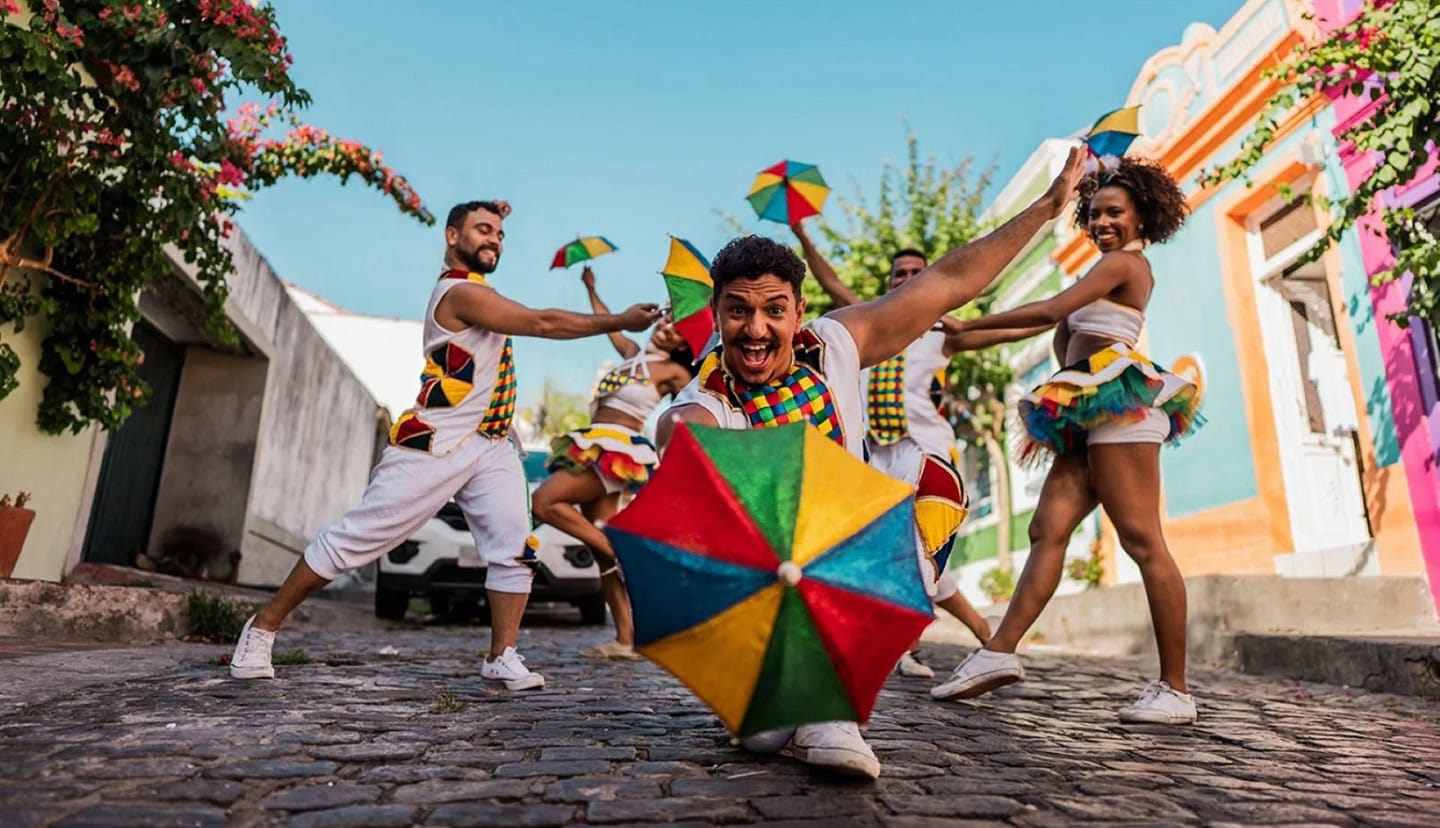 charming Rua Bom Jesus, elected the third most beautiful street in the world by the American magazine Architectural Digest.
Another attraction in Recife is the Instituto Ricardo Brennand, a famous Brazilian art collector. The cultural complex, with red brick castles and large gardens, is part of a large green area of Atlantic Forest and houses personal collections of art and armors that Ricardo gathered during his life. It’s also worth visiting the Parque das Esculturas, an open-air museum with about 90 works by the Brazilian plastic artist Francisco Brennand.
An unmissable visit is the Sinagoga Kahal Zur Israel, the first synagogue in the Americas, founded in the 17th century. Its facilities now comprise the Centro Judaico de Pernambuco, in Recife’s historic center. The space depicts a part of Pernambuco’s history, with information on archaeological excavations, exhibitions, and documents about the history of Jews in the region.
Enchanting Beaches
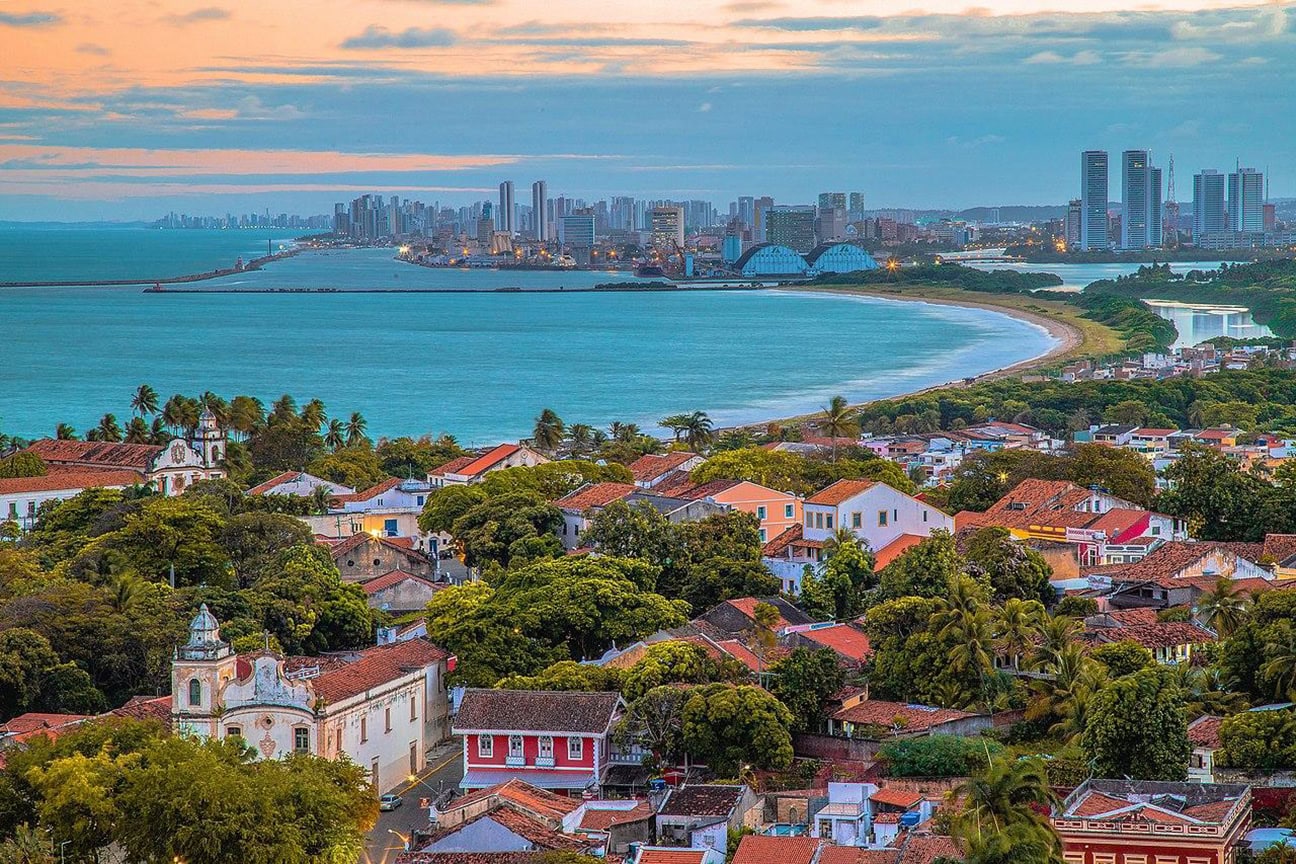 Welcoming and full of life, Recife has beautiful beaches with bluish waters. But Recife’s beauty doesn’t lie only in nature. The stunning beaches, full of natural pools with warm waters, are capable of making anyone fall in love with the capital of Pernambuco.
Boa Viagem Beach is one of the most famous and frequented beaches in the capital of Pernambuco. The vibrant shades of blue and green in the sea, the wide strip of golden sand, the coconut trees framing the waterfront, and the colorful kiosks form a cinematic landscape. It’s about 8 km of beach, characterized by the formation of natural pools with warm waters due to the presence of reefs.
Pina Beach is also a highlight. Its waters remain at a pleasant temperature for much of the year and attract numerous tourists seeking a sea bath and rest in the shade of the coconut trees.
One of the World’s Largest Carnivals
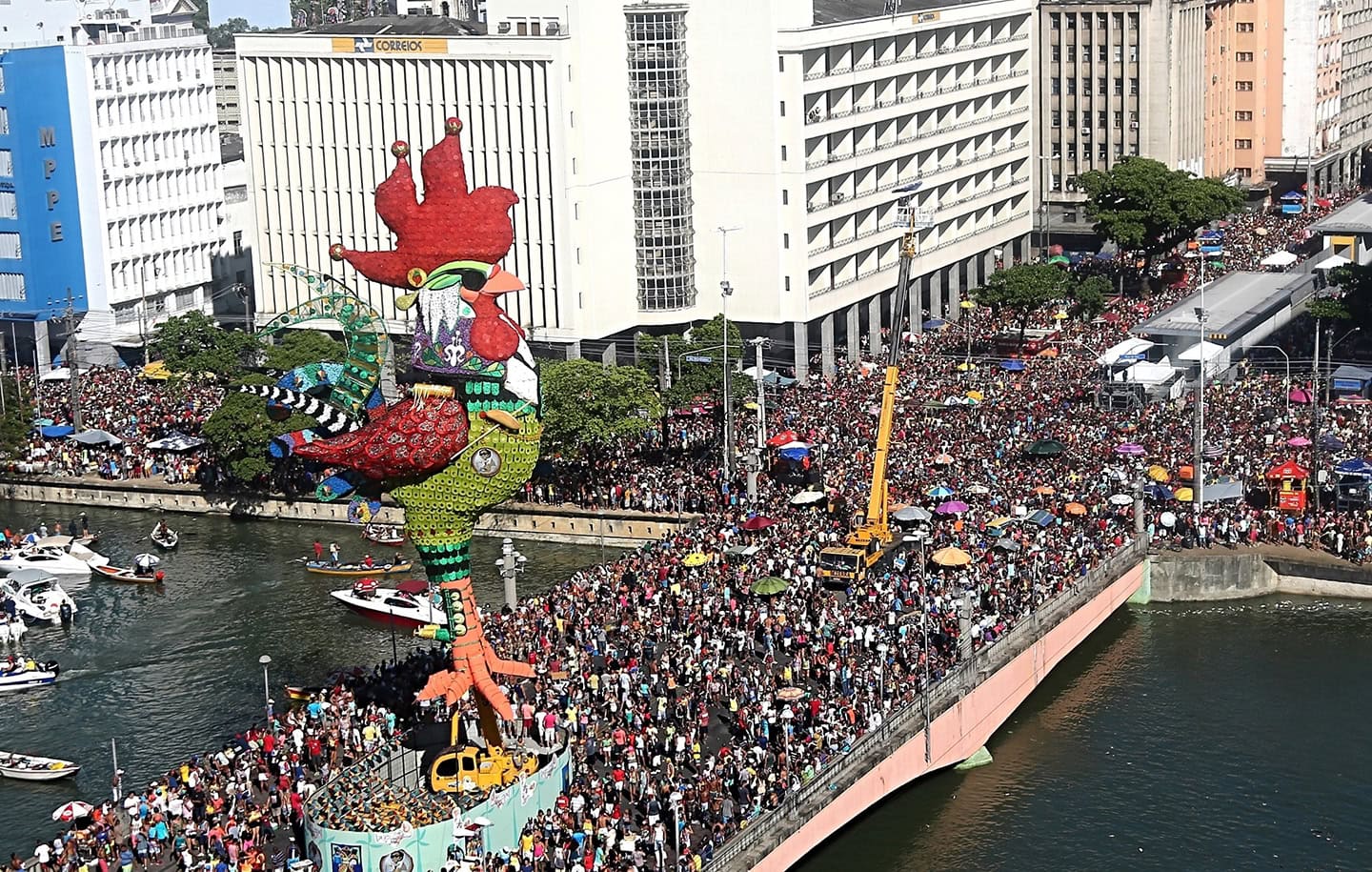 Recife is also one of the most visited Brazilian cities during Carnival. The sound of frevo, a Brazilian musical rhythm and dance originating from the state, draws crowds, accompanying the parades of blocks and troças – orchestras that play frevo and other typical carnival rhythms, which mix with other musical genres like maracatu and forró.
The big highlight is the Galo da Madrugada, recognized as the world’s largest carnival block by the Guinness Book.
While in Recife, it’s worth visiting Olinda, a historic city 10 kilometers from the capital that was declared a World Heritage Site by UNESCO. With extra time, it’s also worth visiting Porto de Galinhas, a municipality in Ipojuca about 50 kilometers from Recife, famous for its diversity of natural beauties, such as the mangrove, white sand beach, coconut groves, and crystal-clear waters.
Source: visitbrasil.com