



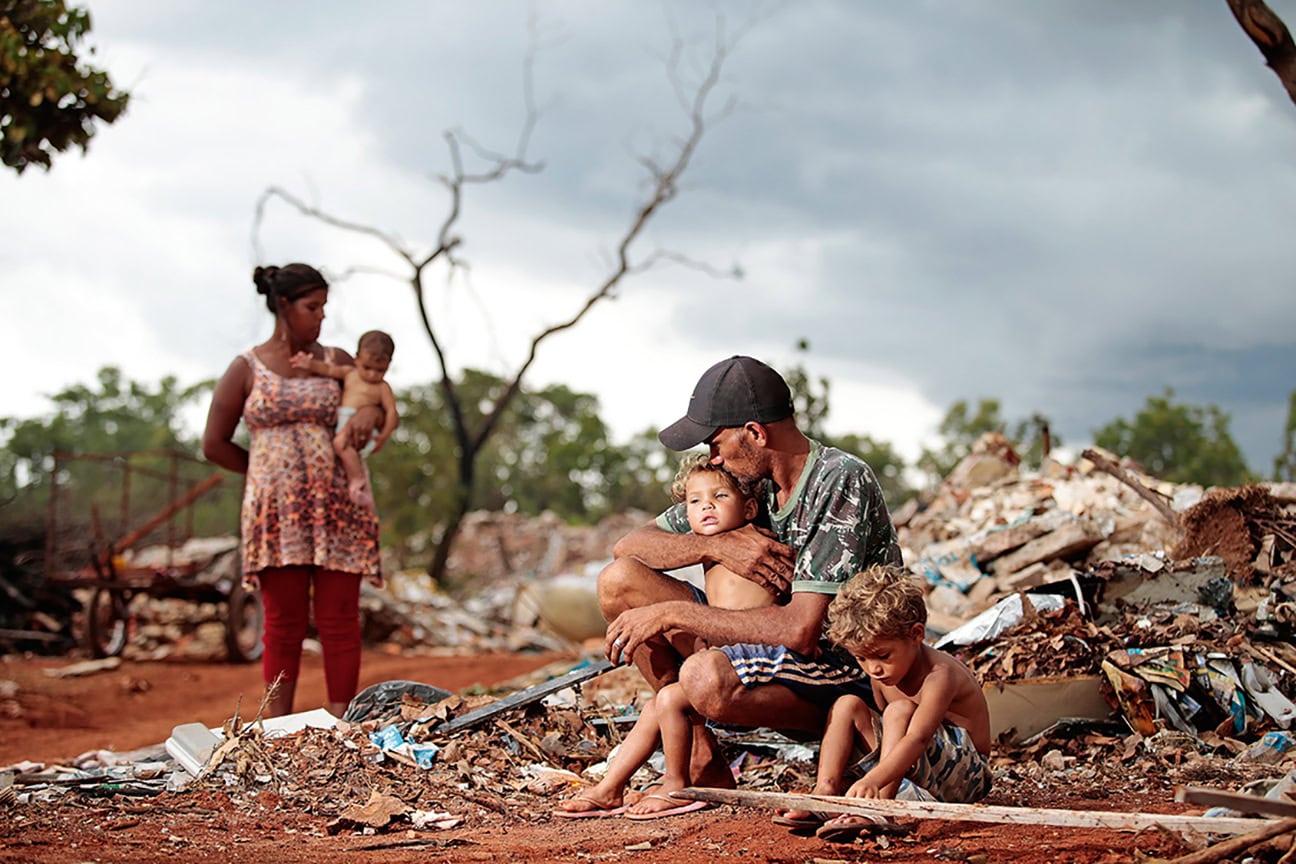
Brazil ended 2023 with the lowest levels of poverty and extreme poverty recorded since the Social Indicators Synthesis began in 2012, by IBGE, the government statistics agency. However, despite this improvement, data released on Wednesday in December revealed that 58.9 million people still live in poverty, with 9.5 million in extreme poverty.
The study focuses on monetary poverty, defined as a family without sufficient income to ensure its well-being. To establish the poverty thresholds, IBGE applied the World Bank’s criteria: US$ 2.15 per person per day for extreme poverty and US$ 6.85 per person per day for general poverty.
In 2023, the proportion of the population living in extreme poverty fell to 4.4%, down from 6.6% in 2012 and 5.9% in 2022. Between the last two years of the survey, 3.1 million people exited extreme poverty, gaining access to an income of at least US$ 2.15 per day.
The proportion of the population living in poverty, defined as those earning less than US$ 6.85 per day, fell to 27.4% in 2023, compared to 34.7% in 2012 and 31.6% in 2022. Between 2022 and 2023, 8.7 million people exited poverty.
Employment and Income
IBGE researcher Bruno Mandelli Perez attributes the reductions in poverty and extreme poverty to two main factors: better job opportunities and social benefits, including income transfer programs aimed at socially vulnerable families, the elderly, and people with disabilities.
“Both the labor market and the benefits from social programs play a crucial role in reducing poverty. However, the labor market has a greater impact on poverty reduction, while social program benefits are more significant in combating extreme poverty,” he explains.
“The increase in the average value of the benefits granted… certainly impacted the maintenance of the trajectory of poverty and extreme poverty reduction in 2023,” points out the Social Indicators Synthesis.
Women, Blacks, and Youth
IBGE highlights that women, blacks, and youth are the most affected by poverty and extreme poverty.
The proportion of men in poverty is 26.3%, compared to 28.4% of women. For extreme poverty, the rates are 4.3% and 4.5%, respectively.
By race, 17.7% of whites live in poverty. This proportion nearly doubles among browns, reaching 35.5%, and stands at 30.8% among blacks.
When analyzing extreme poverty, 2.6% of whites fall below this threshold, compared to 6% of browns and 4.7% of blacks.
When analyzing by age group, the youth population shows poverty rates above the national average of 27.4%. Among those under 15 years old, the rate is 44.8%, while for those aged 15 to 29, it is 29.9%.
Researcher Bruno Perez highlights that poverty and extreme poverty rates are lower among people aged 60 and over, at 11.3% and 2%, respectively.
“This group is generally covered by pension benefits, with incomes linked to the minimum wage,” he explains.
Social Benefits
The Social Indicators Synthesis provides data showing the importance of social benefits for the poorest population. In 2023, labor income was the main source of earnings for families, accounting for R$ 74.20 for every R$ 100.
Among families with the lowest incomes — those earning up to a quarter of the minimum wage per person — social benefits constituted the largest part of their income. For every R$ 100, R$ 57.10 came from benefits, surpassing the R$ 34.60 from labor.
When the survey began in 2012, social benefits represented only 23.5% of the income of the poorest families. A decade later, this proportion rose to 42.2%.
“Among households with the lowest incomes, those earning up to a quarter of the minimum wage, the share of labor income is decreasing, while that of social program benefits is increasing,” Perez points out.
The researcher presented a simulation showing the impact of income transfer programs on poverty and extreme poverty. Without these programs, extreme poverty would rise from 4.4% to 11.2%, and poverty from 27.4% to 32.4%.
Inequality
In 2023, the Gini index, which measures income inequality, stood at 0.518, the same as in 2022 and the lowest recorded since 2012. The Gini index ranges from 0 to 1, with values closer to zero indicating less inequality. The highest level of inequality in the series occurred in 2018, with 0.545.
According to IBGE, without income transfer programs, the Gini index for 2023 would have been 0.555.
Source: Agência Brasil