



In the plain that names the book, the Bai and Lu families, part of the same clan, alternate in power. We follow three generations of these families as they witness the wave of changes and destruction that the Chinese people were subjected to in the first half of the 20th century.
With the end of the Qing dynasty and the fall of the Empire in 1912, local feudal lords begin to fight among themselves. Then, there is the dispute between the Nationalist Party and the Communist Party, each with its idea of popular liberation. At the same time, the Japanese invasion and the devastating Second World War occur. Again, total war between parties culminates in the Long March and the founding of the People’s Republic of China.
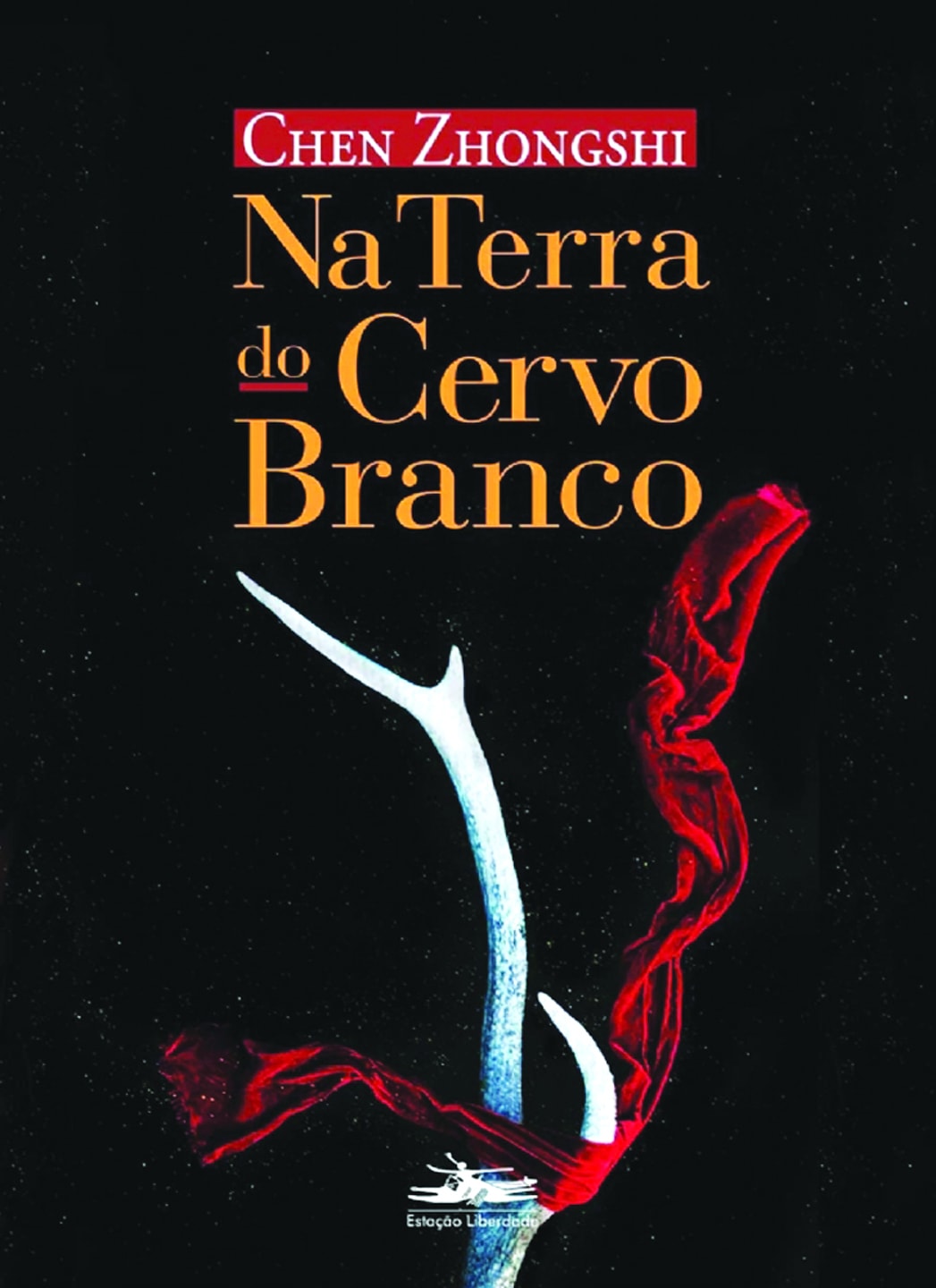 With the establishment of the new revolutionary state, new values and ways of life come to replace the culture rooted for millennia. Against this historical backdrop, the cast of characters created by Chen Zhongshi composes a portrait of the possible ways of living in the face of catastrophe. We learn about the ethics and organization of local life; we experience traditional symbolic rituals, as well as the philosophy of Confucianism – embodied in Doctor Leng and the wise Master Zhu.
We follow characters in search of their personal revolutions through education, banditry, or adherence to power groups. We see patriarchal oppression and attempts at female liberation, embodied in the characters Xiao’e and Bai Ling. Finally, we see how personal choices lead friendly families to opposite sides of a fratricidal war. Conceived in 1987 and completed in 1992 – a period during which the author lived in the rural area of his childhood to experience the atmosphere he wanted to recreate – In the Land of the White Deer is a modern classic of Chinese literature. The book elevated Chen Zhongshi to the level of authors like Yu Hua or Nobel Prize winner Mo Yan, with the difference that, instead of seeking a globalized literature, he addresses eminently Chinese issues.
Review/Opinion
There will be no suspense this time. Superb! Spectacular!! Resounding!!! In the Land of the White Deer is a reading [I believe this now], essential for anyone who enjoys venturing into other cultures and understanding their nuances and, especially, their differences compared to the rest of the world. This, of course, specifically speaking of Chinese culture, which is full of traditions, even if some of them make us wrinkle our noses. But what cannot be denied is the richness of this people and how they unfold to adapt to whatever the circumstances may be.
And it is exactly in this atmosphere that Chen Zhongshi tells us the epic of the Chinese people through the characters of two families from the same clan in the first 50 years of the twentieth century. Bai Jiaxuan believes he has a curse. In fact, not only does he believe it, but the entire village knows, in fact, that he has a curse; all his wives die shortly after marrying him. Jiaxuan only wants to perpetuate his family, but he cannot; of his seven wives, six died in various ways. And, after the death of his father, Bai Jiaxuan promised that he would find a wife and continue the family name; it took six deaths for Jiaxuan to finally break the curse and reach his seventh and last wife.
In the Land of the White Deer not only shows the life of three generations of these two families, Bai [white] and Lu [deer], but also shows the difficulty of various changes that the characters will have to undergo. Changes in traditions, governments, hunger, misery, death, and even the supernatural. Zhongshi chose to show the entire epic of the Chinese people through this village called White Deer.
He hides nothing. He literally shows everything that was common in that troubled time, where everyone had to adapt to the new regime, considering the fall of the Qing dynasty and the entry of the new People’s Republic of China, where we also have the creation of the Nationalist Party and the Communist Party. In a way, In the Land of the White Deer is an educational work that serves for Westerners to understand a little more about Chinese culture since the beginnings of its “modernity,” so to speak. There are very shocking passages throughout the story that become even more impactful knowing that the kind of things depicted in the pages of the book are real. Yes, they happened, and many people paid an absurdly high price for their ideals.
In the Land of the White Deer was a fantastic and captivating read; I can say it was one of the best I’ve had in recent years, especially with a very well-produced edition by the publisher. The cover and dust jacket are beautiful, by the way, off-white paper [yellowish], pleasant font, and flawless editorial work. Therefore, without a shadow of a doubt, the seminal work of Chen Zhongshi, published by Liberdade, is absolutely I-M-P-E-R-D-I-V-E-L.
About the author
Chen Zhongshi was born in 1942 in a rural area near Xi’an, the capital of Shaanxi province in northeastern China. Having been the capital of several dynasties of emperors, the province plays an important role in Chinese history since antiquity. His grandfather was a teacher, and his father was one of the few literate people in the region. He debuted in fiction in 1973 with a short story published in a local magazine and continued producing  literature with strong regional inspiration.
With the death of Mao Zedong and the opening of the country, he became acquainted with the works of foreign authors such as Anton Chekhov, Honoré de Balzac, and Gabriel García Márquez. He also had access to new perspectives on Chinese history, transcending the official view of the Party. Refining his style and thematic concerns, he delved deeper into the rich tradition of the Shaanxi region, using folklore and oral tradition as sources, as well as historical records and local gazettes. With this research, he produced novellas and then returned for a few years to his homeland to write his magnum opus and his only novel: In the Land of the White Deer. The book elevated him to the status of literary celebrity in Asia and secured him international prestige. He passed away in late April 2016, and thousands of people paid tribute to the author at his funeral in Xi’an.
Jeffa Koontz
Literary Critic
literalmente-koontz.blogspot.com
Instagram: @literalmente_koontz