



Student Rahisa Scussel began her doctorate in 2020 with a significant challenge: to develop a safer rapid test for detecting Covid-19, a disease that has impacted the entire world. The young researcher leaves home every day, from Monday to Friday, to go to the laboratory at the Universidade do Extremo Sul Catarinense (Unesc). She conducts analyses, still on the computer, with the help of her advisor and professor Ricardo Andrez Machado de Avila. All this effort is aimed at achieving an important advancement by September: finding molecules that will allow for the rapid and efficient identification of the virus in infected patients.
With this result in hand, it will be possible to start clinical analyses and practically verify what is being tested using bioinformatics, a technology that allows for the analysis and interpretation of biological data. This resource has been frequently used in Covid-19 studies to deeply understand the composition of the new virus.
The stage that includes clinical analyses will receive support from the Fundação de Amparo à Pesquisa e Inovação de Santa Catarina (Fapesc), which allocated R$ 100,000 for research through a public notice to combat Covid-19 and its effects in Santa Catarina. The funds will be used to purchase materials and supplies, as well as to cover transportation, storage, and analysis costs of samples collected from various parts of the country. The study involves, in addition to Unesc, the federal universities of Amazonas, Minas Gerais, Santa Catarina, and the Fundação Oswaldo Cruz (Fiocruz).
Fapesc’s president, Fábio Zabot Holthausen, emphasizes that financial support is crucial for advancing Covid-19 research in Santa Catarina. “We will continue to support researchers and institutions in Santa Catarina in the search for solutions to this pandemic and other future challenges,” he confirms.
How the research works
The objective of Rahisa’s research, conducted in the Graduate Program in Health Sciences, is to develop a platform that is ultra-sensitive and rapid. To achieve this, it will detect specific amino acids of the new coronavirus that bind to the antibodies of the infected person. “We want to select this specific region so that there is no cross-reactivity with other diseases, with other viruses. This will ensure specificity in our test. We will then be able to differentiate individuals with Covid-19 from other types of illnesses, such as influenza (the flu), for example,” she explains.
To reach this result, the researcher is analyzing the proteins of the new coronavirus that participate in the invasive process of host cells or are part of viral replication. The method used by Rahisa is also differentiated, employing magnetic nanomaterials, common in the research group she participates in. “Compared to traditional ELISA tests (antibody detection), for example, with magnetic nanomaterial tests, we noticed that they tend to show greater sensitivity and higher precision of results in a shorter time frame,” she confirms.
Professor Ricardo, also the coordinator of the project approved by Fapesc, has his career focused on the development of serodiagnosis using magnetic nanomaterials. Until now, he has been researching Chagas disease, leishmaniasis, malaria, or even venoms from poisonous animals. Now, his focus is to ensure data for Covid-19 as quickly as possible. If all goes well, starting in December, it will be possible to have a laboratory test with results in less time and a more efficient rapid test. “We will reduce the cost of the serological test and provide more security in the results of the rapid test,” confirms the professor.
The model being developed at Fisiopat at Unesc could be used in the future in the event of new pandemics or even for diagnosing other diseases. Rahisa, who will continue her studies involving the new coronavirus until at least 2023, will work in a second phase with the possibility of developing treatments based on the results obtained in this first stage. For the future, the young researcher wants to continue in the field of serodiagnosis. “Perhaps I will specialize in this bioinformatics research and in the structuring of diagnostic platforms,” she concludes.
Development of another test
Researchers from the Agroveterinary Center (CAV) of the Universidade do Estado de Santa Catarina (Udesc) in Lages have also developed a new technology for conducting rapid tests. In practice, the team created a molecule that recognizes the virus and binds to it. These structures emit a light that goes out upon contact with the new coronavirus, confirming a positive result.
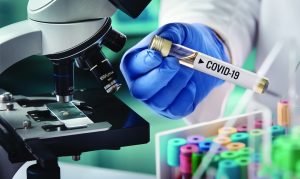
In addition to efficiency, this test allows for a faster analysis. “It is a peptide (block of amino acids) that is entirely national, with low production costs, and we will have the possibility of conducting mass testing,” says Professor Maria de Lourdes Borba Magalhães, project coordinator.
The test was developed in partnership with the startup Scienco Biotech, created by Professor Maria de Lourdes, which is now located at the Órion Parque de Lages. The company was awarded R$ 150,000 from Fapesc under the Tecnova II public notice to develop avian immunodiagnostic technology. Researcher Maria de Lourdes was also recognized in the last edition of the Prêmio Inovação Catarinense, also from Fapesc, in the Innovative Agent category.
Maria de Lourdes will be live next Wednesday, 26, along with Professor Ricardo and Rahisa in a live session organized by Fapesc. The broadcast starts at 5 PM to showcase the development of these tests and how this will impact pandemic control. To follow, just access the Facebook page or YouTube channel.
Investments in actions against Covid-19
Fapesc launched three public notices to support research and products to combat the pandemic and its effects. Public notice 06/2020 approved five research projects, including the study by Rahisa and Professor Ricardo, as well as the activation of laboratories for conducting tests and the creation of a telehealth system.
Public notice 07/2020 supported the development of products, such as in vitro lung tissues, the use of ultraviolet light for sanitizing environments, and a panel for donating resources to social projects.
Finally, the foundation allocated scholarships for master’s and post-doctoral studies to the six selected projects from Santa Catarina in the Federal Government’s public notice, which include everything from vaccine development to studies on the impact of the disease on the bodies of infected patients.
For more information about these projects, visit www.fapesc.sc.gov.br.