



Whoever says “football is not for girls” should pass the ball in various houses and take their turn. Visibility, record audiences, great games, and global repercussions. The success of the women’s World Cup last year was undeniable. When this same football breaks barriers and is allied with social projects, the strength multiplies, especially in times of pandemic.
With the aim of breaking entrenched gender inequality patterns in communities, three women from different countries rolled up their “sneakers” and launched their football projects for girls, including training sessions and tournaments, as well as educational workshops addressing topics such as violence, gender equity, and sexuality.
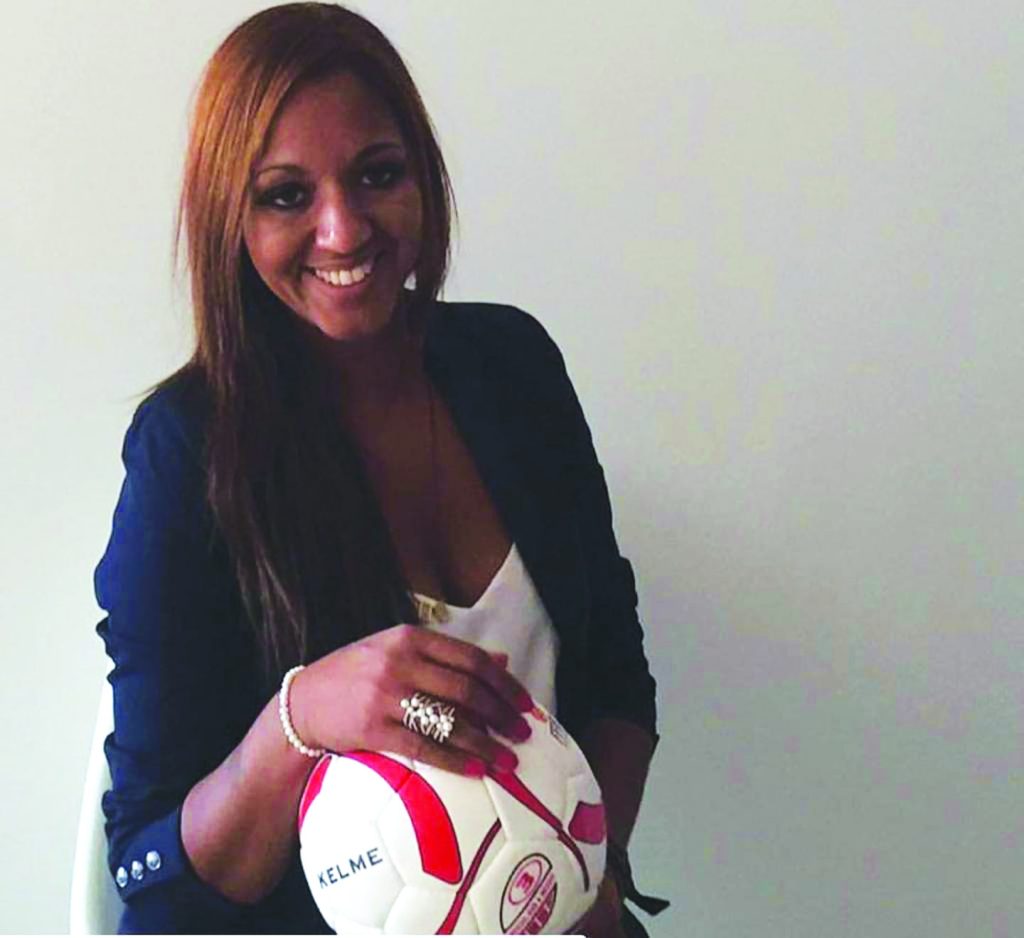
The Brazilian Tatiana Ferreira, who has lived on the island of Mallorca, Spain, for over 20 years, is one of the creators of the Association Deporte para La Igualdad and, four years ago, created the program “Football for Equality,” using sports to work on gender equality, social inclusion, and empowerment of young women. The program currently serves about a thousand children.
“The success was so great that we started to have collaborations with other entities in Argentina, Costa Rica, Colombia, Peru, and Brazil, in partnership with the Rio de Janeiro club Fluminense and CBF social, with three days of activities with 50 children from the Complexo do Lins (from the hills of Praça Seca and Cidade de Deus),” Tatiana says, adding
that all activities are free and, even in such a difficult year, the association committed to the “2030 Agenda of the United Nations (UN),” a plan of actions aimed at eradicating poverty and promoting economic, social, and environmental development on a global scale by 2030.
To survive the pandemic, activities were adapted to the virtual world, thus reaching children and families from other countries as well. “We do a solidarity cinema with the projection of thematic football films conveying values such as equality, tolerance, and camaraderie. There are also free training sessions via webinars, such as women’s empowerment, organizing sports events, team empowerment, and gender language directed at women.”
To keep going strong, the association receives support from the Government of the Balearic Islands (an archipelago off the east coast of Spain), backing from Miguel Bestard, president of the Balearic Football Federation, the Royal Spanish Football Federation, and the municipalities of the cities where events are held, as well as local entrepreneurs.
Football for the Blind
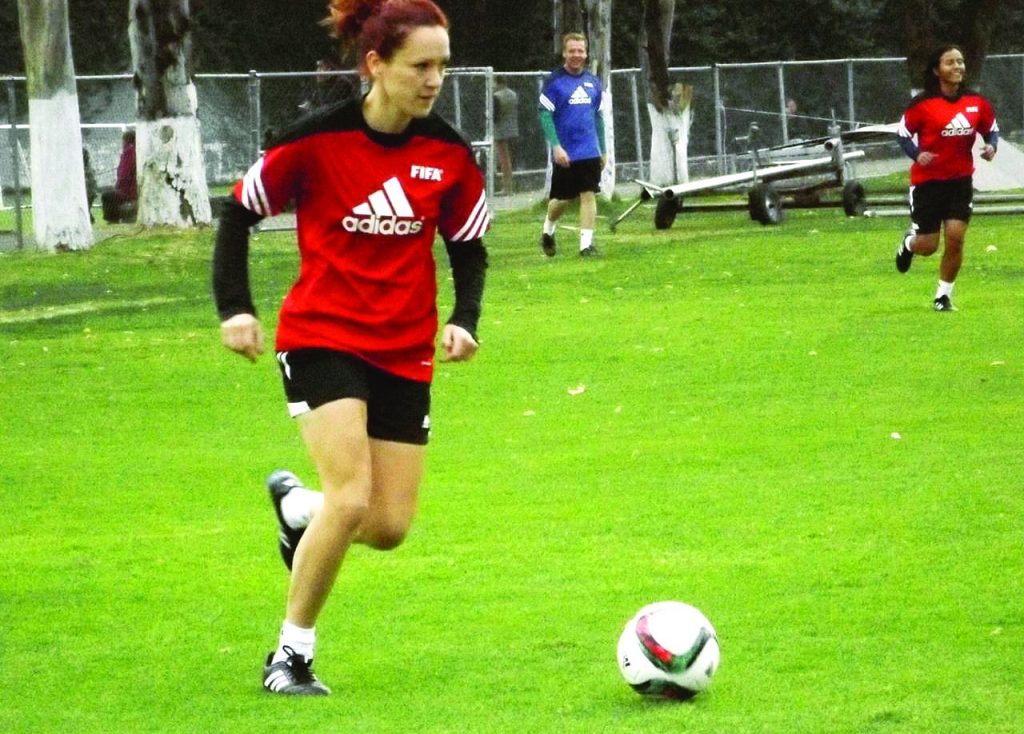
Now let’s go to Argentina with a story beyond overcoming challenges. Before becoming a coach and football manager, Evelina Cabrera, 34, lived on the streets, rummaged through trash cans for food, until she became a teacher and then a player for Club Atlético Platense. With this background and always keeping an eye on the next step, she founded the Argentine Association of Women’s Football (AFFAR), formed the first team of blind girls in Buenos Aires, and spoke at the UN (United Nations) in New York about her work to empower women and give them tools for a better life, in addition to being recognized as one of the 11 most influential women in Latin America and one of the most inspiring women in the world by the “BBC”.
In other words, she is a reference that has enhanced the role of athletes in Argentina and around the world.
“In 2013, I had a tumor that made me stop playing football – it was benign and was removed through surgery, but the doctor said I wouldn’t return to physical activity. My world collapsed, I went into a tremendous crisis, and it was then that my love for sports spoke louder, and I decided to train underprivileged girls on an outdoor beach in Tigre station (Buenos Aires) and at the Nueva Chicago Athletic Club (based in Buenos Aires, in the Mataderos neighborhood).” It was an immediate success, and that same year, she traveled to Mexico as the coach of the Argentine team at the Homeless World Cup.
Three years later, she was invited by the UN in New York to present her story at the Youth Forum of the Economic and Social Council, which brings together young leaders from around the world. She highlights that, in 2016, her greatest gratitude was getting her association to join the UN campaign “Join Latin America” to end gender violence.
“My work is to give women the tools to develop independently and autonomously through football,” summarizes Evelina, who, despite her achievements, continues to work daily to reach more girls in underprivileged communities. “Sports have no gender,” she emphasizes.
With the pandemic, of course, the year was difficult, but she never thought of stopping. “Nothing has been easy for women (especially those who chose football), but if life has taught me anything, it is to fight. And time has made me understand that it is not just for me, but for thousands of invisible women who fight and rise every day for a better life. Our gender and origin should not
determine our future. It is a difficult path, but with collective struggle for a united world, we can achieve equality,” she concludes.
Football for Girls
The Mexican Regina Vivanco Perichart leads the project “Fundación Deportiva para una vida Sana” (roughly translated as “sports foundation for a healthy life”), similar to Cabrera’s, for 20 years in Mexico City, taking advantage of the fact that her family has a Football Academy there. With the problems affecting that country, such as drugs, violence, abandonment, and teenage pregnancy, she and her family decided to create a foundation, through football, to provide tools for children and their families, aiming to improve their community and quality of life.
“Our vision is to reach communities in all 32 states of Mexico through our programs, which offer workshops in football, art, dance, environment, and human development to low-income communities, thus forming a network.”
With the pandemic, some projects were put on hold; however, Regina used creativity and created “Juega conmigo,” where anyone can adopt a child from the program and thus pay an annual fee, offering an opportunity for them to belong to the academy.
“The biggest challenges have been raising funds to help the children and finding new donors. But we are not thinking of stopping, and we have plans for the future, one of which is to improve communication on social media to reach more people and reach more communities within the Mexican Republic,” says Regina, who adds that she also intends to include assistance to groups of elderly women from different communities.
VIVIANE FAVER
Journalist
vfaver@gmail.com