



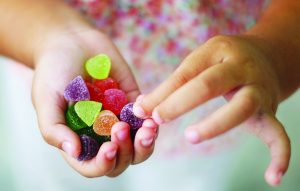
It has been quite some time since many parents, to compensate for the little time they have for their children, have started to exchange hugs and kisses for sweets, soft drinks, snacks… And what was supposed to be a gesture of love ends up creating a vicious cycle that persists throughout childhood, adolescence, and adulthood. The child who grows up in this cycle begins to associate affection with chocolate bars, tight hugs with cups of soda, and loving kisses with bags of snacks… And whenever they feel needy, they will raid the fridge, the pantry, or some convenience store.
Food and affection go hand in hand, but the former cannot be used to replace the latter. A child whose affection is met with food grows up needy and disconnected from their feelings. Physically, they begin to gain weight, potentially developing obesity, with all the serious physical problems associated with this condition, which in turn provokes social reactions, constituting another serious problem in the child’s life, this one of an emotional nature.
As the years go by, the child begins to get “chubby.” Their shape becomes rounder, nicknames start to become part of their life, and feeling excluded from their social environment, they take refuge in sweets and drown in calories in front of the TV that hypnotizes them and makes them travel without leaving the spot.
At the first sign that something of this nature is happening, parents must immediately change their behavior and start a program to recover the child’s self-esteem and eliminate all excesses, especially weight. It is crucial to adopt a food re-education program.
The time is now! Take the opportunity to change the habits of the whole family. Adopt a healthy and balanced diet. A varied and nutritious menu will help the little ones come into contact with different flavors and enrich their appetite. Proteins, carbohydrates, fibers, and vitamins must be present on the table. Inform yourself about the nutritional value of foods and, with the help of a nutritionist, create a menu that meets the needs of both adults and children in the household (the needs of adults and children are different). And encourage the habit of drinking water. Lots of water! Water is vital for the body and should be consumed frequently throughout the day. And take the opportunity to include some physical activity in the weekly routine of the child and the family. Humans are programmed for movement. Don’t forget: small changes, when made repeatedly, become new habits. In no time, swapping greasy fries for juicy carrots will no longer be a sacrifice. You can bet on it!
Recent research reveals that about 15% of Brazilian children are obese and another 40% are overweight. Other numbers show that those who become obese in adolescence have a 60% to 80% chance of becoming obese adults. Furthermore, just like adults, obese children are also at risk of developing diabetes, high cholesterol, hypertension, and other diseases associated with excess weight.
DR. LAIR RIBEIRO
Cardiologist, speaker
www.lairribeiro.com.br
lrsintonia@terra.com.br