



Who would have thought or imagined that the much-anticipated and desired new year of 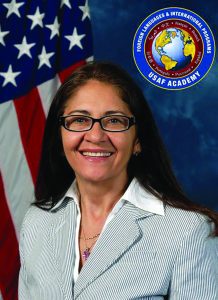 2020 would bring us so much pain, loss, anxiety, and disillusionment? Everything was proceeding according to its normalcy, with some discussions and comments about an epidemic in Asia. However, it seemed like a distant and carefree reality. Our routine, as educators at the Air Force Academy, followed its fast pace, filled with activities and tasks to fulfill. I was very busy teaching four courses (one basic course, one intermediate course in Portuguese, and two advanced courses in Spanish Literature) and working on the logistics of a four-week immersion program in Portuguese that would take place in Brasília. There, I would accompany the 13 cadets from the Air Force Academy. Additionally, I was preparing to present research papers at language congresses in the United States and give several lectures during July in Senegal, Africa. We could not imagine what was about to happen.
The first confirmed case of COVID-19 was announced by federal authorities on January 21. A 30-year-old man returning to the U.S. on January 15 from Wuhan, China. However, it was later discovered that two people had died from COVID-19 in Washington state on February 26. The carefree sentiment in the country, particularly in my state, Colorado, was evident. In reality, between January and February, authorities and leaders in Washington did not confront the reality or the threat of the epidemic. On March 10, Colorado Governor Jared Polis declared a state of emergency, as we already had 17 cases of COVID-19. Consequently, with a sense of urgency, a meeting was scheduled by the director of our Department of Languages. I remember it as if it were today, the expressions on my colleagues’ faces: fear, anxiety, and uncertainty about what was to come. Our head informed us about the seriousness of the disease and that most cadets would be going home

and that we, educators, would have to take our computers and the necessary materials to teach remotely. We were in shock! I had never seen anything like it. I didn’t know what to think; I went to my office and gathered the teaching materials, computer, among other things. Undoubtedly, it was the beginning of great challenges, uncertainties, and losses for our institution and the entire country.
After a short break, we resumed classes virtually. We had two platforms to conduct the classes: Microsoft TEAMS and Blackboard. I would not be honest if I only mentioned the successes in such a mission. Firstly, it is difficult for students and teachers to make the sudden shift from in-person classes to virtual ones. We are very privileged at the Academy to have an average of 14 students in each course, which facilitates interaction during class. Another challenge was having to learn quickly and put into practice the functions of the platforms to complete the semester. On the other hand, we are fortunate to have tools and technology at our disposal to continue teaching the courses and achieve the objectives online.
We had a second break during the semester to allow the final-year cadets to graduate. Unfortunately, it was a tumultuous semester, as we lost two cadets to suicide. This event shook the entire institution and left us with an immense feeling of loss, sadness, and loneliness.
I was happy to return to teaching every morning from 9:30 AM to 11:30 AM. And of course, there were always cadets who liked to “chat” with me before and after classes on TEAMS. I always liked to log into TEAMS about 15 minutes before classes started and played the song “Hoje não saio não” by Marisa Monte. Sometimes I would prepare a little coffee and listen to some of the cadets singing along with Marisa Monte, which became our official quarantine song in our courses. Even though we were not physically together, there was still a mutual and reciprocal closeness between us. We had a lot of fun!
The cadets graduated, and we were able to successfully finish the semester. It was difficult to see on their faces a look of sadness and disappointment over the cancellation of the immersion program in Brasília, the exchange between the Brazilian Air Force Academy and the American Air Force Academy, celebrations, activities, among many other programs scheduled for May and June. I could share in those feelings, as after having a full schedule, I went to a completely empty one. Trips, congresses, parties, and other events were canceled.
We have just come out of quarantine for more than three months. Now, we are in the second phase with some restrictions. Some wonder when everything will return to normal? Will we still have our known “normal”? I don’t believe so, as we are no longer the same. The quarantine offered us the opportunity to reflect on the fragility of human beings, the irrelevance of social classes and possessing wealth. COVID-19 makes no exceptions for people. Moreover, we began to see what is truly important in our lives. What was once everyday and normal has become a privilege, such as celebrating birthdays, weddings, graduations with our dear family and friends. In summary, I truly believe that some individuals will come out of the coronavirus epidemic more humane and less selfish, more aware of what is important in this life. Also, many will see that tomorrow belongs to God and that we are as fragile as the flower of the field.
DR. ISMÊNIA SALES DE SOUZA
Researcher, Teacher & Writer
desou001@yahoo.com