



My guest today is businesswoman Diana Oliveira Jank. She is an advertising professional, successor to Agrindus S/A, a traditional dairy farm in the interior of the State of São Paulo. Diana was recognized by Forbes Under30 Brasil and is currently at the helm of the Letti A² brand.
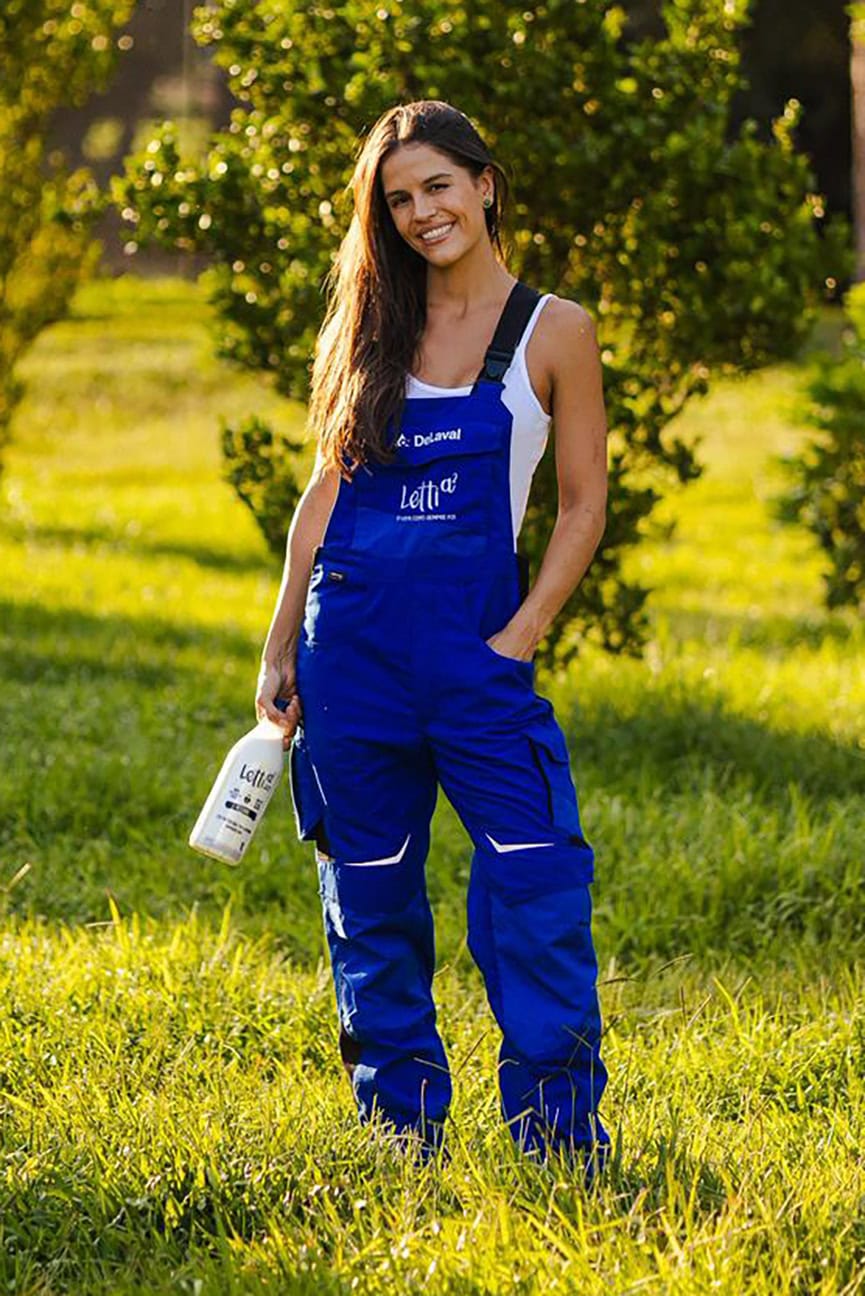 Diana was born and raised on a dairy-producing farm in Descalvado, in the interior of São Paulo. From an early age, she naturally experienced the farm routine, where her parents’ work intertwined with her playtime. Amid milkings, pastures, and the daily comings and goings of farm life, she built a childhood marked by living in harmony with nature, hands-on learning, and enchantment with the rural world.
Diana says she grew up with no pressure to take over the family business. On the contrary, she is the daughter, niece, and granddaughter of agronomists, and in her home there was only one rule: she and her sisters could not study agronomy. Her parents’ goal was for them to know the world beyond the farm gate. “I believe this free upbringing was fundamental for me to genuinely decide in 2018 that I wanted to work on the farm after an invitation from my uncle,” says Diana.
Today, as the fourth generation of the family leading the business, Diana emphasizes that most of her purpose is tied to the challenge of continuing an 80-year legacy, producing special milk for Brazilians and connecting her family’s story with Brazilian families.
Aryane Garcia – During your adolescence, did you ever imagine being in the position you are today?
 Diana – No, especially because when I was a teenager, I was certain I would work in fashion. I always loved it and it was the field I worked in during and right after finishing college in São Paulo before deciding, very naturally, to work with my family on the farm.
Aryane Garcia – Still in your childhood, which artists influenced you that today have lost reference with the digital revolution and the advent of the internet?
Diana – I think all the artists who influenced me are still around and have adapted to the digital world (laughs).
Aryane Garcia – After years of learning, becoming a recognized professional in your field brings you work advantages to opine on other areas/companies in the sector?
Diana – Yes! Much of that learning I owe to the dynamism of my work and the opportunities to meet different people from different sectors and circulate in those worlds. Agribusiness is vast and complex, but what I can say is about the great sense of partnership that exists in the sector and the fact that producers are always open and willing to help and learn together.
Aryane Garcia – Among your productive habits during the week, are there principles you adapted and incorporated into your routine that you now recommend to your other collaborators and younger colleagues?
Diana – I am the biggest advocate of always taking care of our physical and mental health. Being able to pay attention to that is a great privilege. I recommend physical exercise and therapy always.
Aryane Garcia – What is your overview of Brazil’s economic situation in the last 20, 10, and 5 years?
Diana – Brazil’s big problem is the barrier we have to adopting new technologies, especially international ones, with sky-high taxes. This creates a delay that harms the entire production process compared to other countries.
Aryane Garcia – Among the various difficulties and opportunities you encountered throughout your career, being part of agribusiness, Brazil’s most profitable sector, helps you understand the country’s social situation? What are your plans to contribute to including more young people and women in the sector?
 Diana – Yes, but I would say that understanding predates working in agribusiness. I believe growing up on the farm gives us deep knowledge of land, animals, and people, and no other school of life can teach that. I am grateful for that opportunity. The foundation is always education. Broadly speaking, for young people, we need to make the sector attractive and interesting, which requires good communication and image work. For women, we need to keep talking about equity and representation in the workplace. Equity is about necessary changes in day-to-day management to culminate in historical reparation.
Aryane Garcia – Your daily and active engagement with agribusiness economic statistics gives you a variety of growth opportunities. In your opinion, how will agribusiness remain strong in the coming years – according to your line of work?
Diana – Agribusiness is simply the sector that feeds and supplies the world. The most timeless sector there is. Just like that. For the future, I still see a great opportunity to position the sector as a major ally on climate issues. In my area, I also believe in the work we have to do to transform the distorted image of the sector by becoming more capable of telling the good and true stories that already exist behind many farm gates across Brazil.
Aryane Garcia – Based on your experience, on a global level, does agribusiness face challenges in communicating its importance to the world in the impact on the entire production chain?
Diana – Yes. Communication is agribusiness’s biggest bottleneck. Each region has different problems, but the difficulty in establishing dialogue between farm and city, and the fact that people have lost the connection between what they eat and the food’s origin, exists everywhere, to a greater or lesser degree.
Aryane Garcia – How to convince society that agribusiness is not primarily responsible for global warming? What news headline needs to be debunked for falsely harming the sector?
Diana – I don’t think it’s about convincing but about enabling access to information. That’s why I reiterate that the solution is in education. Children and young people need to engage with data, research, scientific backing, and reality, and then they will have the repertoire for future opinion-forming. There is no communication without education.
Aryane Garcia – Is the popularity of rural producers at risk, and what are the reasons for the demonization of the ruralist composition?
Diana – Communication noise contributes to a distorted image. The ruralist bench ends up being associated with too much power, resources, and superiority. Horizontal connections need to be reestablished. It’s also important to say that part of the image problem is resolved by the sector itself speaking out on sensitive issues, which involves differentiating between the rural producer and the environmental criminal.
Aryane Garcia – What are the biggest names in Brazilian agribusiness that influenced your life, and which main global ones changed your view and dynamics to explore the path?
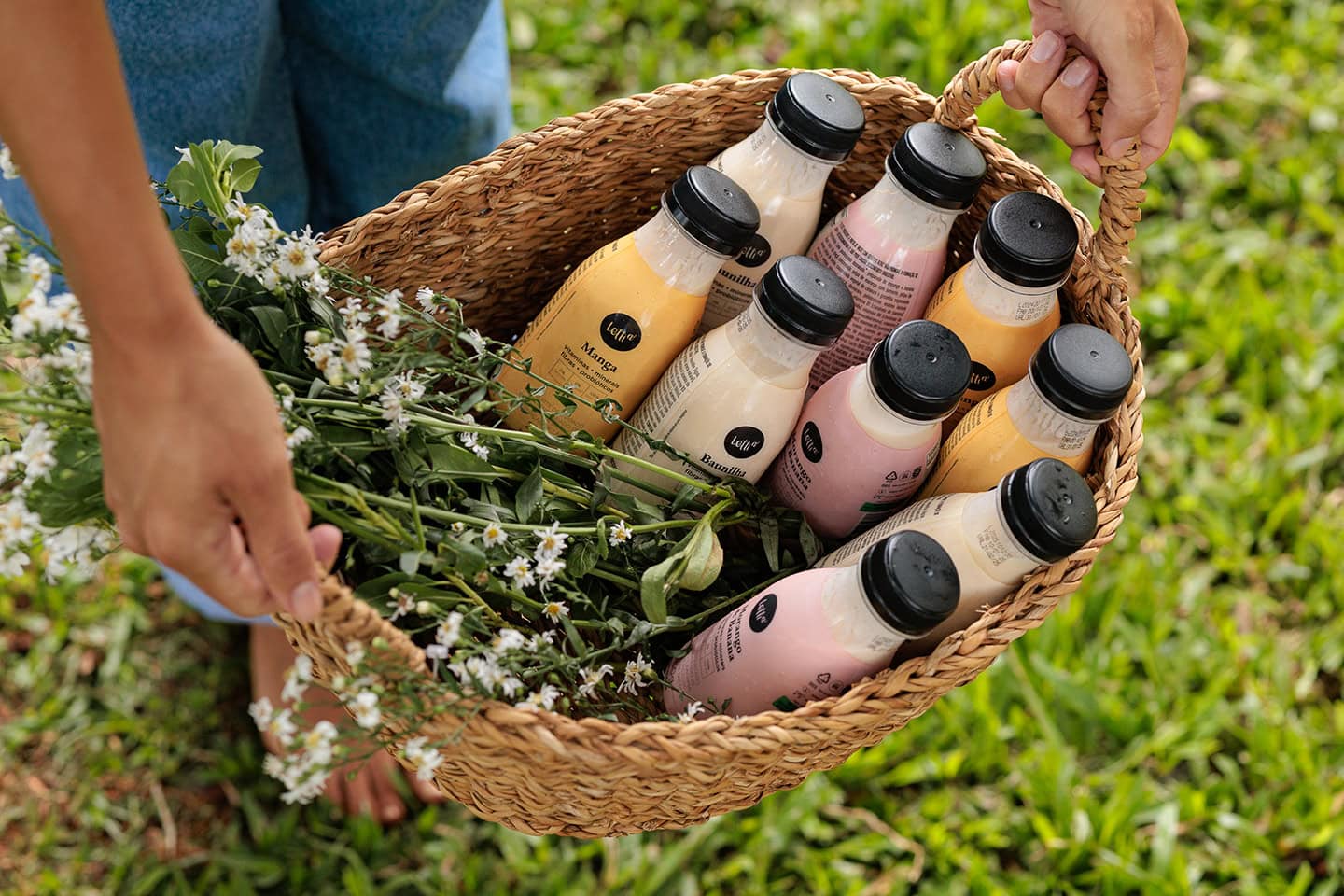
Diana – Definitely my father, my mother, my uncle, and my grandfather—they are the ones, without a doubt, the reason I have such a deep connection to the countryside and see so much purpose in my daily work of delivering fresh, easy-to-digest, certified milk to Brazilians.
Aryane Garcia – The common thread of agribusiness success is the economy; do you think it’s possible for Brazil to lose purchasing power and go through an economic recession? How can Brazil shield itself from a food crisis?
Diana – It’s possible for Brazil to face a recession, so the shielding must be related to reducing food costs for consumers, and for that, we would need to cut taxes, especially those linked  to importing technology. Technology is the key to producing efficiently in a world with finite resources and a growing population.
Aryane Garcia – If you could create some social rules that favor the productive dynamics of agribusiness and the Brazilian people, what would your bill proposals be?
Diana – Adopting new technologies needs to be incentivized. Producers often become captives of internal protectionist policies that make adopting existing technologies from abroad more expensive. The gain from technology use comes through environmental sustainability in the ability to use natural resources more efficiently and often regeneratively, carbon footprint reduction, operational cost reduction, making the sector more attractive to young people, and culminating in efficient, integrated food production. It’s also worth mentioning that in a world demanding sustainable practices and animal welfare in food production systems, it’s essential to be able to measure, prove, and justify what’s being done. The entire chain benefits from this efficiency—from producer to consumer.
Aryane Garcia – Among the various attitudes that accelerate Brazil’s growth, what is the greatest contribution this generation can deliver that will impact the next 30 years?
Diana – Deep investment in education, science, technology, and sustainability—environmental, social, and financial.
Aryane Garcia – If you could choose a Brazilian city to live in until your last day, which one would it be and why?
Diana – Although I am passionate about Salvador, I would always choose Descalvado, the city where my family’s farm is, where I was born, raised, where my work is, and where I feel at home. One thing is certain: I wouldn’t trade Brazil for anything!
ARYANE GARCIA
Journalist
@aryanegarcia