



The Western Wall, or Kotel, in the Old City of Jerusalem, has been prominent in Jewish consciousness for centuries. Generations have dreamed of standing before the old stone wall, even if just once. Today, the Wall is active 24 hours a day, 365 days a year, and the crevices between the rectangular stones are stuffed with notes.
The wall we now call the Western Wall, although not part of the Holy Temple itself, was part of the remaining wall of the Temple Mount built by Herod the Great in the 1st century CE when he ambitiously expanded the Temple Mount and renovated the then dilapidated Second Temple.
When the Romans destroyed the Temple in 69 CE, this wall was not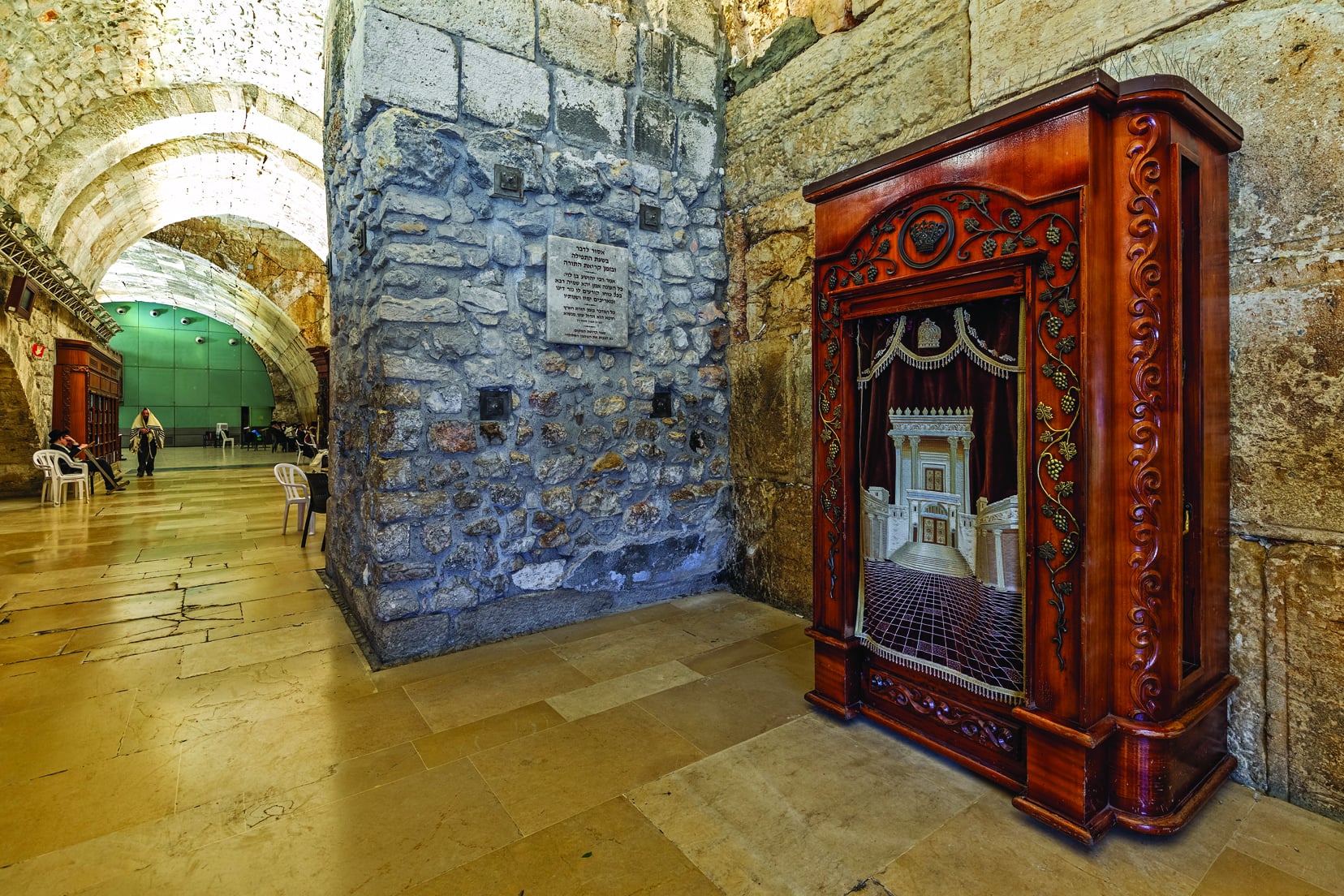
destroyed. And nearly two thousand years later, the wall still endures. In the visible part of the wall, only the lower part of the seven layers of stones, consisting of large stones with irregular edges, dates back to Herod’s design. The next section, consisting of four layers of smaller, flatter stones, dates from the Byzantine Period. The uppermost layer was added sometime after the Muslim conquest in the 7th century, and the top layer in the 19th century, funded by the famous English philanthropist and financier, Sir Moses Montefiore.
Tourists have visited the Western Wall to pray and place small notes of thanks and personal requests at this sacred site, as Jewish sages teach that the Shechinah (Divine Presence) that was manifested in the Temple has never departed.
In the second half of the 16th century, Suleiman the Magnificent granted Jews exclusive rights to pray at the Western Wall. The prayer area was small, surrounded by a wall running parallel to the Wall and bordered by a poor neighborhood. This remained the case until 1947.
In 1930, a British commission sanctioned by the League of Nations reaffirmed the right of Jews to pray at the foot of the Wall.
Between 1948 and 1967, the Old City of Jerusalem was under Jordanian control, and Jews were completely banned from visiting the Wall.
On June 7, 1967, Israeli fighters liberated the Temple Mount on the third day of the Six-Day War. Until then, the accessible part of the Kotel had been a 30-meter section of the massive wall, and the open area in front of the Wall was only 3 meters wide. The various buildings in front of it were immediately demolished, down to the southern corner. The entire area was leveled and paved, creating a large open space.
Today, the visible part of the Kotel from the plaza is 62 meters long. The entire length of the Western Wall, however, is actually over 500 meters.
Seventeen more layers of stones from the Western Wall are buried beneath the floor. Due to many generations of destruction and reconstruction, city upon city, the ground level is now higher, and the lower part of the western side of the Temple Mount is buried.
Interesting Facts
• The Roman general Titus allowed the Western Wall to remain standing as a tribute to his power, a testament to the greatness of the structures he destroyed.
• Many of the subterranean stones of the Wall uncovered by archaeologists in excavations are extraordinarily large, larger than any stone found in the pyramids. Some of these stones weigh hundreds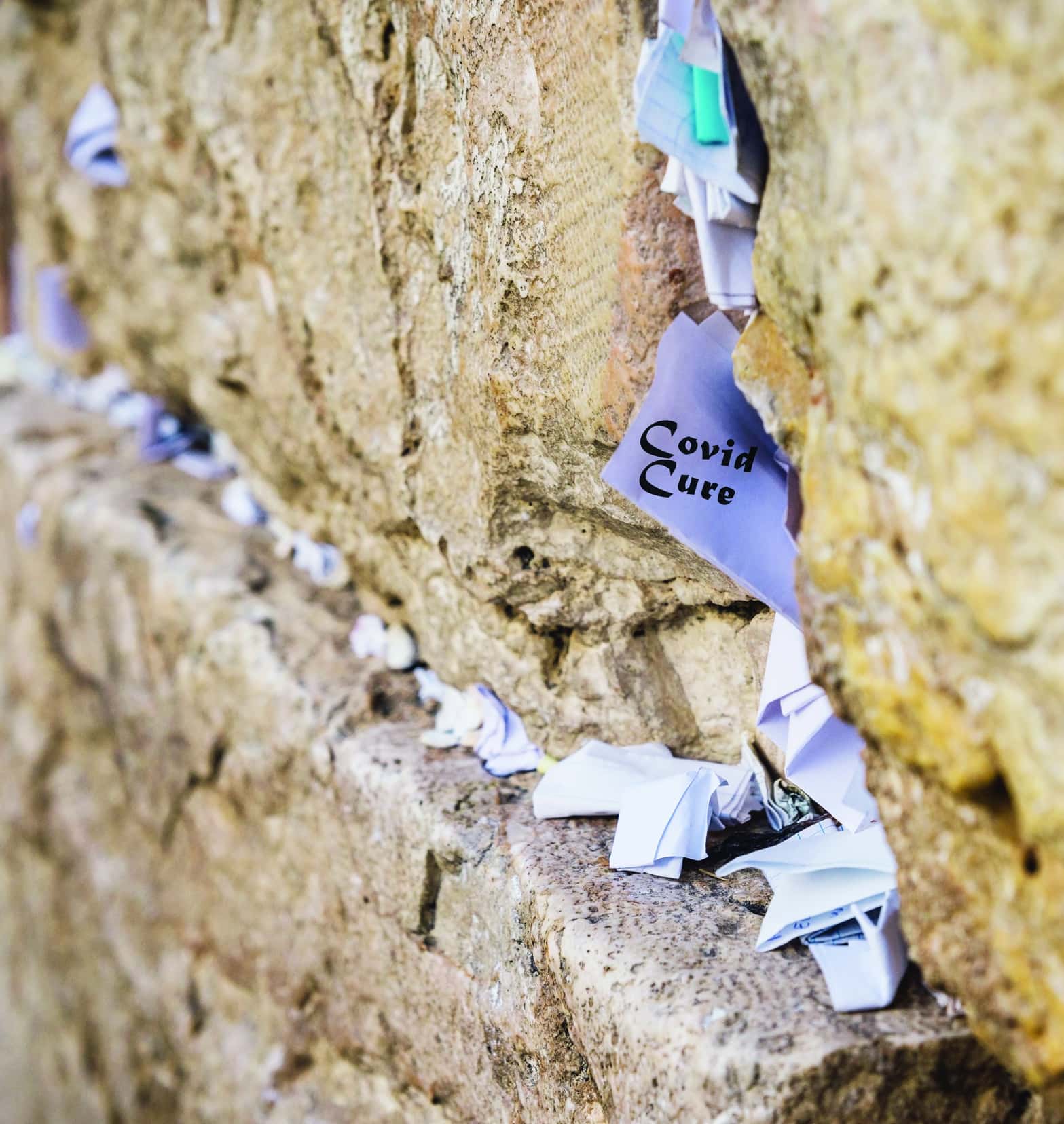 Photo: Alexandre Rotenberg/www.shutterstock.com[/caption>
of tons.
• The Western Wall is also known as the “Wailing Wall.” This name was given by non-Jewish observers who were accustomed to seeing Jews gathering at the foot of the Wall and “wailing”; lamenting in prayer, and lamenting in tears for the destroyed Holy Temples.
• After basic training, many combat units of the Israel Defense Forces take their oath in ceremonies at the Kotel.
• Many Jews come from all over the world to celebrate their children’s bar/bat mitzvah at the site.
Since the Western Wall was liberated in 1967, archaeological excavations have been conducted beneath it. Although only a small section of the length of the Wall is visible above ground in the plaza, one can walk along the entire length of the Wall in the tunnels and see all the subterranean layers, and even the bedrock beneath it. At the opposite point from where the Holy of Holies was located, there is an underground synagogue. Walking through the tunnels can only be done with a guide and must be scheduled.
Source: Chabad.org