



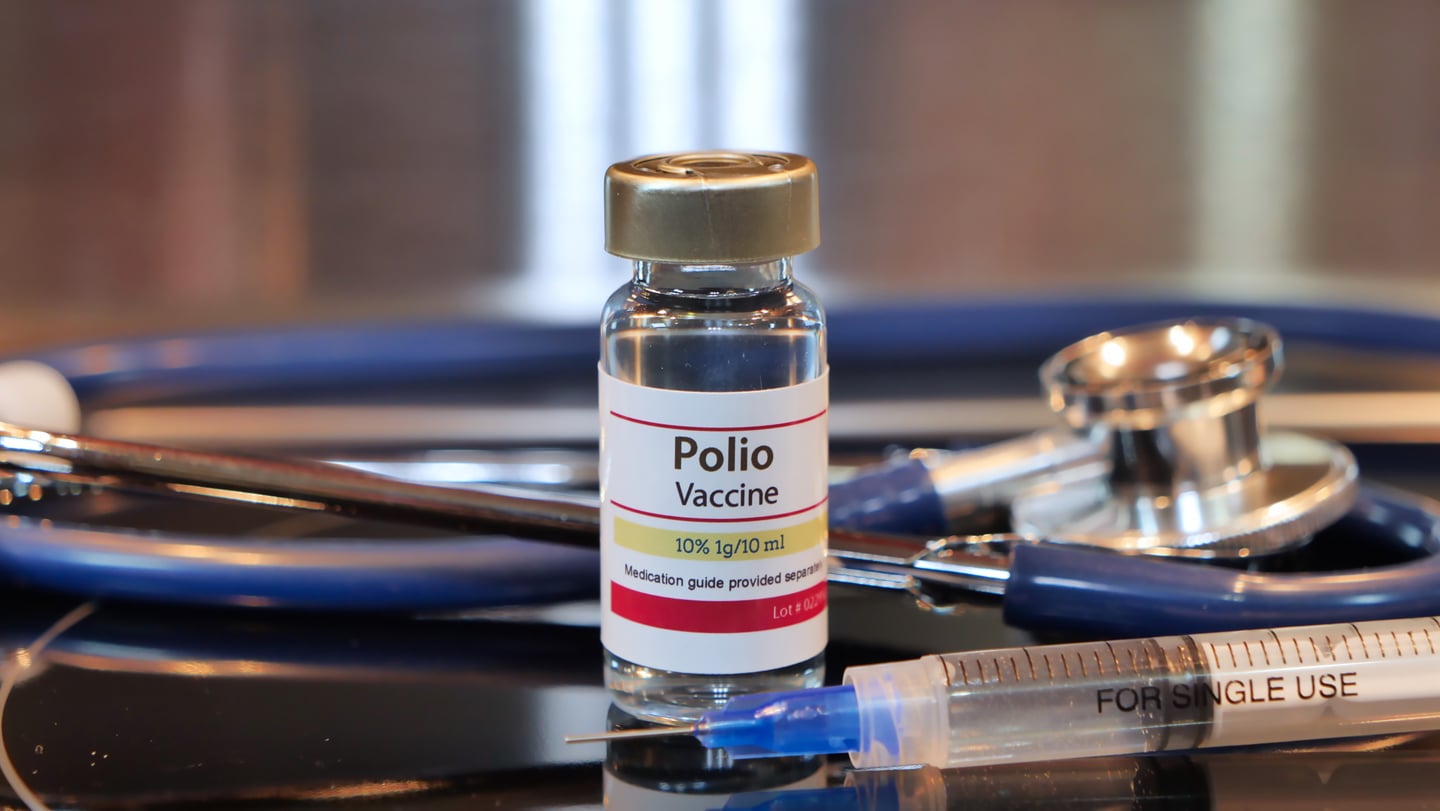
If you are wondering whether the polio vaccine you received in childhood is still valid, you can check your antibody levels against the polio virus with a blood test. There are three types of polio viruses: PV1, PV2, and PV3; immunity from one does not transfer to the other types.
It is very important to be vaccinated. Don’t panic, but get organized with your family as soon as possible, instead of putting it off, so you won’t be caught off guard. We have vaccines at the office, but in limited quantities.
The following information is from the Centers for Disease Control.
Who Should Get the Polio Vaccine?
Babies and Children
As part of routine childhood immunization, children in the United States should receive the inactivated polio vaccine (IPV) to protect against polio, or poliomyelitis. They should receive a total of four doses, one at each of the following ages:
• 2 months old
• 4 months old
• 6 to 18 months old
• 4 to 6 years old
Children who have not started the polio vaccine series or who are behind on the recommended doses should begin as soon as possible or complete the series following the recommended catch-up schedule.
People planning to travel abroad should ensure that they and their children are fully vaccinated against polio before departure.
Adults
Most adults were likely vaccinated against the poliovirus in childhood, which is why IPV is not part of routine vaccinations for adults.
However, unvaccinated adults, those who are incompletely vaccinated, or those fully vaccinated but at higher risk of contact with the poliovirus should receive the polio vaccine. The following situations put adults at higher risk:
• You are traveling to a country where the risk of contracting polio is higher. Consult your doctor if you need to be vaccinated.
• You work in a laboratory or healthcare setting and handle samples that may contain poliovirus.
• You are a healthcare professional treating patients who may have polio or have close contact with someone who may be infected with poliovirus.
Adults who have never been vaccinated against polio should receive three doses of IPV:
• The first dose at any time
• The second dose 1 to 2 months later
• The third dose 6 to 12 months after the second
Adults who received one or two doses of the polio vaccine in the past should receive the remaining doses, one or two.
Adults at higher risk of contact with poliovirus who have previously completed the polio vaccination series (IPV or OPV) may receive a lifetime booster dose of IPV.
DR. ALBERT LEVY
Family Practice Physician
www.manhattanfamilypractice.com