



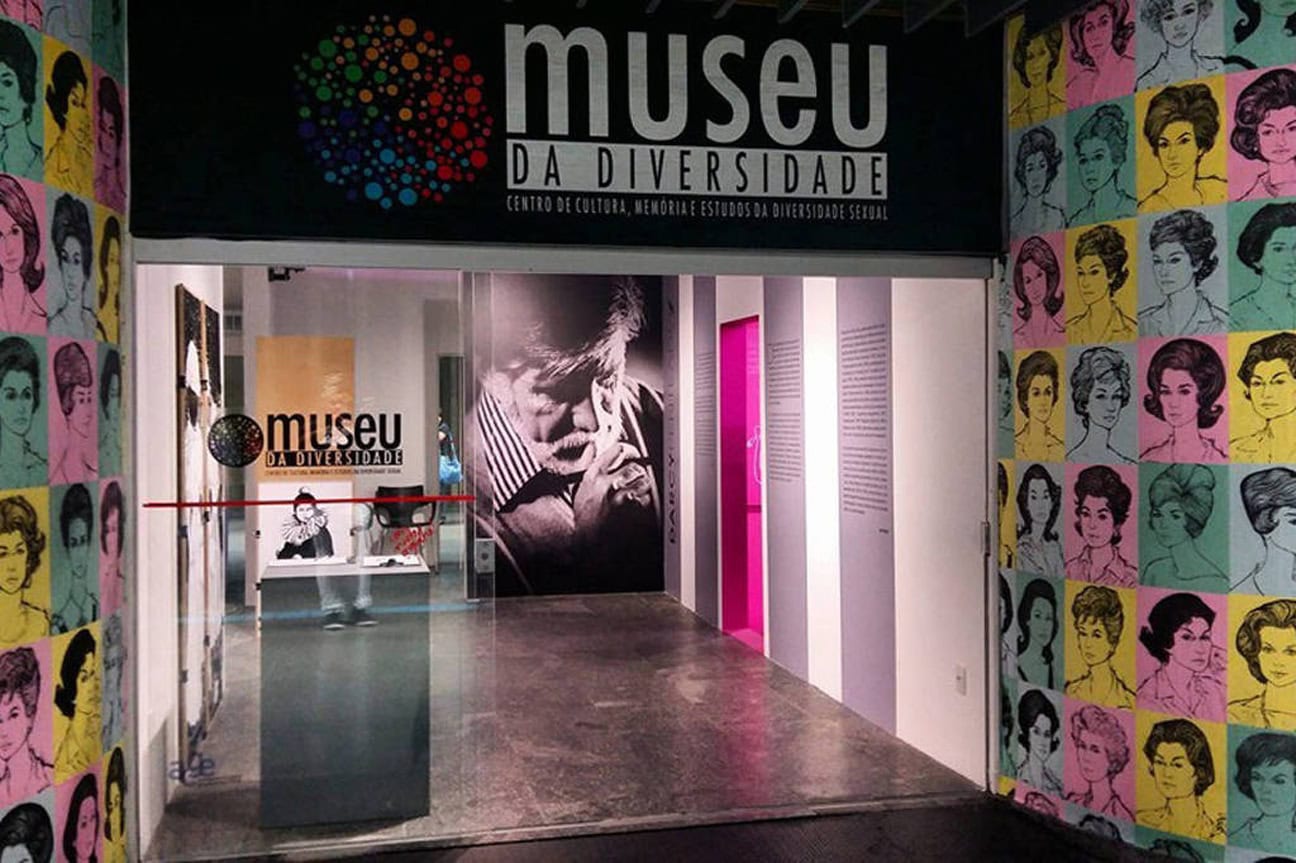
After a closure of nearly a year and a half, the Museum of Sexual Diversity has reopened its exhibition spaces at the República subway station, located in the heart of São Paulo.
The space currently features two exhibitions: “Pajubá: the Time and Place for the Close,” curated by Amara Moira and Marcelo Campos, and “Dissident Arts,” organized based on research conducted by Dri Galuppo.
In Pajubá, visitors can explore the creations of over 100 artists, including Gê Viana and Vulcânica Pokaropa. The exhibition is inspired by the Pajubá language, historically used by transgender and transvestite individuals as a means of communication and self-preservation. “These terms and vocabulary,” explains the museum’s content manager Tony Boita, “served as a form of resistance, allowing them to communicate safely and assert their identities throughout history.”
Boita emphasizes that this vocabulary serves as a testament to the experiences lived by these communities. He notes that elements of this language, such as the word “babado,” permeate mainstream culture and have integrated into the everyday discourse of many.
Moreover, this linguistic tradition intertwines with terms derived from African religions. “There is a deep connection,” he emphasizes, “between the inclusive nature of these spaces and the welcoming of dissident bodies.”
“Dissident Arts” is a photographic exhibition resulting from Dri Galuppo’s exploration of artistic collectives in urban areas across Brazil.
Expansion
With the museum expanding from its original 100 square meters to an area that exceeds five times its previous size, totaling now 540 square meters, it is expected to welcome 10,000 visitors in 2024. “It is a tremendous joy to reveal this new museum to society, especially one dedicated to reflecting on the memories of our memories, the memories of LGBTQIA+ people,” exclaims Boita enthusiastically.
The space, under the Secretary of State for Creative Culture, Economy, and Industry of São Paulo, offers free admission to all. For more details, visit https://www.cultura.sp.gov.br/.