



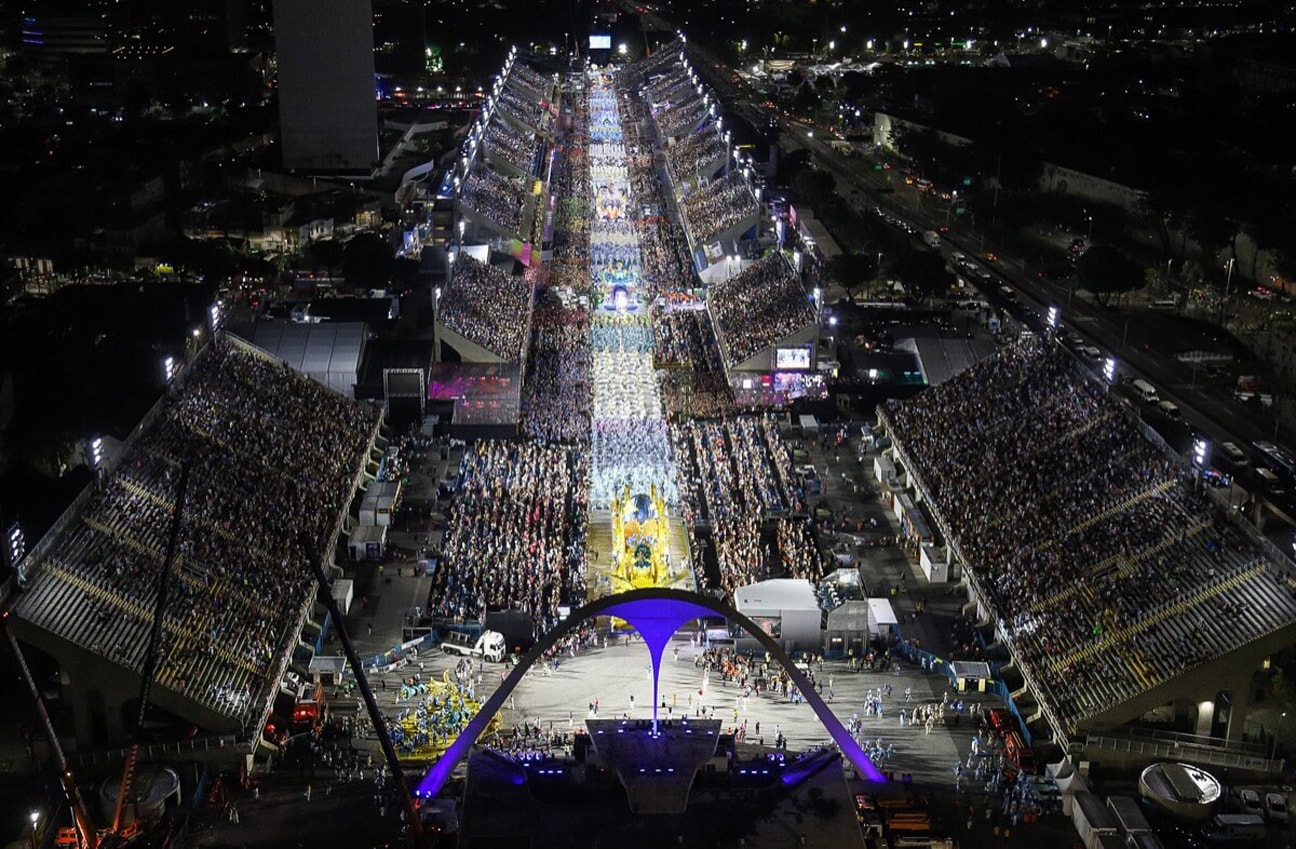
The Marquês de Sapucaí Sambadrome (the venue where samba schools perform), located in the central region of Rio de Janeiro, celebrates its 40th anniversary in 2024.
Stage for the grand parades of samba schools during Carnival, the project was conceived by architect and urban planner Oscar Niemeyer and underwent several modifications before reaching its final characteristics.
Famous worldwide, the 700-meter avenue is synonymous with celebration, joy, and excitement. But before it was inaugurated, four other locations hosted the Rio carnival: Praça XI, Avenida Presidente Vargas, Avenida Rio Branco, and Avenida Presidente Antônio Carlos, all located in downtown Rio.
In 1983, construction began on the structure. Announced in September 1983 and delivered in early 1984, it was built by 2,500 workers in 156 working days. On March 2, 1984, as promised, the sambadrome was ready.
Listed by the National Institute of Historical and Artistic Heritage (Iphan), the Marquês de Sapucaí has established itself as an emblematic landmark of the city and the country.
The first major samba school to perform at the new venue was ‘Unidos da Tijuca’.
For the first time, the parade was divided into two nights with two champions chosen by the judges. ‘Portela’ won the first night and ‘Estação Primeira de Mangueira’ emerged victorious on the second.
Who was Marquês de Sapucaí?
Cândido José de Araújo Viana, the Marquês de Sapucaí, was born in Nova Lima (MG) on September 15, 1793. A Brazilian judge and politician, he presided over the Senate from 1851 to 1853 and was a master of literature and positive sciences for Prince D. Pedro II in 1839. He was also responsible for the education of Princess Isabel.
So, why name a place so ‘carioca’ (people born in Rio de Janeiro are called cariocas) after someone who wasn’t even born in Rio de Janeiro? According to historians, it was Darcy Ribeiro, one of the creators of the project, who wanted to pay tribute to an intellectual who was significant in the educational life of the prince and became well-known in the city.