



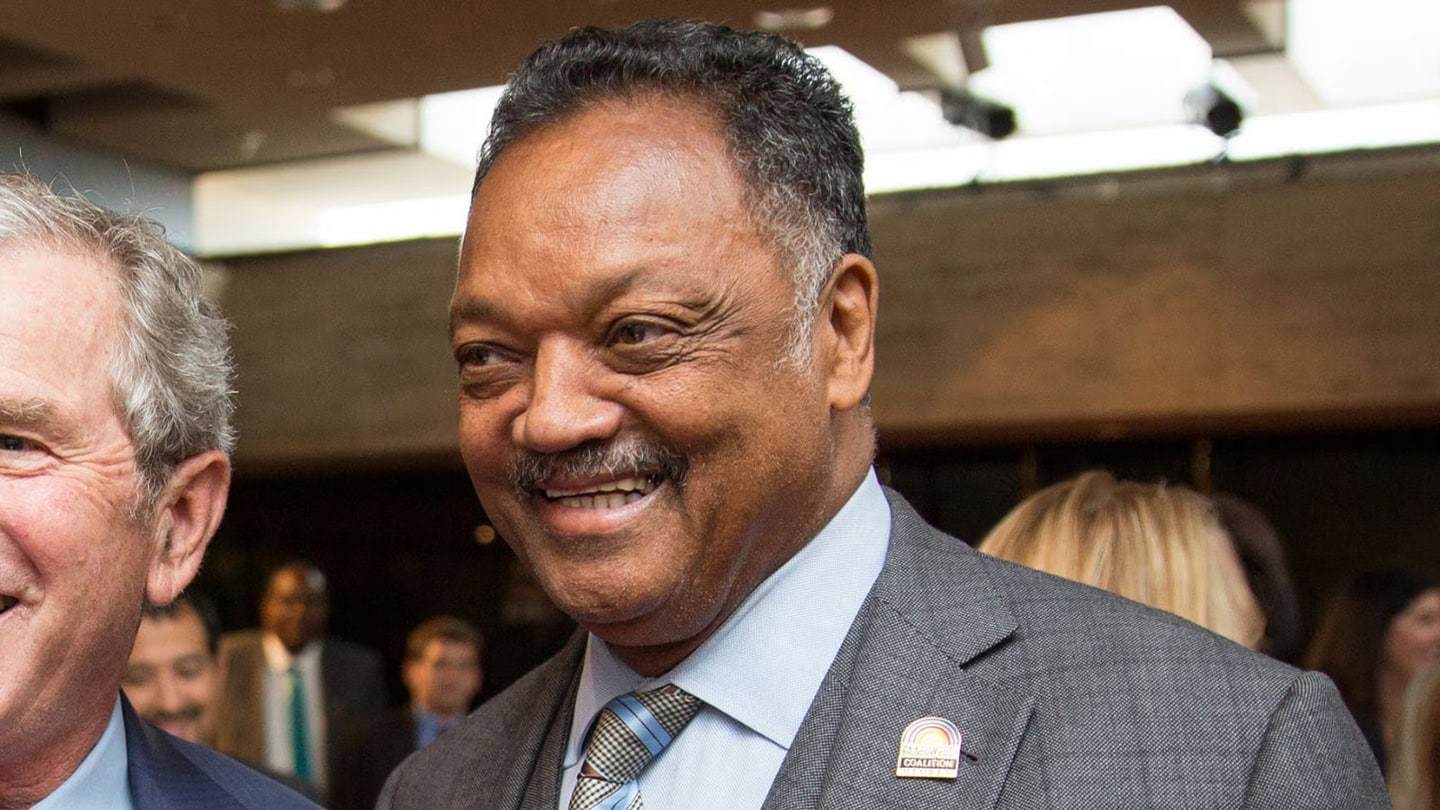
Civil rights leader Jesse Jackson, one of the most influential figures in politics and social activism in the United States in recent decades, died at 84, his family announced on Tuesday (17). Baptist pastor and close ally of Martin Luther King Jr., Jackson built a career marked by powerful oratory, historic presidential campaigns, and defense of marginalized communities.
“Our father was a servant leader – not only for our family, but for the oppressed, the voiceless, and the marginalized around the world,” the Jackson family said, according to a Reuters report.
Diagnosed with Parkinson’s disease in 2017, Jackson had been battling the disease for three years after presenting symptoms. He had lived in Chicago for decades and remained active in public life even after the diagnosis.
The death comes at a time of intense debate over historical memory and civil rights in the United States. The Trump administration has promoted measures aimed at reviewing public exhibitions and monuments, justifying this by claiming it combats what it calls “anti-American” ideology. Civil rights advocates argue that such actions could undermine the progress achieved over decades.
Two Historic Presidential Campaigns
Jesse Jackson ran for the Democratic presidential nomination in 1984 and 1988, becoming one of the first African Americans to compete in national-level competitive campaigns. In 1984, he received 3.3 million votes in the Democratic primaries, about 18% of the total, finishing third in the race won by Walter Mondale.
In the second race, he received 6.8 million votes—29% of the total—won 11 primaries and state conventions, and finished second in the party’s internal contest, behind Michael Dukakis. Jackson positioned himself as an agent of change for Blacks, the poor, and the marginalized.
At the 1988 Democratic National Convention in Atlanta, he delivered a speech that would become one of the most memorable of his career. “America is not a blanket woven with one thread, one color, one cloth,” he told the delegates.
In another memorable passage, he declared: “Wherever you are tonight, you can make it. Hold your head high, stick out your chest. You can make it. Sometimes it gets dark, but the morning comes. Don’t give up. Suffering builds character, character builds faith. In the end, faith will not disappoint.”
Origins in the Segregated South
Born on October 8, 1941, in Greenville, South Carolina, Jackson grew up under the racial segregation laws known as Jim Crow. During his youth, he received a scholarship to play American football at the University of Illinois, but transferred to a historically Black institution after reporting experiences of discrimination. His activism began still in college. He was arrested for trying to enter a public library restricted to whites in South Carolina. Later, he studied at Chicago Theological Seminary and was ordained a Baptist pastor in 1968.
Jackson became a close collaborator of Martin Luther King Jr. and was in Memphis on the day the leader was assassinated, in 1968. After King’s death, he broke with the leadership of the Southern Christian Leadership Conference (SCLC) and founded Operation PUSH in Chicago in the early 1970s. In 1984, he created the National Rainbow Coalition, with the aim of expanding the civil rights agenda to include women’s rights and the LGBTQIA+ community. The two organizations merged in 1996. He stepped down from the presidency of the Rainbow-PUSH Coalition in 2023, after more than five decades of leadership.
Source: brasil247.com