



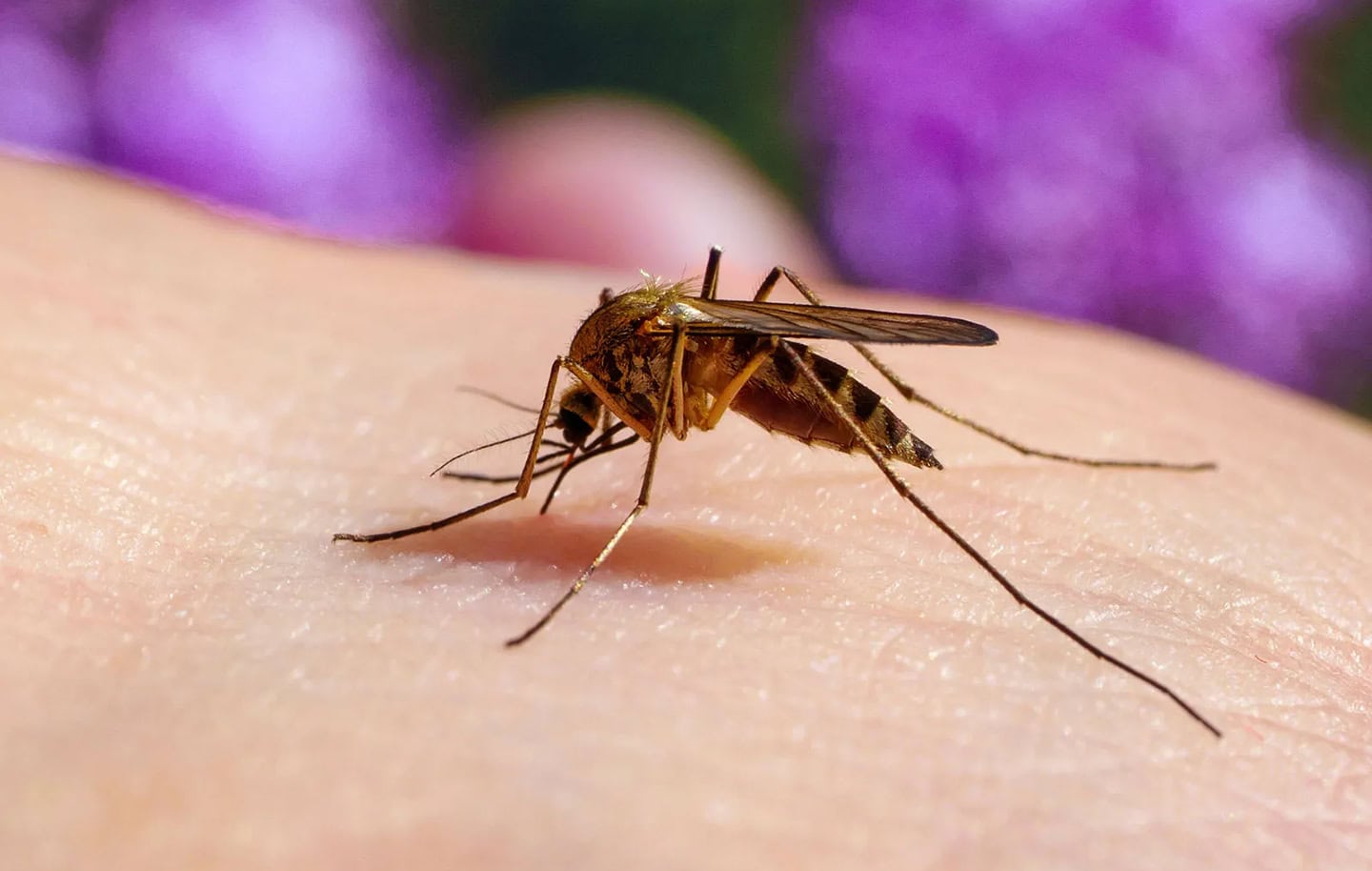
Icelanders may be the last group of people on Earth to experience the annoying bite of a mosquito.
This week, Iceland recorded the presence of the insects within its borders for the first time in the history of the Nordic nation.
The discovery of three Culiseta annulata mosquitoes was confirmed on Monday by the Icelandic Institute of Natural History, which said the mosquitoes likely arrived via cargo and appeared capable of withstanding Iceland’s climate. (There have been previous reports of mosquitoes found on airplanes in Iceland.)
The institute noted that the mosquitoes are one of several new insect species discovered in Iceland in recent years due to the warming climate and increased international transport.
Insect enthusiast Björn Hjaltason said he found the mosquitoes on a farm in Kjós, just north of Reykjavík, earlier this month.
“At dusk on the evening of October 16, I spotted a strange fly on a red wine trap,” Hjaltason told the Icelandic broadcaster RUV. “I immediately suspected what was happening and quickly collected the fly. It was a female.”
Hjaltason captured two more afterward. The three insects were handed over to authorities for testing, which revealed they were two females and one male.
Antarctica is now the only place in the world considered mosquito-free.
Climate change is causing temperature increases worldwide, and the Arctic region is warming at more than double the global average rate.
According to the Icelandic Institute of Natural History, the Culiseta annulata species consists of large mosquitoes present in Europe and other Nordic countries that can live in cold climates, usually sheltering in sheds and basements.
Although they bite, the institute said they do not transmit known infections in these areas. A 2017 study said Culiseta annulata are often “considered a biting nuisance rather than a deadly enemy”.
There are more than 3,000 mosquito species around the world, some of which can transmit serious and even fatal diseases through their bites, such as malaria, dengue, and West Nile virus.
Source: npr.org by Joe Hernandez