



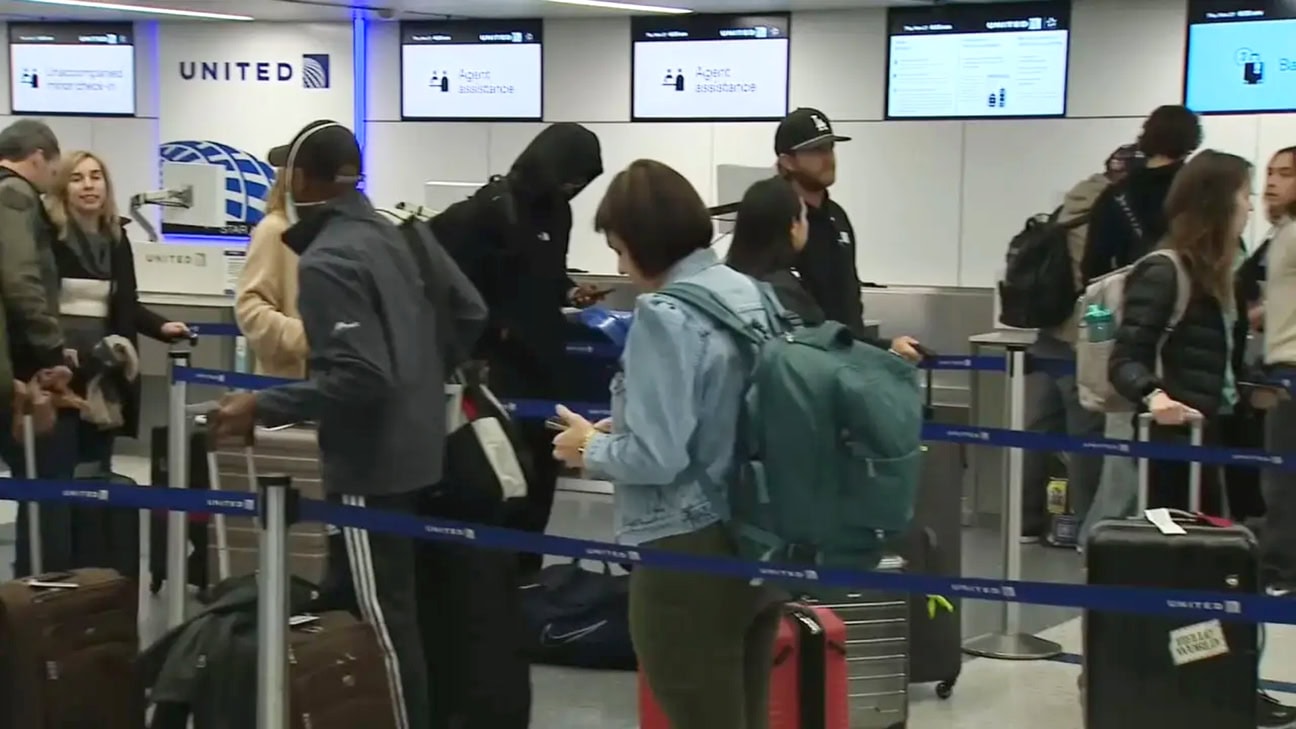
With winter weather and crowded airports, Thanksgiving travel can already be stressful. Now, add the possibility that the government shutdown could extend until then.
Tens of thousands of air traffic controllers and TSA agents have been forced to work without pay. Recently, the Federal Aviation Administration said it recorded an increase in staff absences, forcing the agency to reduce the number of flights to maintain safety.
Delays related to staffing issues have emerged at airports across the country in recent weeks, including in Orlando, Los Angeles, Houston and New York. So far, most of these issues have been short-lived, but the Trump administration warned that the situation could worsen significantly during the holiday season if the government remains shut down.
On Wednesday, Transportation Secretary Sean Duffy said air traffic will be reduced by 10% at 40 locations starting Friday, amid staffing disruptions.
“I anticipate there will be additional disruptions, there will be frustration,” he said. “But, in the end, our only role is to ensure we keep the airspace as safe as possible.”
Aviation and travel experts similarly expect more delays and cancellations, as well as longer TSA lines, if the shutdown doesn’t end before Thanksgiving.
“This means that, during one of the busiest periods of the year, many people will be stuck,” said William J. McGee, senior fellow in aviation and travel at the American Economic Liberties Project, an antitrust group.
See how the shutdown could affect your holiday plans and whether you should travel or not.
What will air travel be like during the Thanksgiving weekend if the shutdown continues? Thanksgiving — and the days around it — are among the busiest periods for air travel. Last year, the Sunday after Thanksgiving set a record with nearly 3.09 million passengers screened by the TSA.
The last government shutdown also extended into a holiday season, but Philip Mann, an aviation expert at Embry‑Riddle Aeronautical University, said a key difference was that, in 2018, the shutdown began a few days before Christmas.
“People hadn’t missed a full paycheck,” he said.
This year, when Thanksgiving arrives, air traffic controllers and TSA agents will have been forced to work without pay for more than eight weeks. If that’s the case, Mann anticipates more staff will call out due to fatigue and financial stress, causing more delays and cancellations.
Part of the problem is that travel disruptions don’t happen in a vacuum, according to McGee, from the American Economic Liberties Project. Instead, they often create a domino effect, impacting other flights and airports.
“Delays and cancellations generate more delays and cancellations,” he said.
And if the shutdown ends before then?
Aviation experts say travel disruptions will likely remain a concern if the federal government reopens very close to Thanksgiving.
McGee said flight operations need time to stabilize after a series of delays. That’s because, nowadays, flights operate near maximum capacity, leaving fewer seats available for passengers who need to rebook.
“That’s why we have breakdowns that last not a few hours, but sometimes a week,” he said.
Another reason is that staff absences may persist after the shutdown, as some air traffic controllers will need retraining before returning to service, according to Mann.
“One of the huge things they do constantly is train and update policies,” he said.
Mann added that how smooth the holiday travel will be also depends on how airports and airlines plan ahead.
Fly or not fly this Thanksgiving?
The Thanksgiving weekend tends to be one of the busiest periods at airports because travel is concentrated in a few days — unlike December or summer, when vacations can be spread out.
This also means that delays during the Thanksgiving weekend can shorten an already short trip. Despite the risk, Katy Nastro, travel expert at the flight deals app Going, said she encourages people to stick to their travel plans.
“I would still say we’re cautiously optimistic that you should buy your tickets,” she said.
Nastro’s advice is not to wait for the federal government to reopen before booking a flight. Instead, she recommended choosing tickets that offer credits for flights in case plans need to change. She also suggested opting for direct flights and morning departures.
Mann said travelers should also allow ample time for security checks, especially if the shutdown lasts until Thanksgiving.
While travel disruptions remain a concern, Mann said that, in the end, it’s a good sign that the FAA is reducing flights in response to staff absences, because it means the agency is prioritizing safety.
“Flying will remain safe,” he said. “It may just become increasingly inconvenient.”
Source: npr.org by Juliana Kim