



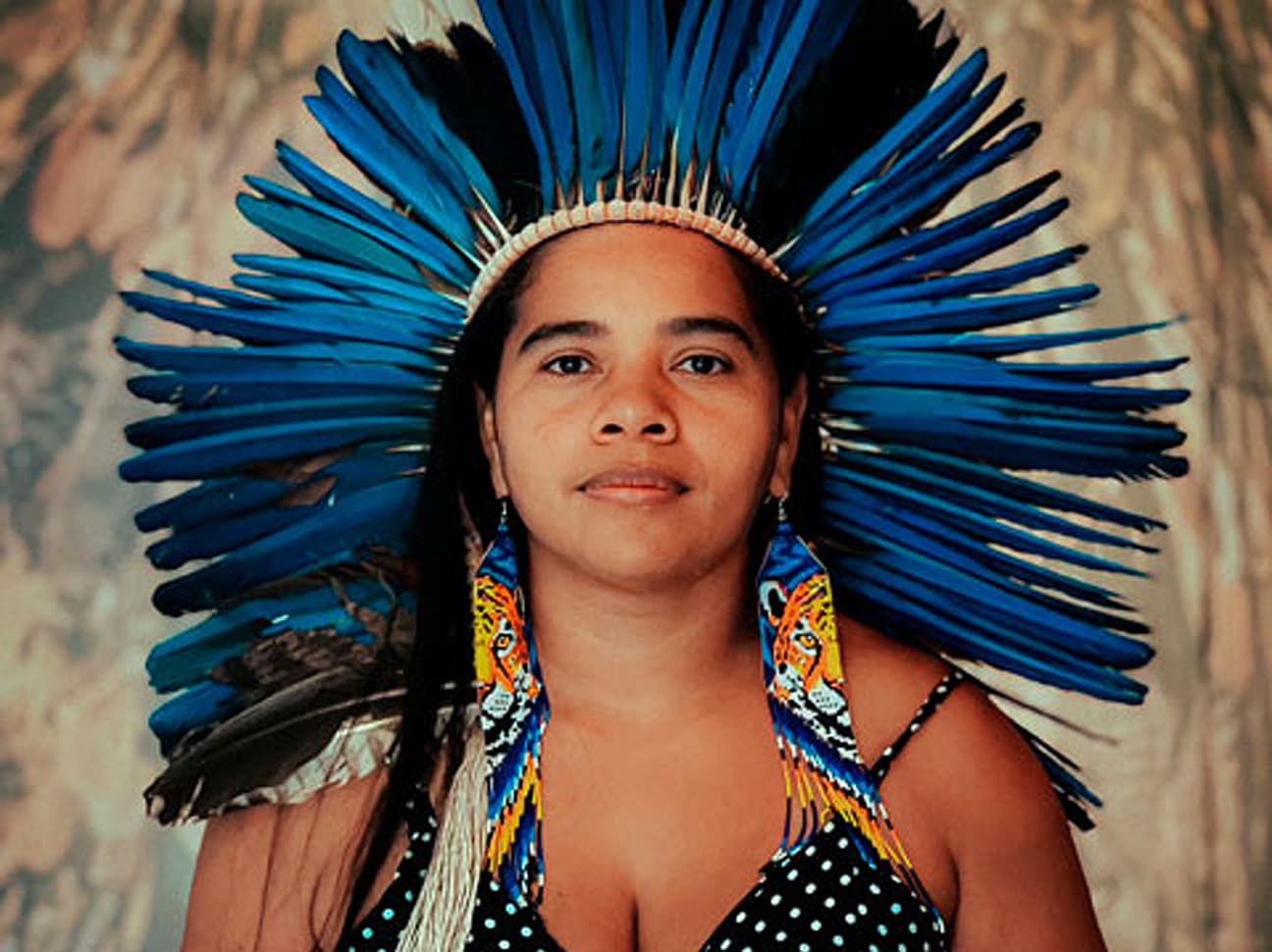
Glicéria Tupinambá will represent Brazil at the Venice Biennale in 2024, becoming the first Indigenous artist to occupy the country’s pavilion alone.
The exhibition space, normally known as the Brazilian Pavilion, has been renamed for this edition as the Hãhãwpuá Pavilion. Its name derives from the word of the Pataxó people for the territory now known as Brazil before its colonization by the Portuguese. The pavilion’s announcement noted, however, that the territory “had many other names.”
The renaming of the pavilion follows the memorable approach taken in 2022 for the Nordic Pavilion, an exhibition space at the Biennale used by Norway, Sweden, and Finland. For that edition, the pavilion was entirely dedicated to Sámi artists and retitled accordingly.
Although Glicéria is the first artist with sole credit in the pavilion, she is not the first Indigenous artist to exhibit in the Brazilian Pavilion. At least one other has done so: Chico da Silva, a painter born to a Peruvian Indigenous mother and a Brazilian father, who participated in the Brazilian Pavilion in 1966.
The Hãhãwpuá Pavilion will also echo a milestone occurring at the United States pavilion, where Jeffrey Gibson, a member of the Mississippi Band of Choctaw Indians and of Cherokee descent, will become the first Indigenous artist to represent the country alone.
Glicéria, a member of the Tupinambá people, will present an exhibition called “Ka’a Pûera: we are walking birds,” a reference to the capoeira, a bird that can disguise itself in the forests that the Tupinambá cherish so much. These same forests are threatened with destruction by corporate forces seeking to use them for agricultural purposes, against which Glicéria has vehemently protested.
In Brazil, Glicéria is known both as an artist and as an activist. In 2010, she was arrested, along with her baby, for two months after reporting cases of police brutality, which raised alarm among human rights groups. She is dedicated to preserving Tupinambá culture and even uses her films in this struggle. One of her works, currently on display at the São Paulo Museum of Art, addresses the production of significant cloaks for Tupinambá culture.
Her presentation at the Venice Biennale will be curated by Arissana Pataxó, Denilson Baniwa, and Gustavo Caboco Wapichana.
In a statement, the curators said that the pavilion explores the notion “that we remember those who are on the margins, deterritorialized, invisibilized, imprisoned, whose territorial rights have been violated, but who call us to resistance, believing that we are human-birds-memory-nature, for there is always the possibility of resurgence and resistance.”
Although Glicéria is the officially credited artist in the pavilion, she will invite other members of her community to work alongside her in it. The invited Tupinambá participants have not yet been announced.